
Aidan Hogan is the new director of the DCC at U. Chile
July, 2024.- Starting July 19th, the alternate director of the Millennium Institute for Foundational Research on Data (IMFD) and academic at the Departamento de Ciencias de la Computación de la Universidad de Chile, Aidan Hogan, took over as the new director of DCC U. Chile, a role that will last for a period of two years. Meanwhile, Professor Alejandro Hevia will continue as deputy director.
Upon taking on this new challenge, Professor Aidan Hogan commented that today DCC U. Chile plays an increasingly important role in the country’s context, since “computing is taking on -more and more- a leading role in society and in our daily lives. In this context, DCC U. Chile has the key role of advancing the state of the art in computing, and of educating and training the future leaders in this field,” he stated.
In the academic’s view, the challenges facing our department are considerable, but they are “positive challenges,” as he explained: “The Computer Engineering degree continues to grow in popularity; we have six times more students compared to eight years ago. It is a positive challenge, as it underscores the relevance and importance of our mission, but it means that DCC U. Chile must keep adapting to scale up and meet this demand, and what the country requires. The second challenge lies in the speed at which the discipline changes. Nowadays, for example, artificial intelligence is having a strong impact on society, and the state of the art in that area is constantly changing. This means that, once again, DCC U. Chile must keep adapting not only to stay up to date, but also to be leaders in these advances in the national and international context.”
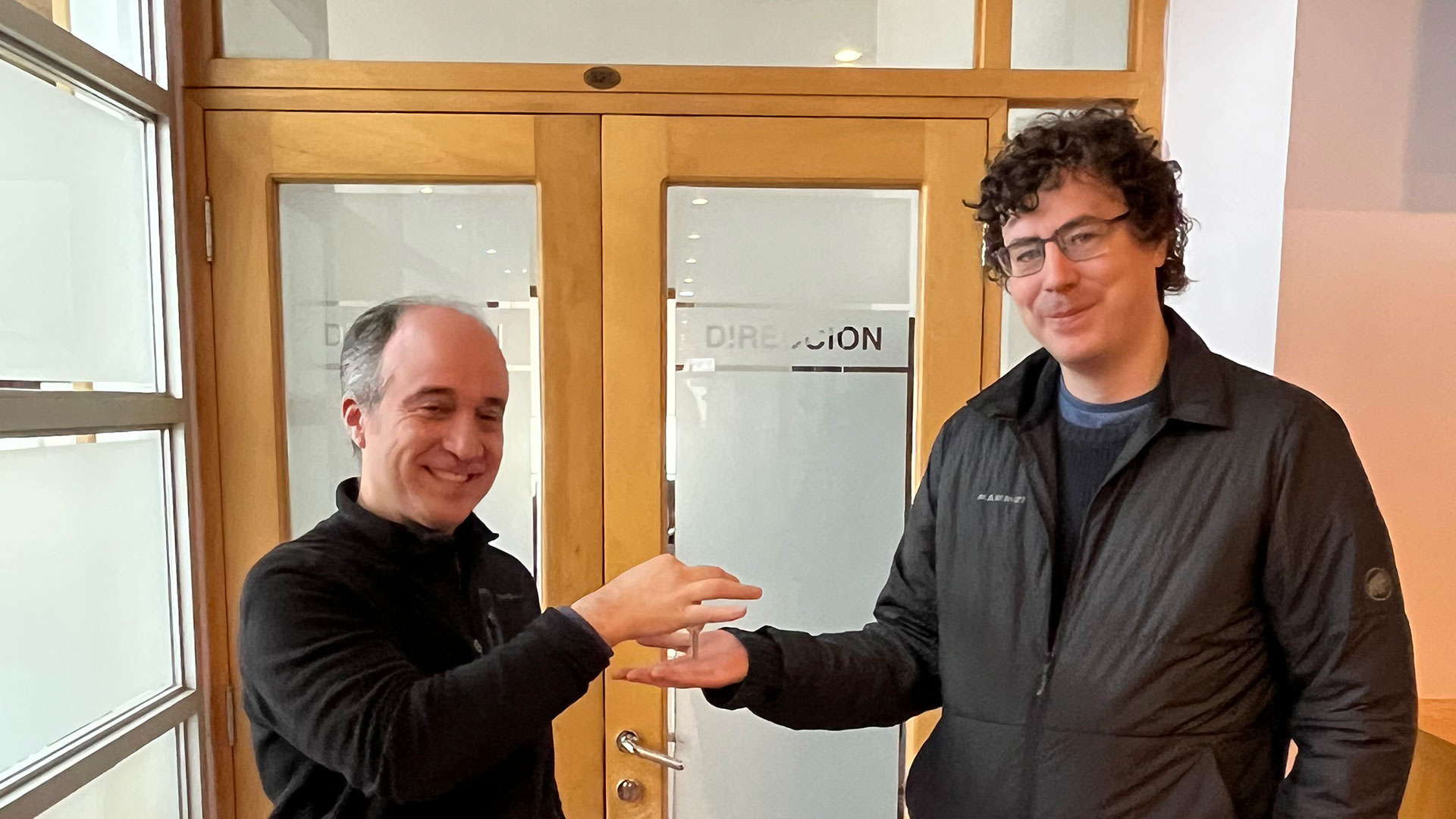
Along these lines, the new director expressed that among the main goals of his administration are, “first, finding ways for DCC U. Chile to scale its processes to grow sustainably, maintaining its community spirit, in the face of the great increase in demand, and thus fully take advantage of the discipline’s growing popularity and importance. Second, identifying the direction we need to take today in order to remain well positioned in the future amid the abrupt changes in the field of computing,” he concluded.
Source: Comunicaciones DCC U. Chile