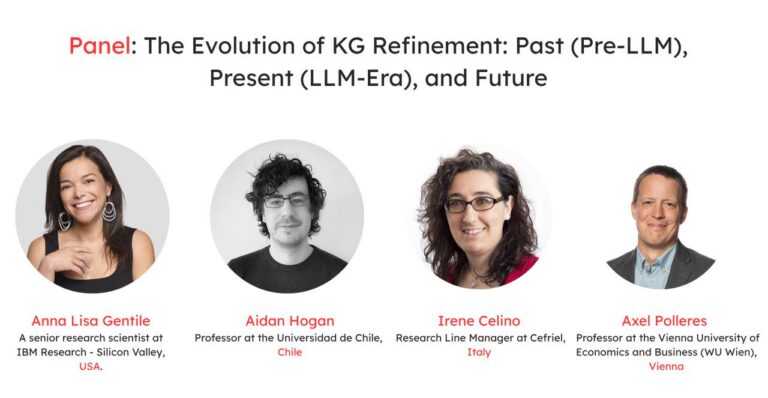

Panel Discussion: “Archives for the Future”

📅 Thursday, September 24 | 9:00 a.m. to …

International Seminar: Sites of Memory, Archives, and Digital Humanities

📆 Friday, September 4th from 8:45 AM Nuestra …

Workshop “Know Your Data: An Essential Step for AI”

📆 Santiago · Viña del Mar · Concepción …

IDIA Talk: How LLMs Are Transforming Software Development

📅 Thursday, May 14 | 1:00 PM We …

Talk on AI in Academic Research

📅 Monday, April 27 | 4:30 PM AI …

Crime and Democracy in Latin America

📅 Friday, April 17 | 10:00 am Organized …

Leopoldo Bertossi at LINDA 2026

📅 Friday, July 24 | 3:00 PM The …
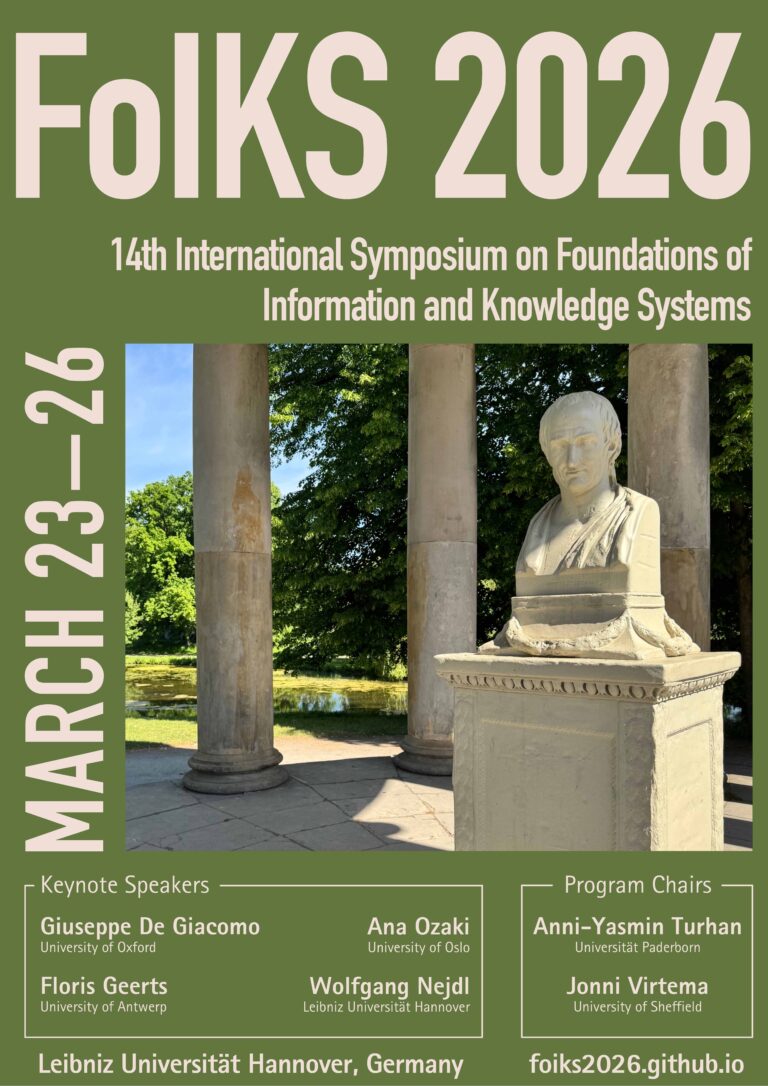
Leopoldo Bertossi at FoIKS 2026

📅 Monday, March 23 | 09:00 hs The …

# What is New in Hash Tables? Hash tables have been a cornerstone of computer science for decades, but they continue to evolve with interesting theoretical and practical developments. Here is an overview of recent advances: ## 1. **Better Worst-Case Guarantees** Traditional hash tables suffer from potential worst-case linear-time operations due to collisions. Recent work has focused on: – **Cuckoo hashing variants**: Improved schemes offering better load factors while maintaining O(1) worst-case lookup time – **Tabulation hashing**: Provides strong theoretical guarantees while being fast in practice, especially useful when you need provable randomness properties without full universal hashing overhead – **Robin Hood hashing**: Refinements that minimize variance in probe sequences, improving worst-case behavior in open addressing schemes ## 2. **Learned Hash Tables** One of the more exciting developments is the integration of **machine learning into data structure design**: – **Learned indexes** (following Kraska et al.’s influential work) use models to predict key positions, potentially reducing memory footprint and improving cache efficiency – Hybrid approaches combine learned models with traditional hashing to handle distribution shifts and edge cases gracefully ## 3. **Concurrent and Lock-Free Hash Tables** With multi-core systems being standard, there is ongoing work on: – **Lock-free hash tables** that allow high-throughput concurrent access without traditional locking overhead – **Resizable concurrent hash tables**: Solving the challenge of resizing without stopping the world, using techniques like incremental rehashing – Hardware transactional memory (HTM) integration for better concurrency control ## 4. **Cache-Efficient Designs** Modern hash table research pays close attention to hardware realities: – **SIMD-friendly hash tables** that exploit vectorized instructions for faster probing – **Memory-efficient variants** like Swiss tables (used in Abseil/Google’s codebase) that pack metadata efficiently for better cache utilization – Techniques to minimize cache misses through better memory layout (e.g., open addressing with SIMD-based group probing) ## 5. **Perfect Hashing Advances** – **Minimal perfect hash functions (MPHFs)** continue to improve, offering near-optimal space usage (close to the information-theoretic lower bound) while maintaining fast construction and query times – Practical implementations like **PTHash** and **RecSplit** have made minimal perfect hashing more accessible for large-scale applications ## 6. **Hashing for Streaming and Sketching** – Integration with **streaming algorithms** for approximate membership queries (Bloom filter alternatives like **Cuckoo filters**, **Quotient filters**, and **Ribbon filters**) – These provide better space-time tradeoffs than classic Bloom filters in many scenarios ## 7. **Hashing in Distributed Systems** – **Consistent hashing** improvements for better load balancing in distributed caches and databases – **Rendezvous hashing (HRW)** gaining renewed attention as an alternative with different tradeoffs — Is there a particular direction you are most interested in—theoretical guarantees, practical implementations, specific applications (e.g., databases, distributed systems), or the ML-hashing intersection? I am happy to go deeper into any of these!

📅 Tuesday, December 2 | 3:00 PM Abstract: …