
Images, democracy, communications, and databases: Six 2023 Fondecyt awards for Millennium Institute for Foundational Research on Data (IMFD) researchers
January, 2023.- Six research projects by researchers from the Millennium Institute for Foundational Research on Data (IMFD) were awarded funding through the Fondecyt funds for 2023. This funding is provided by the Agencia Nacional de Investigación y Desarrollo, ANID, to promote scientific-technological research in various areas of knowledge, through the funding of excellence research projects aimed at the production of knowledge.
The IMFD researchers who were awarded the funds are Benjamín Bustos, faculty member of the Department of Computer Science of Universidad de Chile; Juan Pablo Luna, faculty member of the Instituto de Ciencia Política and the Escuela de Gobierno of Pontificia Universidad Católica; Denis Parra, faculty member of the Department of Computer Science of Pontificia Universidad Católica; Gonzalo Navarro, faculty member of the Department of Computer Science of Universidad de Chile; Cristian Riveros, faculty member of the Department of Computer Science of Pontificia Universidad Católica; and Sebastián Valenzuela, faculty member of the Facultad de Comunicaciones of Pontificia Universidad Católica.
Image processing
The project by Benjamín Bustos, faculty member of DCC U. Chile, works in the field of digital archaeology, carrying out analysis of symbols on ceramic objects, which are scanned in 3D. This research proposes the design, development, and evaluation of algorithms that allow automatic labeling of the patterns that appear on ancient ceramics, based on the work of Kunisch in his book “Ornamente Geometrischer Vasen: Ein Kompendium,” where he defines a taxonomy of the labels that can appear on ancient ceramics. For Benjamín Bustos, this award will allow the project to move forward: “We hope to investigate algorithms that allow automatic or semi-automatic identification of the patterns drawn on ancient ceramics or also in other contexts such as rock art,” and he highlights the important collaborative work carried out with researchers from Anthropology and Archaeology, with whom they held a collaboration workshop, which makes “this project now more interesting given the possibilities of being able to test the methods and algorithms we will develop with new data and in local contexts.”
Also in the field of image processing with algorithms, the interdisciplinary research of Denis Parra, faculty member of DCC UC, uses deep learning techniques for the recognition of medical images, which optimizes diagnosis times in radiology, creating highly useful tools for the healthcare field. For the researcher, this award represents “great satisfaction, but mainly a boost we were hoping for in order to continue the research we have already been conducting for a couple of years on generating radiology reports from medical images. This project is interdisciplinary because it involves the development of AI algorithms under the scrutiny of physicians, whose role in this project is taken on by co-director Cecilia Besa from Radiología UC.” As a goal, they hope to improve the ability to generate reports in Spanish, since much of the current technology for these models is only available in English.
Studying democracies and communications with data
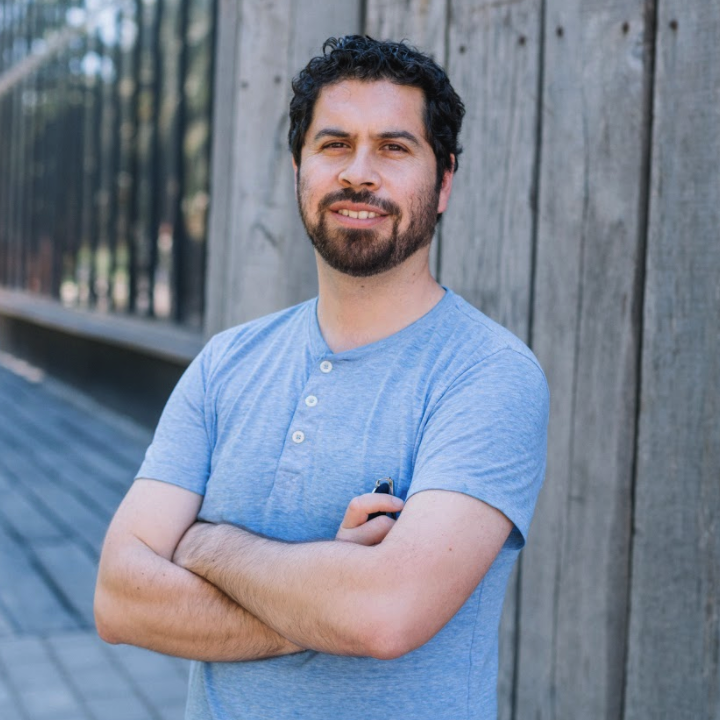
With the research “Analysis of the informational repertoires of social platform users and their relationship with knowledge of current news”, IMFD researcher and faculty member of the Facultad de Comunicaciones of Pontificia Universidad Católica, Sebastián Valenzuela, seeks to analyze the informational repertoires of social platform users in Chile and assess the impact of these informational repertoires on three dimensions of news knowledge: retention, comprehension, and self-confidence. “A fundamental premise of democratic theory is that the media must provide accurate information about current events and that citizens must have a sufficient understanding of public affairs to make informed decisions and participate effectively: Today, the main means used by the population in Chile to stay informed about current events are social platforms such as Facebook, Instagram, WhatsApp, YouTube, and Twitter. But it is not clear that these media provide relevant and truthful content, as indicated by the phenomenon of disinformation.”
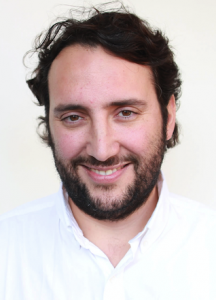
Meanwhile, the research by Juan Pablo Luna, faculty member of the Escuela de Gobierno and the Instituto de Ciencia Política PUC, explores the crises of democracies in Western societies. The study focuses on the cases of Bolivia, Chile, Ecuador, Paraguay, Uruguay, and uses the cases of France, Germany, and the United States as controls. “It is an opportunity to gain a deeper understanding of the type of crisis that contemporary democracies are experiencing today, placing emphasis on demand factors: what society expects from politics, rather than supply factors (such as political leadership, institutional factors) that are usually emphasized by recent literature,” explains Luna. The goal is to consolidate an approach that recovers traditional insights from economics and political sociology to understand the crisis of democracy and eventually its potential remedies.
Robust data structures and algorithms for large amounts of data
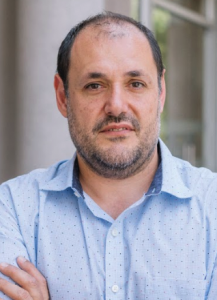
In “Compact Data Structures for Graph Databases,” Gonzalo Navarro, faculty member of DCC U. Chile and who was recently recognized as an ACM Fellow, delves into work on graph databases. “This type of database -among which is, for example, Wikidata- is becoming popular as a more flexible mechanism than the traditional relational model for representing information,” explains the researcher. This flexibility comes hand in hand with more powerful query languages, where answering these more complex queries is more resource-demanding. “My recent work shows that compact data structures, a field that has been consolidating over the past few decades and that combines information theory with data structures, can be a good answer to this problem. In the project, I propose to continue with this line of work, moving from proofs of concept to complete solutions that can fully replace current systems that manage graph databases. This involves using the functionality provided by compact structures to further improve the performance of current solutions, integrating them into real systems, extending the solutions to more general queries and query plans, allowing for dynamism, supporting graph analytics, and researching new compact structures that can offer even better performance than those I have considered so far.”
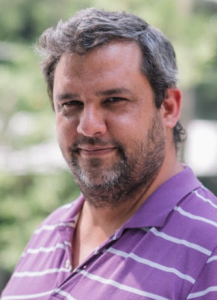
The challenge posed by the enormous amount of data currently being generated, for example in internet traffic, social networks, weather forecasters, or sensors, is the focus of the research by Cristian Riveros, faculty member of DCC UC, “Constant-delay algorithms for Complex Event Recognition (CER).” CER systems arise as a response for the fast processing of large data streams, providing timely responses to queries made to the systems. This project proposes to study the algorithms used in these systems, their feasibility and limits, in order to define when they can be used and when they cannot.
The diversity of projects and topics addressed by this research is a reflection of the universality of the work with data being carried out at the institute, as well as the interdisciplinarity actively promoted within the community of researchers. Fondecyt funds focus especially on projects that lead to new knowledge or applications, so these awards also recognize the academic and social value of the selected research.