
Ricardo Baeza-Yates comments on artificial intelligence regulation affecting human beings
Last month, the researcher and expert in data science and artificial intelligence (AI), Ricardo Baeza-Yates, received a call he was not expecting: he was informed that he had been chosen, along with other experts, to join the Artificial Intelligence Advisory Council of the Spanish state. This is a consultative body whose role is to advise and provide independent recommendations on artificial intelligence, and specifically, the measures that should be adopted to guarantee a safe and ethical use of this technology, which is so much in vogue these days.
According to the newspaper Cinco Días, belonging to El País de España, “this new body, chaired by the third vice president of the Government and Minister of Economic Affairs and Digital Transformation, Nadia Calviño, is made up of 18 Spanish experts ‘of the highest international prestige in the field.’ As explained by the Executive in a statement, this council will contribute to the finalization and launch of the National Artificial Intelligence Strategy,” the publication states.
In this interview, Baeza-Yates, senior researcher at the Millennium Institute for Foundational Research on Data (IMFD) and Full Professor at the Departamento de Ciencias de la Computación (DCC) at the U. de Chile, explains the scope his work could have under this council and the safeguards that must be taken regarding the use of artificial intelligence, in processes and applications related to people and society in general.
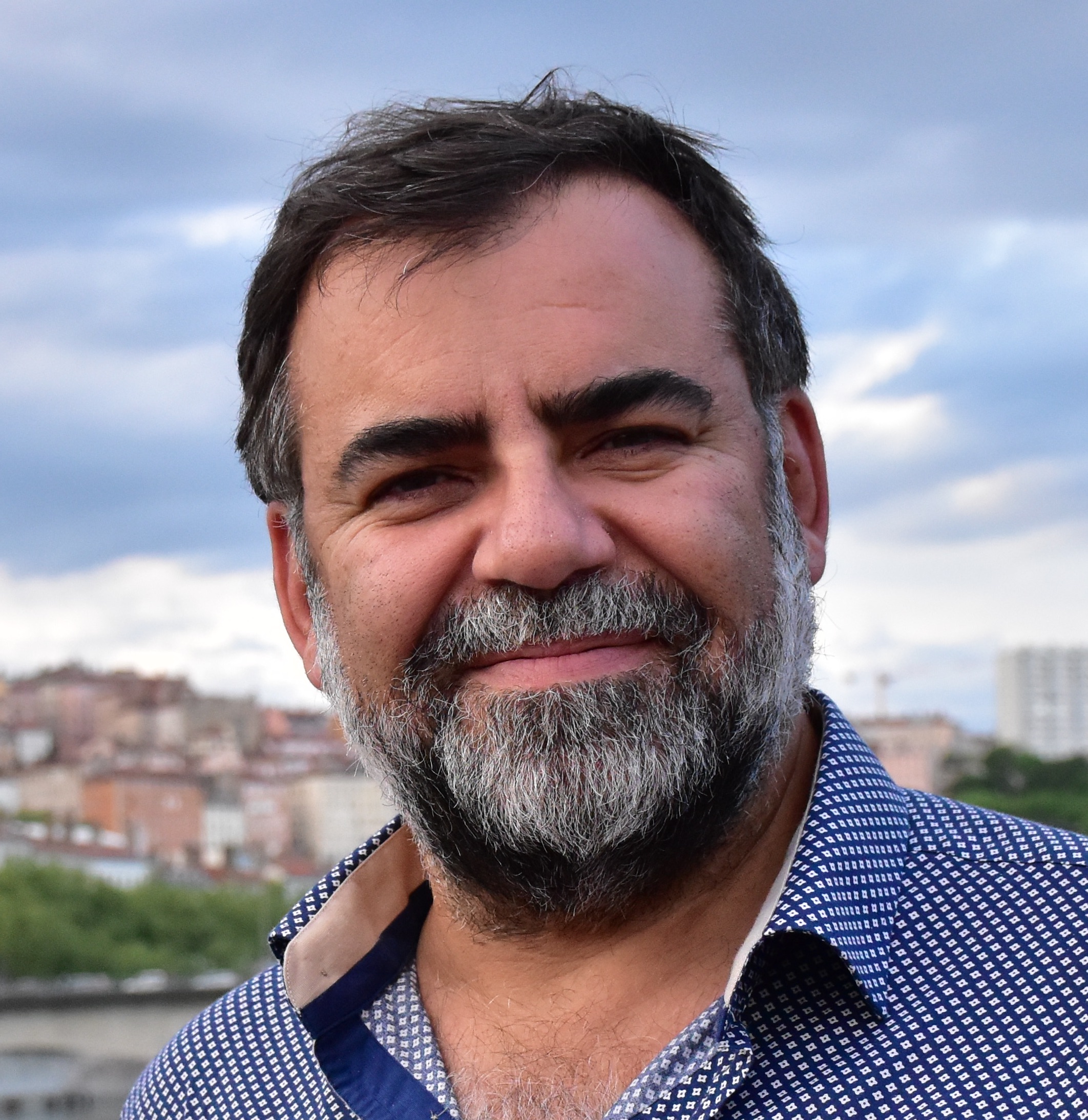
-Did this appointment take you by surprise?
-Yes, it took me somewhat by surprise because there are many qualified people in artificial intelligence in Spain. Also, to be on a State Council you need to be Spanish. I meet this requirement, although through naturalization and not by birth, since Chile and Spain have a dual nationality agreement.
-You were a professor at the Institución Catalana de Investigación y Estudios Avanzados (ICREA) and founder of the Web Science and Social Computing Group at the Universitat Pompeu Fabra, in Barcelona. Does this prior work partly explain your appointment?
-I suppose so. I arrived in Catalonia in 2004 thanks to ICREA, a talent attraction program belonging to the Catalan government. Then, my main contribution was having led the European research laboratory of Yahoo Labs in Barcelona between 2006 and 2015, one of the most important computing industrial laboratories that Spain has had. I also suppose they considered my scientific track record, since I am one of the three most cited computer scientists in Spain, and the most cited, Francisco Herrera, is also part of the council. Finally, in 2018 I won one of the Spanish computing awards called Angela Ruiz Robles for my career in applied research and technology transfer.
-How relevant is it for you to be part of this advisory council that will provide independent recommendations to guarantee a safe and ethical use of AI?
-I believe it is a recognition of my scientific career and it is also very aligned with one of my current research topics, which is responsible and ethical AI. This is especially true in web systems where there is a closed loop that learns from interactions with its users, such as search engines or recommendation systems. These systems can magnify the cognitive biases of the people who influence the system’s learning, keeping in mind that it is the system itself that generates the elements with which people can interact. In part, the system is building the future of interaction, since it helps generate the data from which it will learn.
-Can you give us a preview of the most important points to keep in mind, in this regard, with the use of AI?
-The first aspect is the ethical one, since there are applications that should not be used if they can cause harm to individuals, or to society in general. This ranges from military applications to personnel selection, where women or specific minorities can be discriminated against. A classic example is the use of facial recognition to identify criminals or homosexuals, which in a certain way “rediscover” the pseudoscience of phrenology, very popular in the 19th century, which explained personality traits, as well as supposed criminal tendencies, based on the shape of the skull, head and facial features.
Another example is security systems that discriminate against people of certain races. For this reason, large companies such as Amazon, IBM and Microsoft have recently decided to freeze the sale of this type of software. Along the same lines, recently the technology policy committee of the Association for Computing Machinery (ACM), of which I am a member of the AI and algorithms subcommittee, made a similar recommendation. ACM is the most important association of computing professionals and scientists in the world, with dozens of publications and resources that promote computing as a science and a profession.
The second aspect is equality, equity and justice for applications that are indeed ethical. This includes avoiding gender or minority discrimination in applications that make decisions about people, or discrimination against products or services in digital markets. These are just two examples that do not include other data, algorithmic, or usage biases, like the cognitive biases mentioned earlier, that can affect AI systems.
-How do you see the situation in Chile, where a commission was created for this topic?
-Chile is a bit behind on this issue. Spain, for example, already has an strategic AI plan that was published in 2019. I participated in the committee that designed the Catalonia AI plan, which was published at the beginning of this year. As far as I know, contributions are currently being received in Chile for a future artificial intelligence plan. But the 10-person committee is more focused on the impact of AI on the economy, and not on its safe and ethical use. In fact, there are only two AI researchers proper, and two others working on related topics.
-What impact could this committee’s work in Spain have on other European Union countries? Could the experience and recommendations they gather be useful for countries like Chile?
-All efforts within the European community are fairly well coordinated. The European Union has already published many AI recommendations that are useful for the whole world and that serve as the initial input for the work of this new council, whose main task will be to support the implementation of the Spanish strategic plan. I hope we can generate public documents that are useful not only for Chile, but for other Latin American countries as well. In any case, I am always available to contribute with my knowledge and experience. For example, I am currently a member of the advisory council that the Inter-American Development Bank (IDB) has for the responsible use of AI in Latin America and the Caribbean (fAIrLAC).
-What is coming in this AI topic in the future?
-I hope that AI applications that affect human beings will be like medications: regulated to ensure that they are ethical, fair and safe. This regulation can vary from country to country because ethics depends on culture, just as the definition of what is fair is not yet universal. In 2017, ACM published the seven properties that responsible and transparent algorithms should have. However, most algorithms do not meet even one of them.
Even in applications that do not need to be regulated, I believe responsible algorithms will make a difference in the adoption of certain products, similar to how it happens with organic food today. To achieve this, it will be necessary for companies to share anonymous data so that neutral institutions can validate claims, or audit these applications, in the same way that laboratory studies can be done today with food samples.
On this topic, IMFD can play a very important role in Chile as an independent institution, to audit and certify any software that makes or recommends decisions, especially those that affect people or society.