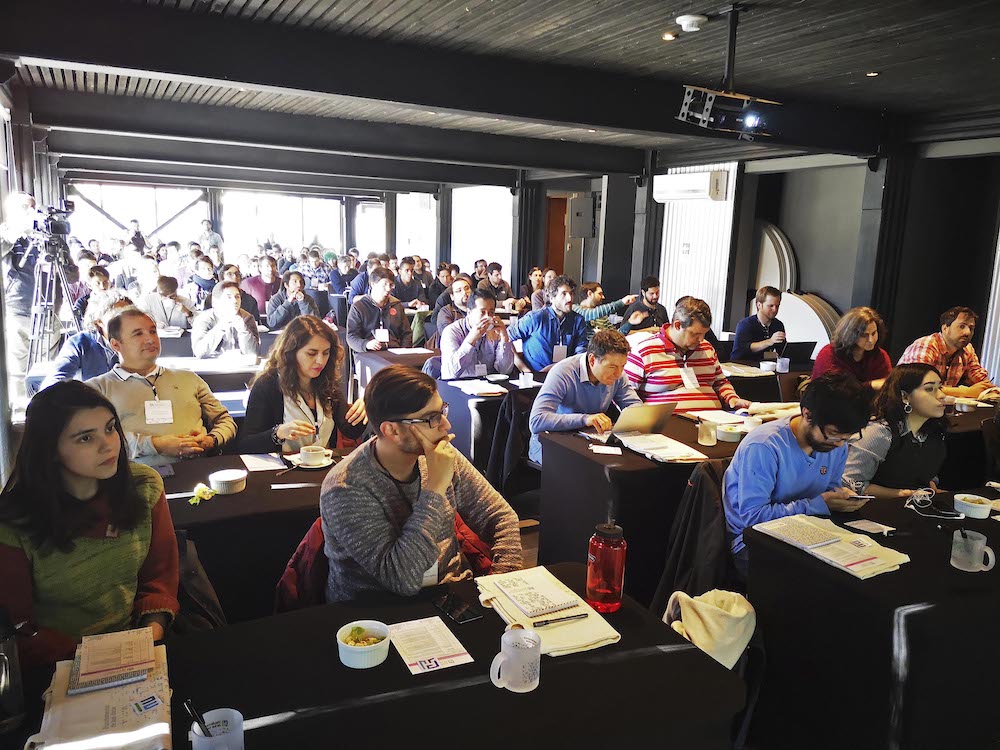
More than 100 researchers gather at the 1st IMFD Workshop
Experts from the fields of computing, statistics, political science, and communications gathered at the I Workshop of the Millennium Institute for Foundational Research on Data (IMFD), held in Machalí in August 2018.
The meeting was attended by nearly 70 undergraduate and graduate students from the diverse areas of knowledge that make up the institute, who—together with more than 30 researchers—worked collaboratively on analyzing and finding solutions to topics ranging from phenomena in social networks to the analysis of algorithms applied to computing.
An alliance with an interdisciplinary spirit
“The main goal of this first workshop was to introduce all the members of the institute to the flagship projects through which interdisciplinary research is being carried out, with an eye toward their potential application and development,” said Marcelo Arenas, Full Professor at the Department of Computer Science of Universidad Católica and Director of IMFD.
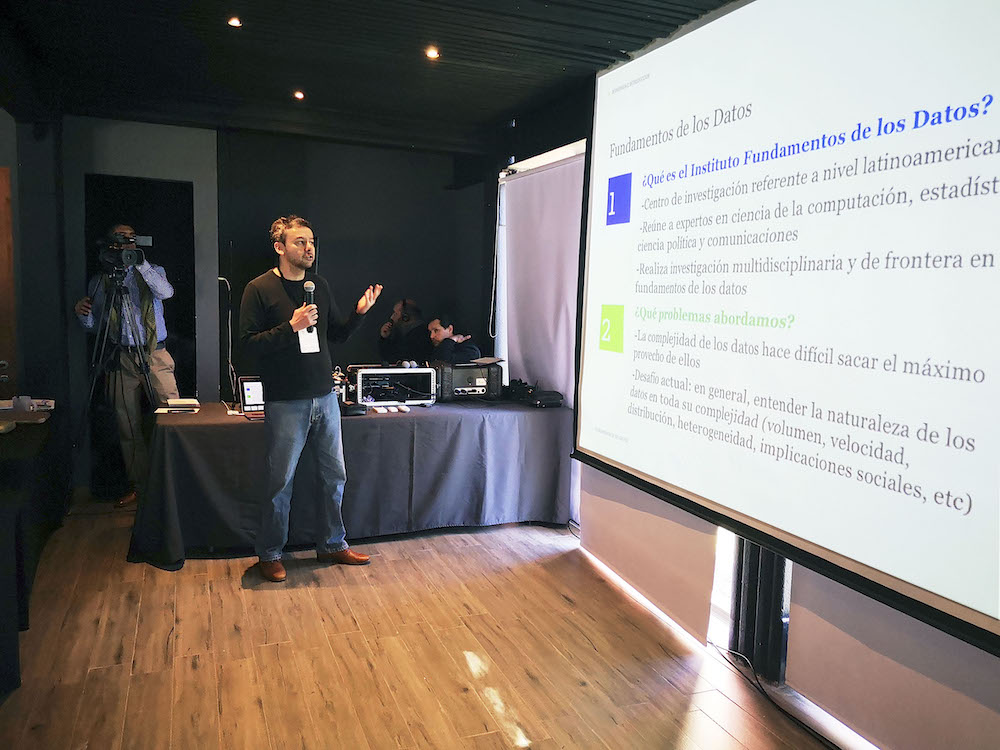
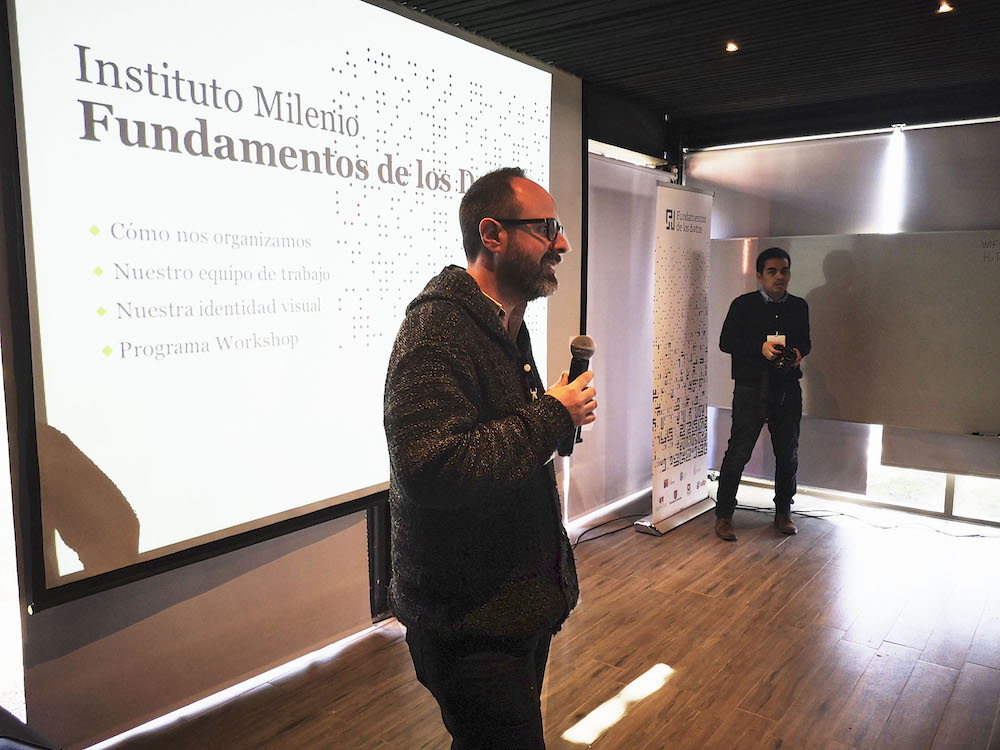
For Pablo Barceló, one of the most interesting elements of this workshop was the presentation of the units that support the institute in the areas of Administration, Communications, and Outreach: “We feel we have a project that we are approaching with a forward-looking vision in every dimension, and we place particular importance on our connection with society. Data is the future, and citizens cannot be left out of this debate,” he stated.
Innovation and Transfer
While the focus of the Millennium Institute for Foundational Research on Data is to conduct frontier science in the field of data, one of the researchers’ major concerns is to strengthen ties with the public sector as well as with private organizations that express urgent needs regarding data.
Jorge Pérez, Scientific Director of the Innovation and Transfer Office and professor of Computer Science at Universidad de Chile, commented that “we are training human capital in data science at the highest level, and Chile has urgent needs to address in this field; building a bridge between both points seems the most logical step if we want our country to incorporate these techniques into its management.”
Problems in a minute
One of the sessions that generated the most debate was “The Stone in the Shoe,” a two-hour segment in which any workshop participant could present—in one minute—a problem they were struggling with in their research.
“The first goal was to generate interdisciplinary sub-projects led by young researchers, with participation from students of all disciplines, and that goal was met beyond expectations, since more than 20 problems were presented, which we will continue working on and refining throughout the year,” says Juan Reutter, Director of Academic Training and Networks and professor at the Department of Computer Science of Universidad Católica.