
Technology and memory: IMFD joins discussion on AI and human rights archives
The event was organized by the National Human Rights Institute (INDH) and brought together specialists from different disciplines to reflect on the ethical and methodological challenges posed by the use of these technologies. A publication prepared by the INDH and the Millennium Institute for Foundational Research on Data (IMFD), based on the analysis of more than 46,000 records from former Colonia Dignidad, was also presented.
The National Human Rights Institute (INDH) held the discussion panel “Archives for the Future: Risks and Opportunities of Artificial Intelligence in the Search for Truth and the Right to Memory,” an event that brought together specialists from different disciplines to discuss the use of new technologies in the management and analysis of human rights archives.
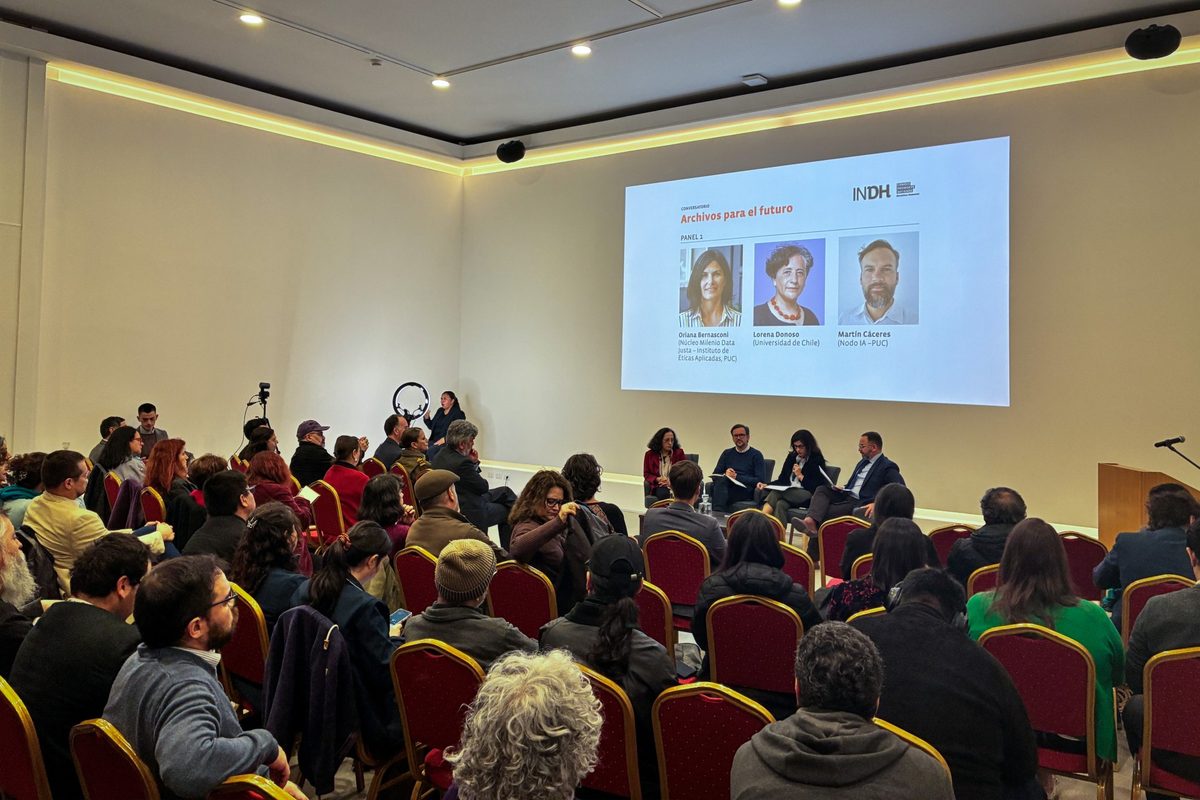
The event was held at the Centro de Extensión of the Pontificia Universidad Católica de Chile and featured two panels: the first was dedicated to reflecting on the ethical and methodological challenges posed by the use of artificial intelligence, while the second focused on the presentation of a publication jointly developed by the INDH and the IMFD on the use of technologies in archives of the former Colonia Dignidad.
The director of the INDH, Yerko Ljubetic, stated that “the debate on artificial intelligence, which is filling us with uncertainty and concerns all over the world, converges on the need for governance and regulation that must be based on the dignity of people. On that basis, human rights must play an essential role in the pursuit of regulations and technology management, so that it serves people rather than working against them.”
Panel 1: Reflection on Ethical and Methodological Challenges of AI Use
The first panel featured Oriana Bernasconi, associate professor at the Pontificia Universidad Católica de Chile and director of the Millennium Nucleus Data Justa; Lorena Donoso, associate professor at the Facultad de Derecho of the Universidad de Chile; and Martín Cáceres, director of Nodo IA at the Pontificia Universidad Católica de Chile.
Researcher Oriana Bernasconi shared part of the experience of using these tools in Colombia, where efforts are underway to locate 136,000 missing persons through the use of technology, drawing on external databases and information gathered from the communities themselves. “Artificial intelligence has been used to narrow down territories, work with images of missing persons to identify what their current appearance might be, and review how the territories where the disappearance took place have changed,” she explained.
Lorena Donoso stated that “it is very important to coordinate the protection of human rights and their advancement in this technological society, with the benefits that artificial intelligence can bring, that is, to safeguard human beings while also taking advantage of the benefits of artificial intelligence. To achieve that, we need to build legislation that is coherent and protective of peoples”.
Meanwhile, Martín Cáceres noted that “it may seem that there is a contradiction between artificial intelligence and human rights. However, if it is properly governed, artificial intelligence can bring us closer to the truth. To achieve that, we have to meet certain conditions, and in that way we can gain both a light toward the past and hope for what we can do with it in the future”.
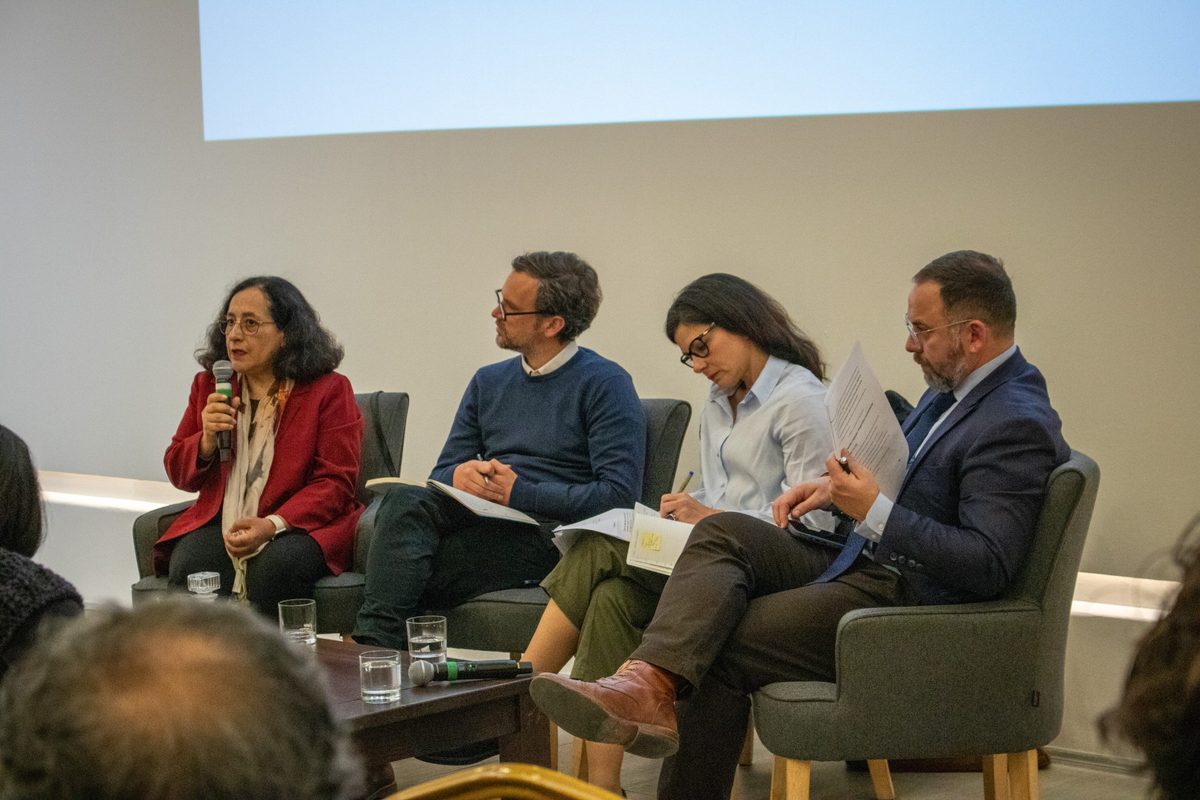
Panel 2: An Experience Analyzing the Records of the Former Colonia Dignidad
During the second panel, the publication “Use of Computational Technologies in Memory Archives: Massive Processing of the Information Contained in the Records of the Former Colonia Dignidad” was presented, gathering the experience of collaboration between INDH and the Millennium Institute for Foundational Research on Data (IMFD). The presentation was given by Matías González, from the INDH’s Memory, Archives and Documentation Area, and Camila Rojas, a researcher at IMFD.
The work arose from the collaboration agreement signed between the two institutions in 2024 and had as its starting point the more than 46,000 records of the former Colonia Dignidad received by INDH, as part of its function of analyzing and systematizing documentation related to human rights violations. These documents contain information about people and organizations, political background, press clippings and monitoring records, and constitute a relevant source for historical research and the processes of memory, truth and justice.
Given the volume of this archive and the difficulty of manually carrying out an in-depth analysis of its content, INDH and IMFD developed a project to process this documentation using computational tools. The goal was to advance in identifying people, places, events and organizations, as well as establishing connections between the data.
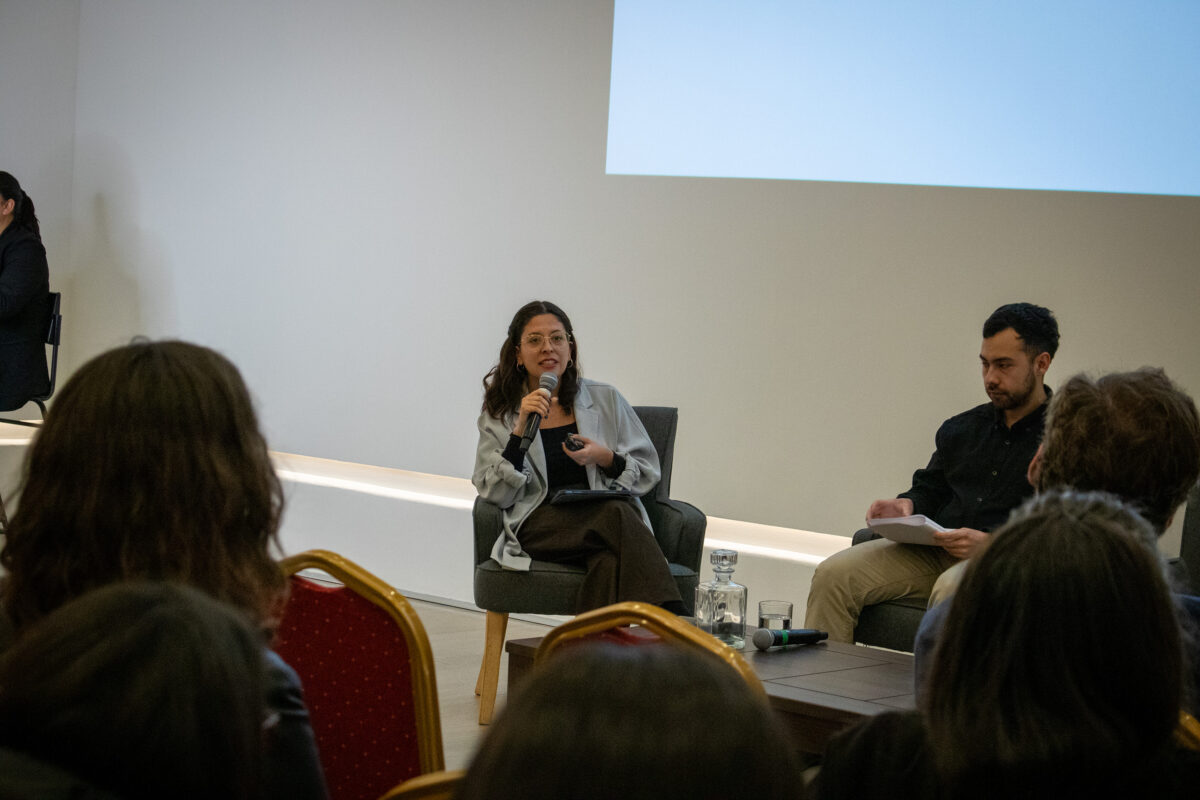
The work brought together methodologies from computer science, sociology, archival science, and law. While the IMFD contributed computational tools based on artificial intelligence to automate the analysis of the content of the records, the Memory, Archives and Documentation Area of the INDH contributed its expertise in archives, memory, and human rights, taking part in reviewing the results and providing sources to complement, contextualize, and cross-check the processed information.
Leonardo Urrutia, head of the Memory, Archives and Documentation Area of the INDH, explained that “the ethical use of these tools is highly relevant because the records contain personal data and background information on possible victims of persecution, forced disappearance, or other forms of violence in the context of the dictatorship. The ethical challenge involves taking responsibility for the way results are produced, reviewed, and communicated”.
For her part, Camila Rojas, researcher at the Millennium Institute for Foundational Research on Data, commented: “Computational tools make it easier to process this information and make navigation of these archives available, but the more substantive questions about what we want to do with this archive, once we have this information organized, still depend on human expertise”.
The experience seeks to explore the possibilities offered by these technologies with the aim of contributing to memory, reparation, and justice regarding human rights violations that occurred during the dictatorship. At the same time, the collaboration opens up the possibility of applying this type of tool in the future to other archives that could contribute to the search for truth and the clarification of the facts.
The recording of the full event is available on YouTube:
—
Source text: INDH and own editing.