The impact of graphs on generative AI: IMFD's prominent participation in the International Semantic Web Conference ISWC-2025
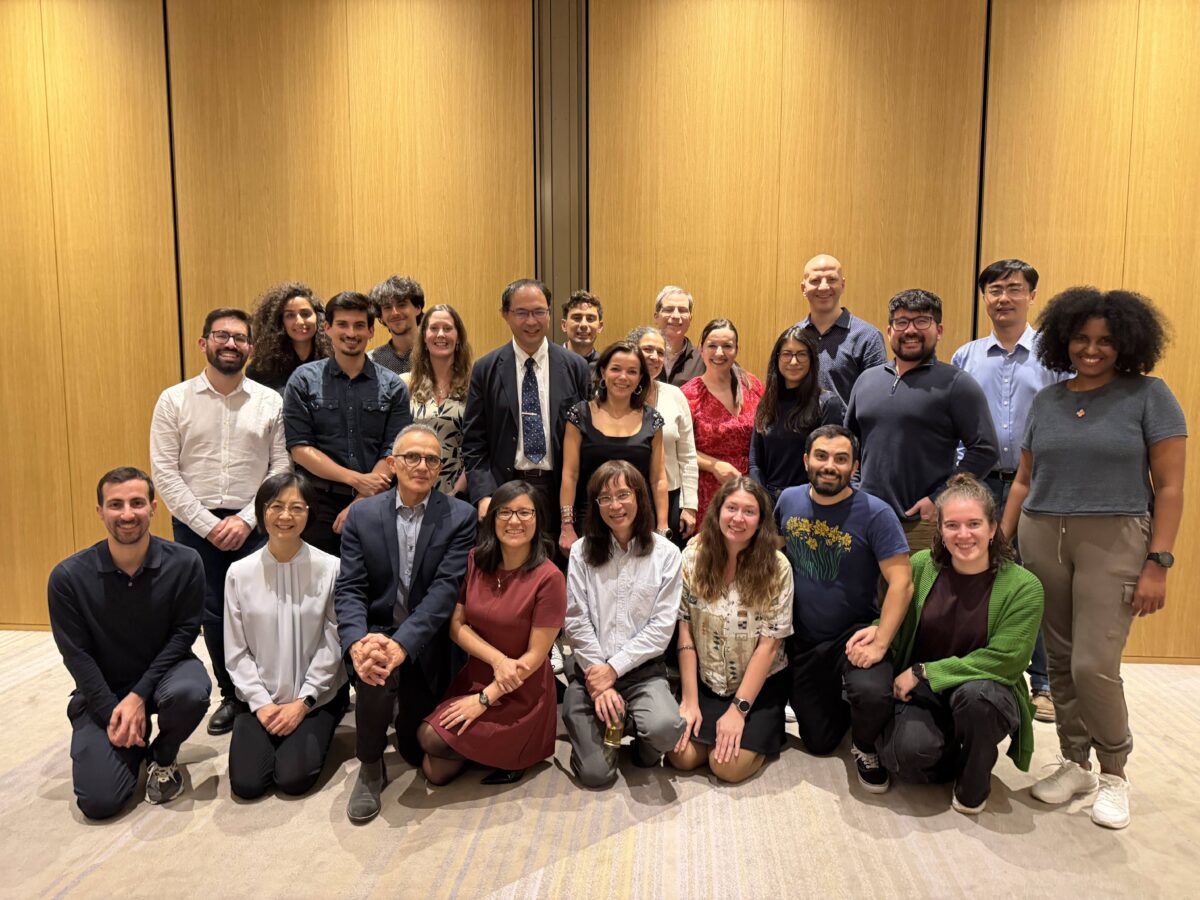
The latest edition of the International Semantic Web Conference (ISWC), the world's most important conference on the Semantic Web, featured outstanding participation by researchers from Millennium Institute Foundational Research on Data.
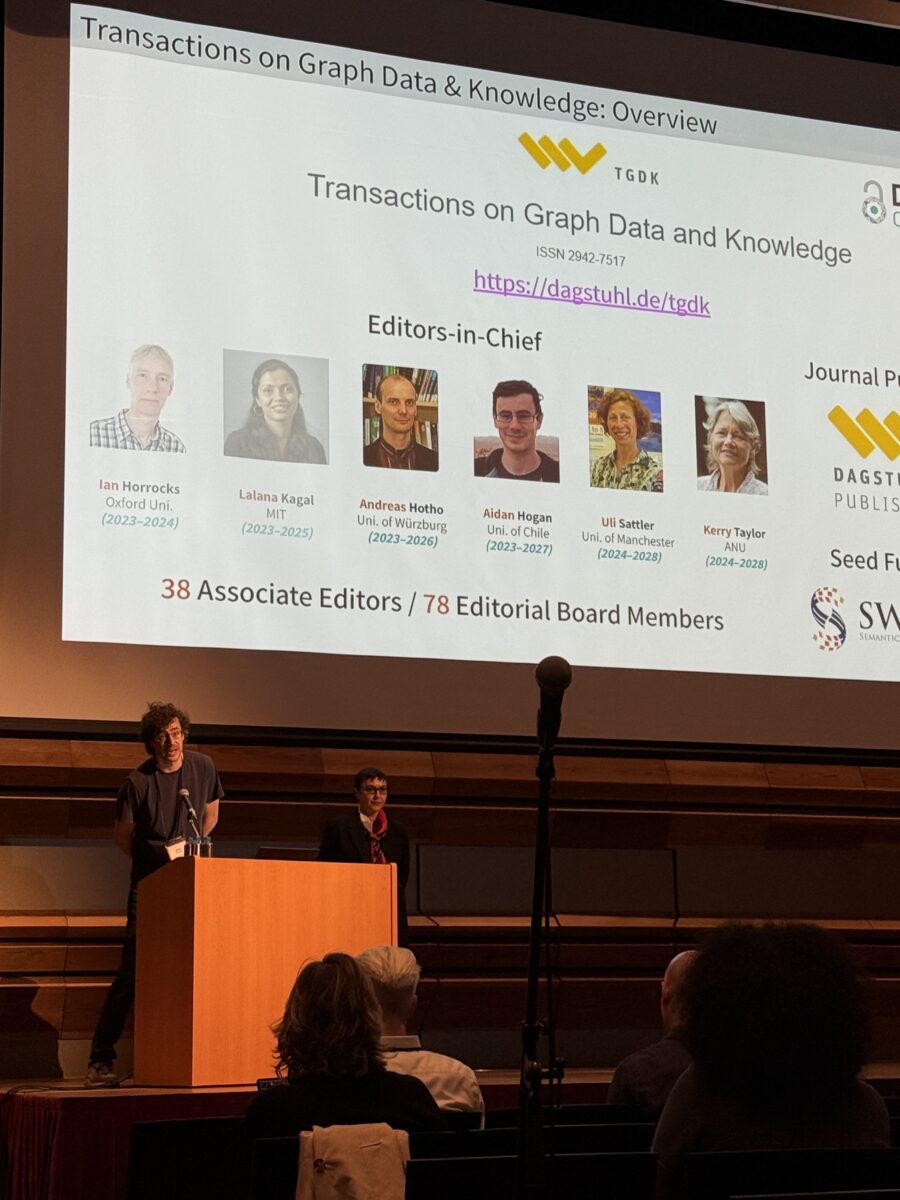
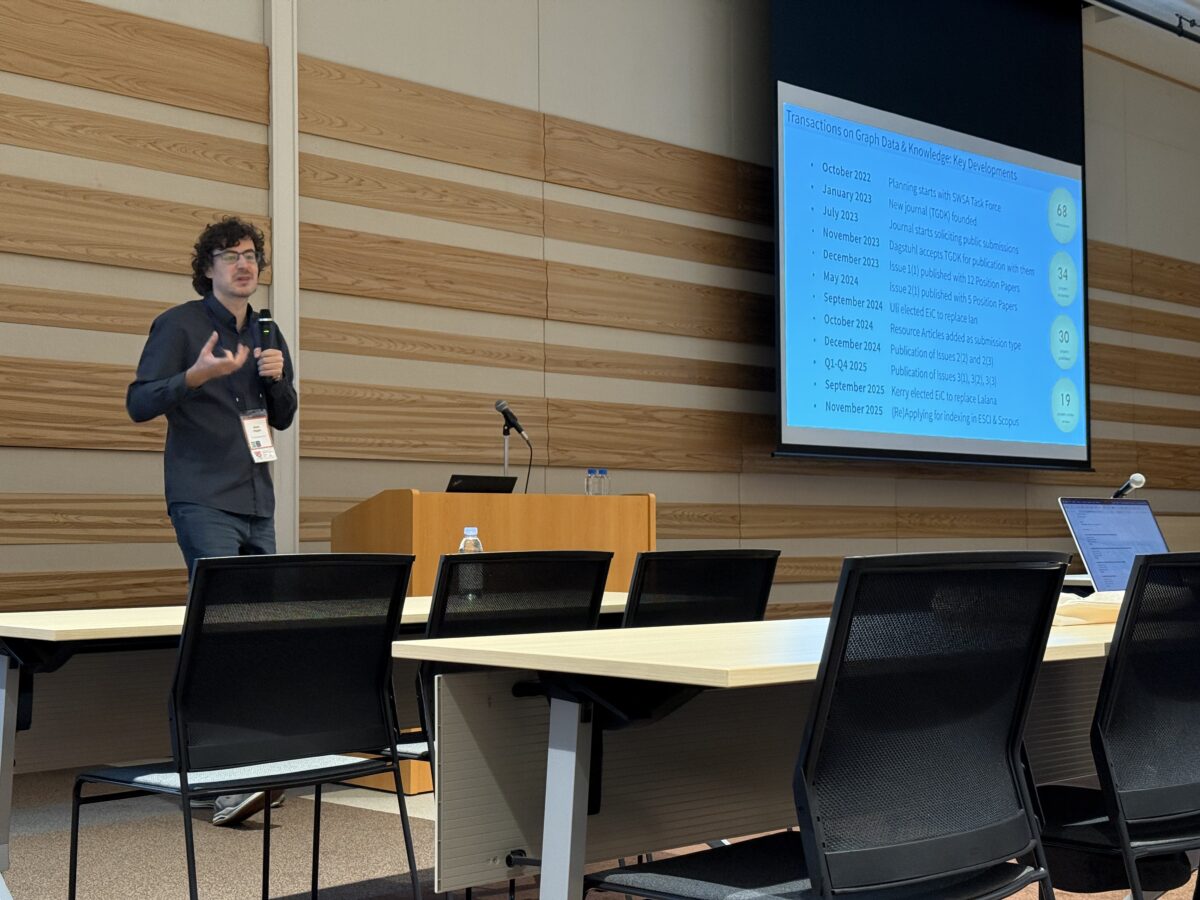
Sebastián Ferrada, an academic at the Data and Artificial Intelligence Initiative (IDIA), was part of the organizing committee and presented two papers selected in the demanding research and resources tracks. Meanwhile, Aidan Hogan, director of the Department of Computer Science at the University of Chile, chaired the session of TGDK (Transactions on Graph Data & Knowledge), a journal of which he is co-founder and Editor-in-Chief, and presented two research papers at the Wikidata Workshop.
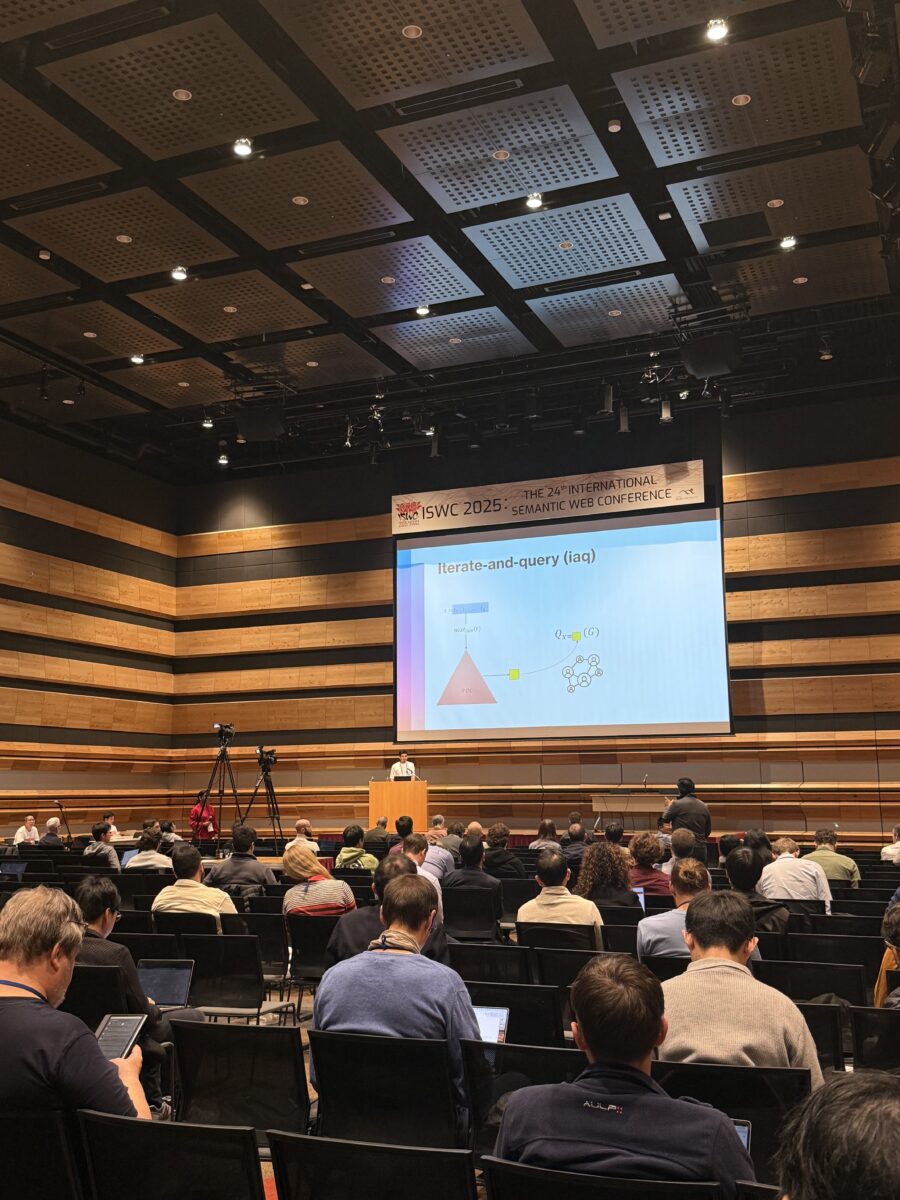
ISWC is considered the fundamental conference for the development of Knowledge Graphs, a key field for the development of more accurate and explainable AI systems, and is highly regarded internationally. This year, the standards were particularly high: only 20% of research track submissions were accepted, while 23% of resource track submissions were accepted.
This year, the award recognizing the 10-year impact of the work presented at ISWC was given to the RDFox team for the project "RDFox: A Highly-Scalable RDF Store": they launched a company to commercialize this engine, which was acquired by Samsung. Today, this technology, which originated from research in the area of the semantic web, is installed in every Samsung S25 phone. "This is a good example of the kind of impact the ISWC community can have, and of the technology transfer that can be leveraged from research articles to People, Peoplesays Aidan Hogan.
The 24th International Semantic Web Conference (ISWC 2025) was held at the Nara Prefectural Convention Center, Japan, from November 2 to 6, 2025. The conference covered theoretical, analytical, and empirical topics in the Semantic Web, knowledge graphs, and Linked Data technologies. It also included practical applications and software tools.
Organization and spotlight
Sebastián Ferrada, as part of the organizing committee, coordinated the creation of the official conference proceedings, a task he describes as key to giving visibility and traceability to global research in Semantic Web, which can be accessed at https://link.springer.com/book/10.1007/978-3-032-09527-5.
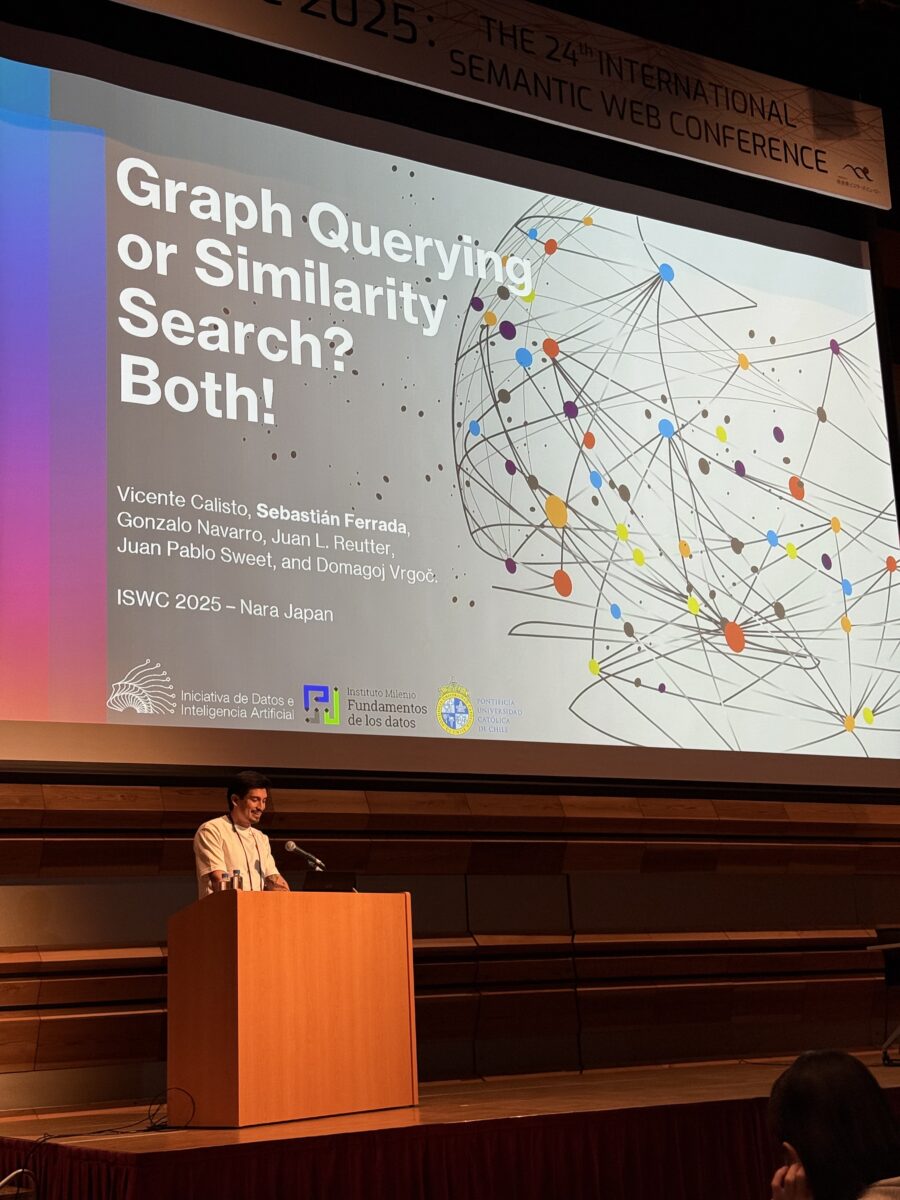
The IDIA researcher and academic presented two papers, one of which was "Graph Querying or Similarity Search? Both!", which combines two worlds that were historically resolved separately: semantic queries in graphs and similarity searches. The IMFD team: Vicente Calisto, Juan Sweet, Juan , and Domagoj Vrgoc (both academics at DCC UC) and Gonzalo Navarro from DCC UChile, developed two algorithms that outperform current graph database managers when dealing with large volumes of results.
Ferrada explains that this type of query is particularly useful in multimedia graphs, discourse analysis, or modern methods such as Graph-RAG for artificial intelligence agents, which combine language models with structured data. The article was selected as a spotlight paper by the conference, generating significant interest and impact among the audience of more than 150 attendees.
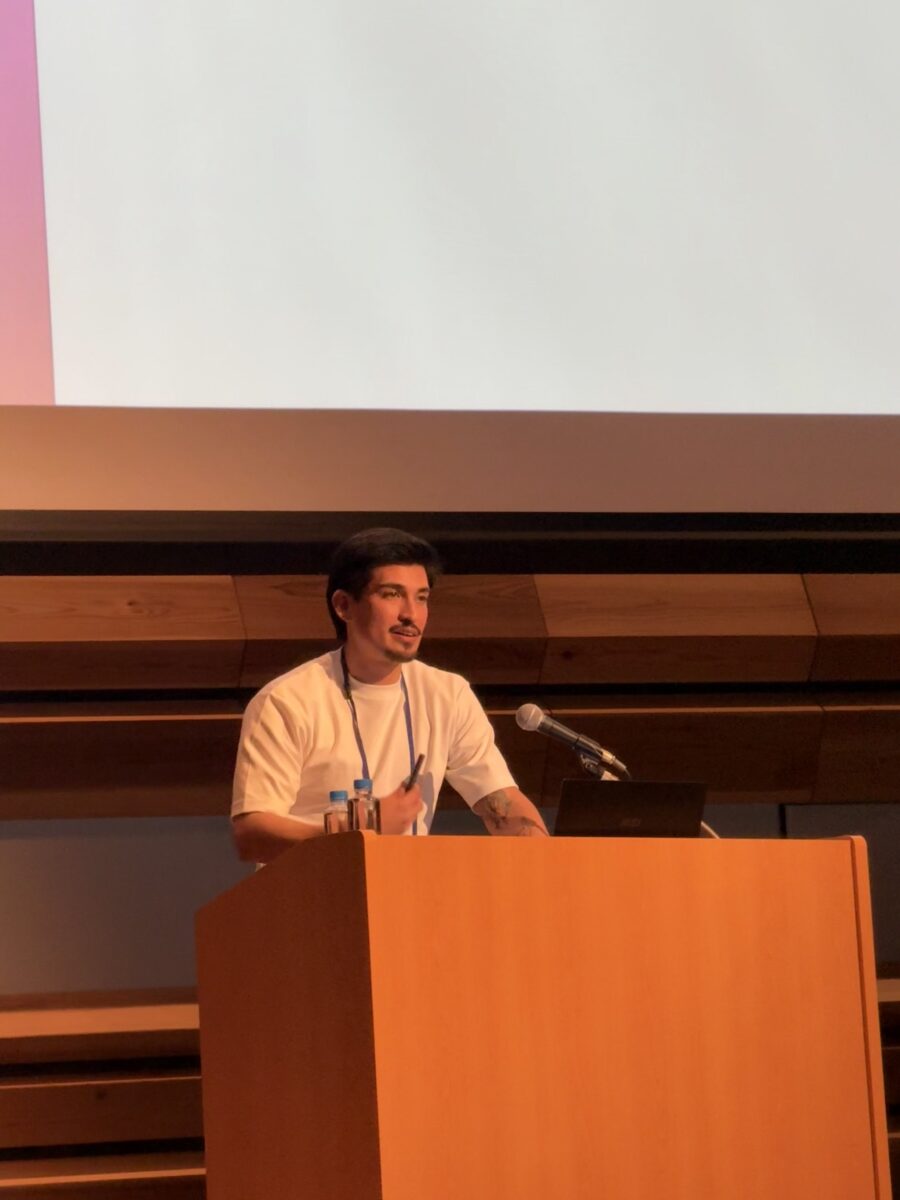
Meanwhile, in "COTTAS: Columnar Triple Table Storage for Efficient and Compressed RDF Management," developed in collaboration with Julián Arenas-Guerrero, an academic from the Ontology Engineering Group at the Polytechnic University of Madrid, he proposes a compressed and searchable format for storing RDF graphs using Parquet. Its contribution is significant: it manages to compress graphs to half the size of the current leading technique (HDT) and allows basic queries to be performed significantly faster.
Commitment to open science
Aidan Hogan, alternate director of Millennium Institute Foundational Research on Data director of the DCC U. Chile, chaired the session on the journal TGDK (Transactions on Graph Data & Knowledge), a journal of which he is co-founder and Editor-in-Chief. This journal is open access and free of charge, and 16 articles published by the journal were presented at the session. "TGDK represents the commitment of both the Department of Computer Science at the University of Chile and the Millennium Institute Foundational Research on Data to facilitating 'open science,' and the positive reception it has received speaks to the value that the community places on this initiative," the researcher notes.
The Wikidata Workshop was held at ISWC-2025, which has established itself as a key forum for addressing the main challenges associated with Wikidata, including data quality, multilingualism, and the dynamics of collaborative knowledge graphs. The workshop placed special emphasis on the intersection of Wikidata and Generative Artificial Intelligence (Generative AI), bringing together researchers and professionals with the aim of fostering discussions on the role of knowledge graphs in an AI-driven world.
This space featured the demo paper DataQuest: Web Augmentation with Wikidata, by Diego Pizarro, DCC University of Chile & IMFD; Sergio Firmenich, Loyola University Andalusia; and Aidan Hogan, DCC, University of Chile & IMFD. This work consists of a browser extension designed to enrich web browsing by harnessing the power of the Wikidata knowledge graph. The relevance of DataQuest lies in its ability to dynamically contextualize web content. Specifically, when a user visits a web page in their browser that contains an external identifier previously registered in Wikidata, the DataQuest extension queries the graph to retrieve information about the associated entity.
The information extracted from Wikidata is used for two key purposes: to display additional details about the entity to the user and to guide the next navigation steps. This approach transforms passive navigation into an augmented experience with structured and semantic data.
At the same workshop, Alberto Moya Loustaunau and Aidan Hogan, both researchers at IMFD and the Department of Computer Science at the University of Chile, presented QAWiki: A Knowledge Graph Question Answering & SPARQL Query Generation Dataset for Wikidata, an article that was recognized as Best Paper. This article describes a dataset that is fundamental to the task of answering natural language questions about knowledge graphs (KGQA). The researchers present QAWiki, a multilingual, hand-curated dataset designed specifically for the Knowledge Graph Question Answering (KGQA) challenge and the generation of SPARQL queries on Wikidata.
The dataset consists of 526 questions and is exceptionally valuable because it is multilingual, presenting each question in English and Spanish, including paraphrased versions and detailed annotations of Wikidata entity mentions and relations. This resource is crucial, as it can be used as an evaluation and training dataset for KGQA and query generation systems.
The IMFD team has strengthened its commitment to open science by hosting QAWiki on a Wikibase instance, enabling collaborative editing and refinement by the international community.
The immediate usefulness of QAWiki has already been demonstrated with illustrative experiments using advanced language models such as GPT-4o to generate SPARQL queries on Wikidata. "The quality and relevance of this dataset have motivated the team to plan an international competition based on QAWiki to promote research in KGQA, which we are preparing and will present to the international community," says Aidan Hogan.
The IMFD's participation in ISWC 2025 highlights the capacity of research generated in Chile to directly influence data management technologies worldwide. The content of the presentations is available in the ISWC 2025 proceedings.