
Successful series of talks on ChatGPT
June 2023.- With the goal of providing a broad and critical perspective on the development and possibilities of language models, specifically regarding the latest technological advances in the field of artificial intelligence and the major impact generated by ChatGPT, during the month of May, the research group Representations for Learning and Language (ReLeLa), from the Departamento de Ciencias de la Computación de la Universidad de Chile (DCC U. Chile), together with the Millennium Institute for Foundational Research on Data (IMFD) and the Centro de Inteligencia Artificial (CENIA) held a talk series “The (Im)possibilities of Language Models”, which featured several talks and a discussion panel.
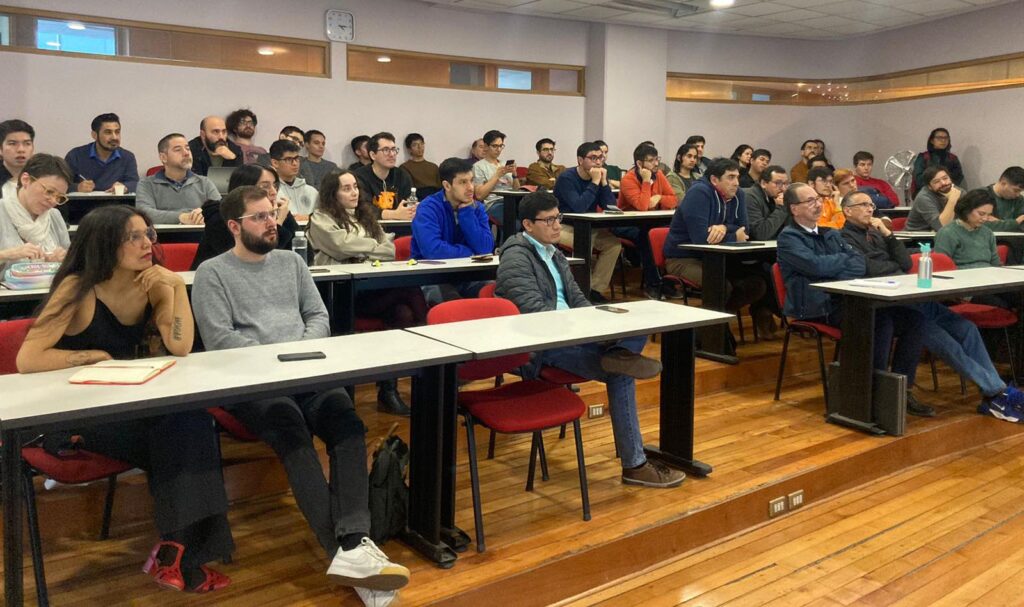
The events held in this series were: “Can ChatGPT conquer the world? Human language vs. machine language”, with Jorge Ortiz, graduate student at DCC U. Chile and IMFD researcher; “A Journey Through Language Models: from Shannon to GPT-4”, with Felipe Bravo-Márquez, academic at DCC U. Chile, and IMFD and CENIA researcher; “Current ethical challenges in light of the socio-technological revolution of GPT-3 and 4”, with Gabriela Arriagada, researcher at the Pontificia Universidad Católica de Chile (UC) and (CENIA); “ChatGPT in Industry: possibilities and projections”, with Jorge Pérez (CERO.AI) and Manuel Peña (Fintual); and the Discussion Panel: “Scope and limits of language models”, featuring Claudio Gutiérrez, academic at DCC U. Chile and IMFD researcher, as moderator, and the participation of Cristián Buc (CENIA), Magdalena Saldaña, academic at the Facultad de Comunicaciones de la P. Universidad Católica de Chile and IMFD researcher, Martín Cáceres, director of the Centro de Innovación del Ministerio de Educación de Chile, and Felipe Tobar, from the Iniciativa de Datos e Inteligencia Artificial (IDIA UChile) and the Centro de Modelamiento Matemático de la Universidad de Chile (CMM).
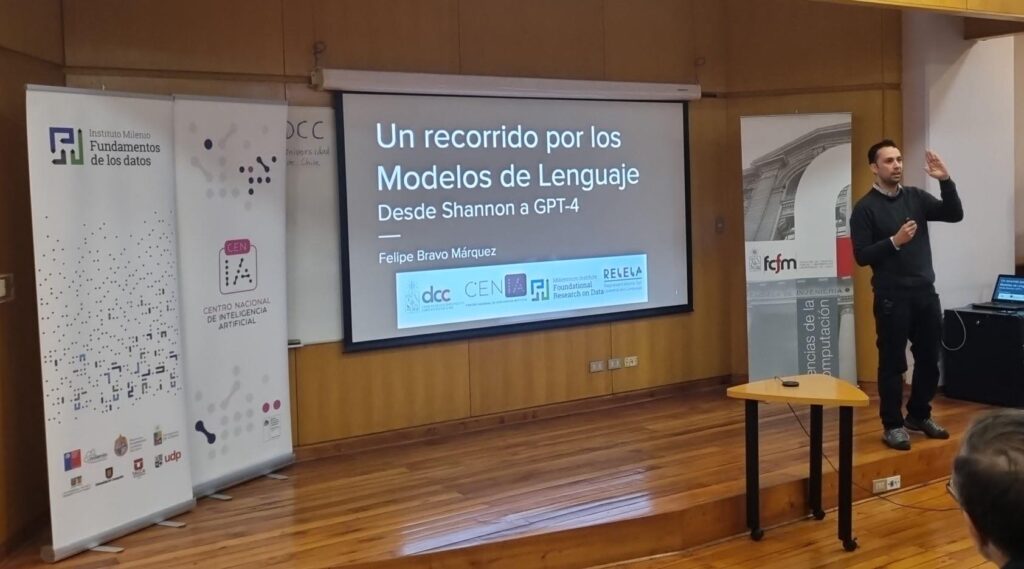
For Felipe Bravo Márquez, academic at DCC U. Chile and IMFD researcher, this series was very beneficial. “We managed to connect with the community, with attendance from many people, from industry, students, people from research centers, faculties, etc., so from the standpoint of impact within the field, the result was very valuable. It is also important to highlight that we managed to put DCC U. Chile at the center of a broad discussion about the impact of this technology; it is good to show that we have strong groups in this area here, such as RELELA, a strong group in Deep Learning,” he said.
Among the outlooks that exist on this topic, Felipe highlighted that for the future, several angles must be analyzed, such as centrality and the ethical issue, among others. “We also need to consider how these technologies affect the way software is built or applications are created. At the same time, it is important to analyze the topic of agents, programs that use these language models to solve complex tasks such as, for example, scheduling a doctor’s appointment, buying tickets, etc.”
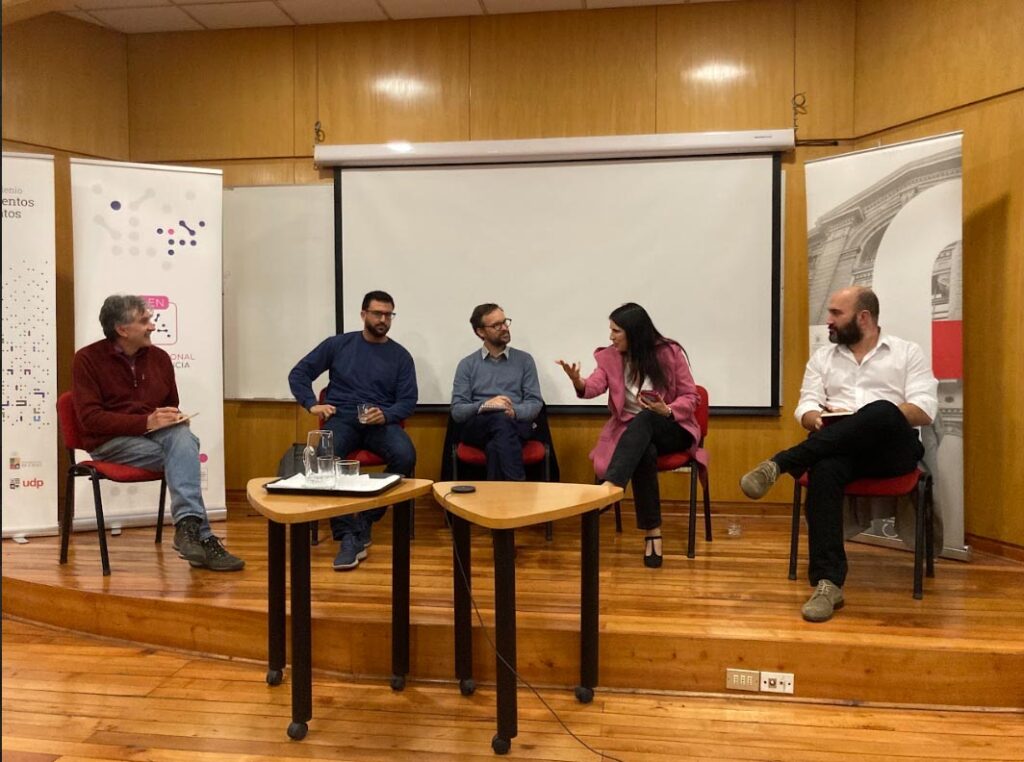
To conclude, the DCC professor noted that they will continue holding this type of event, since there are still topics pending, such as the legal issue. “I believe the people who took part in the discussion panel, Felipe Tobar, Cristián Buc in neuroscience, Martín Cáceres in education, and Magdalena Saldaña in communications, are people who could easily have given an entire talk on their own. So there are many topics left to keep discussing and analyzing,” he concluded.
All the talks from this series can be viewed at the following link.
—
Source: Comunicaciones DCC U. Chile