
Gonzalo Navarro named Fellow of the ACM
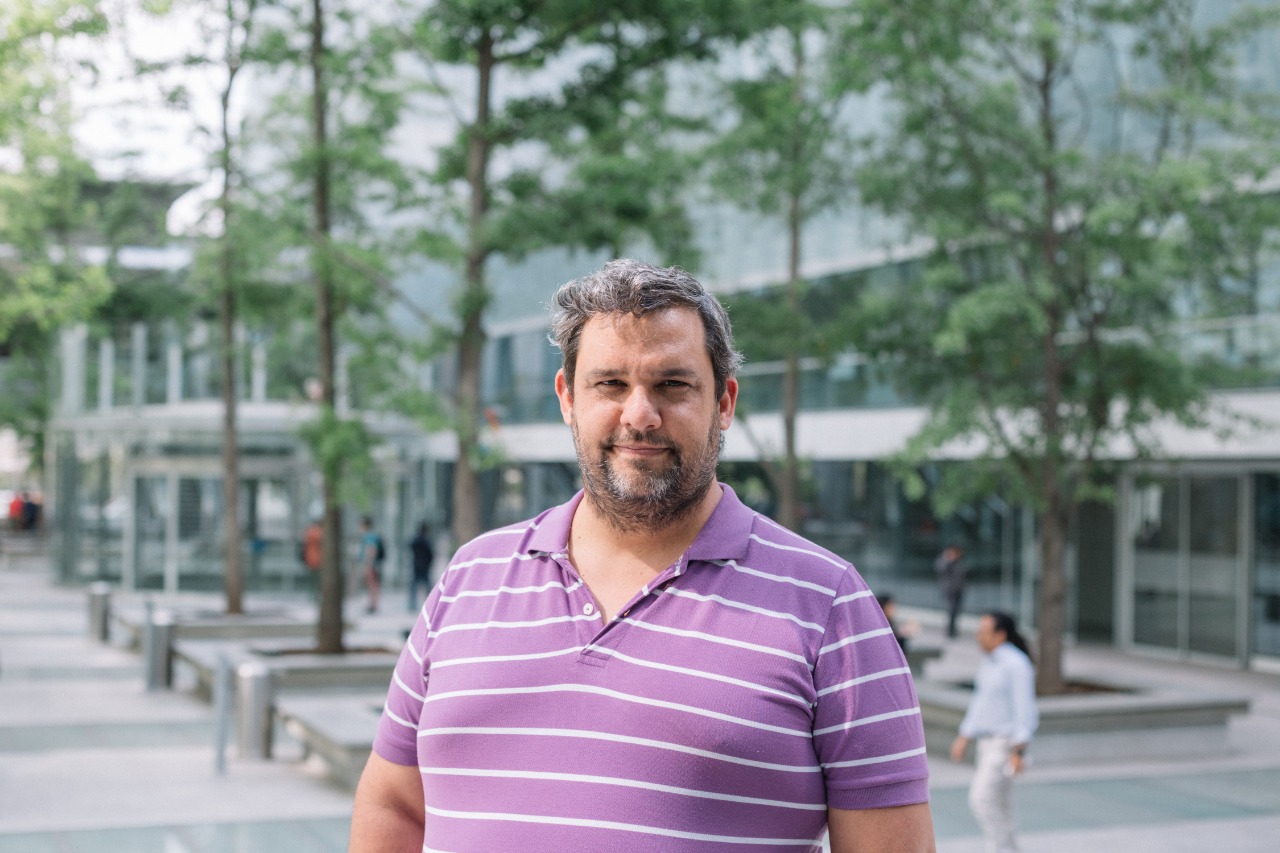
January 2023.- A new recognition for his research work was received by Gonzalo Navarro, academic at the Departamento de Ciencias de la Computación de la Universidad de Chile and researcher at the Millennium Institute for Foundational Research on Data (IMFD), who was distinguished as a Fellow of the Association for Computing Machinery (ACM), the leading professional computing society in the world. “The Fellow distinction is granted to approximately 1% of its members, based on their track record, quality, and impact of their research. For me, this is an extremely important recognition of the research I have carried out throughout my career,” highlighted IMFD researcher Gonzalo Navarro.
“The most important advances in computing are often the result of a collection of many individual contributions, which complement each other,” explained ACM President Yannis Ioannidis. “But each individual contribution is an essential link in the chain. The ACM Fellows program is a way to recognize the women and men whose hard work and creativity go unnoticed but drive our field forward. By selecting a new class of ACM Fellows each year, we also hope that learning about these leaders can inspire our broader community, with ideas for their own work.”
For Navarro, this distinction recognizes his contributions in the areas of text search and compact data structures, which have been his main research topics throughout his career. “In addition, it is a recognition of the quality of computer science research carried out at the department, and by extension at the faculty, the university, and the country. For me it is a great pleasure to be the means of showing what we can do, and the working conditions generated by the good policies we have toward quality research. We are on a continent where this is very uncommon, where the conditions and incentives for conducting world-class research often do not exist.” Meanwhile, the distinction also “shows that IMFD is a world-class institute, with experienced researchers working side by side with young people, some of whom are rising stars, and whom I hope to see recognized in the near future. I also think it shows that IMFD is a driving force for the development of these successful career paths, providing the space, resources, and environment necessary to carry out first-rate research without constraints.”
Navarro emphasized that this distinction was awarded in 2009 to fellow IMFD researcher and DCC U. Chile academic, Ricardo Baeza, marking the first time it went to someone in Latin America. “Then two Brazilian researchers received it, the last one in 2013. For the past 10 years, no one from the region had been distinguished as an ACM Fellow. That is to say, only Brazil and Chile have managed to create the conditions for their researchers to reach this level of international recognition,” he explained.
Among the main challenges involved in receiving this recognition, Navarro emphasized that he will continue working at the same level, carrying out research of outstanding quality and impact. “I will also continue training new researchers or positively influencing younger colleagues who can continue this work in the future. I am certain that collaborative work at IMFD had a significant impact on my appointment. IMFD pushed me to collaborate with new top-level researchers in Chile, with whom I had not worked before, creating a new area that neither party separately could have tackled on its own. That new area, the efficient representation of graph databases, brought very significant results published in top-tier conferences and journals.”
It is worth noting that ACM named 57 of its members ACM Fellows, for their fundamental and far-reaching contributions in disciplines including cybersecurity, human-computer interaction, mobile computing, and recommender systems, among many other areas.
Finally, the researcher highlighted that obtaining this distinction requires a previous Fellow to make the nomination and others to support it. “For this reason, I want to take the opportunity to thank Ian Munro, from the University of Waterloo, Canada, who agreed to nominate me, and the international colleagues who supported it. At the local level, I also want to thank Pablo Barceló, who encouraged me to apply. In general, I am not very inclined to apply for awards or recognitions, since I focus more on the research itself, but these kinds of distinctions are important to give visibility to the quality of the research we do at DCC and in Chile,” he concluded.
Source: Comunicaciones Departamento de Ciencias de la Computación de la Universidad de Chile.
—
Source: DCC Communications