
Millennium Institute of Astrophysics and Millennium Institute for Foundational Research on Data (IMFD) hold their first joint workshop to explore possible collaboration
Taking advantage of the clear synergy between the research conducted by both institutions, on March 15th researchers from the Millennium Institute of Astrophysics (MAS) and the Millennium Institute for Foundational Research on Data (IMFD) met for the first time to discuss possible collaborations that would help expand data-driven science. In MAS’s case, the focus is on analyzing large volumes of astronomical data that will be generated by new instruments currently being installed in Chile and around the world.
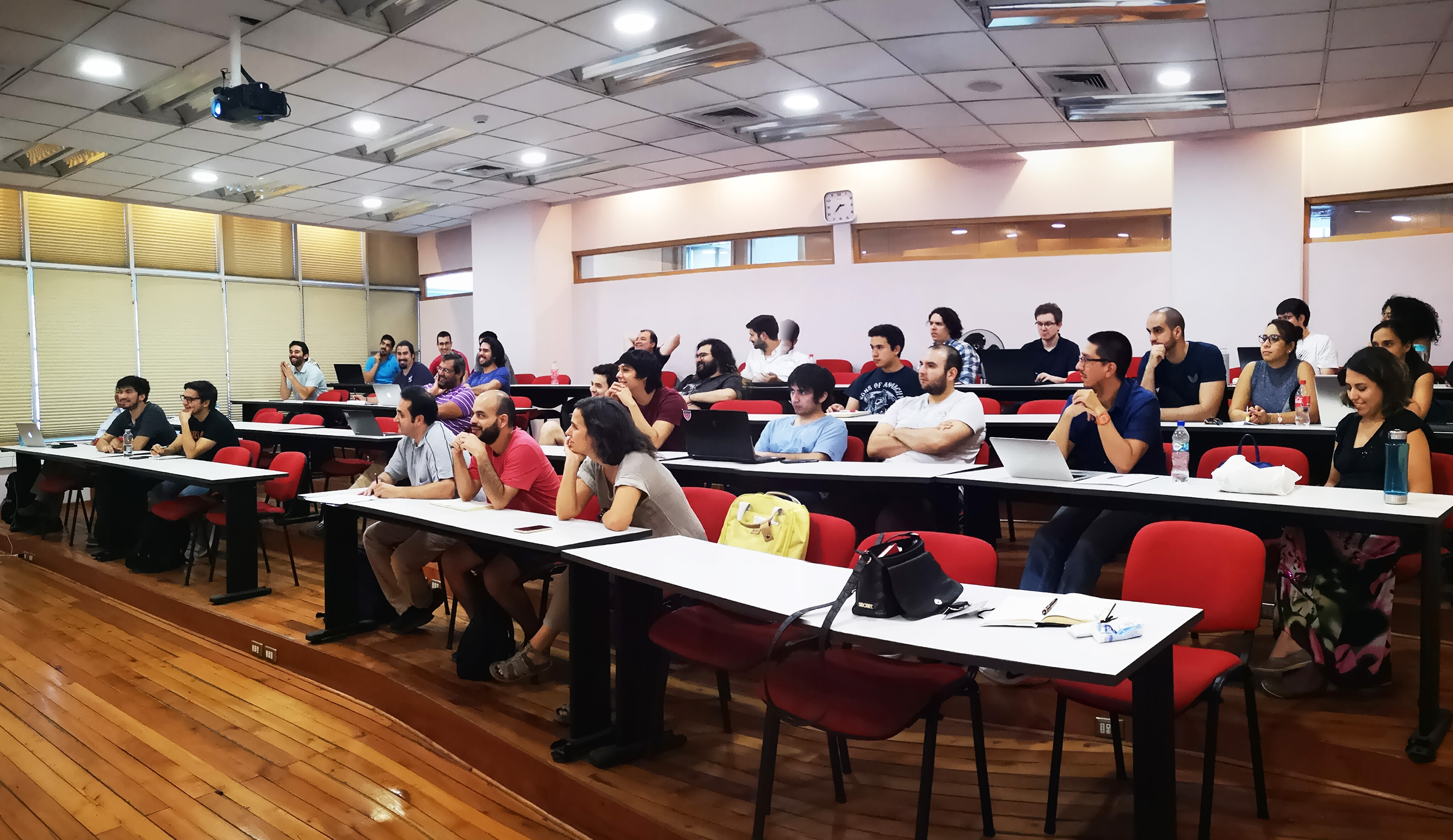
The meeting -held at the Department of Computer Science of the Universidad de Chile- was organized by Francisco Förster, associate researcher at MAS; Aidan Hogan, associate researcher at IMFD; Ismael Álvarez, a master’s student collaborating with both centers; and Susana Eyheramendy, a scientist affiliated with both centers. Its main goal was to learn about the work being done at each institution and to identify initial points of common ground for future collaboration.
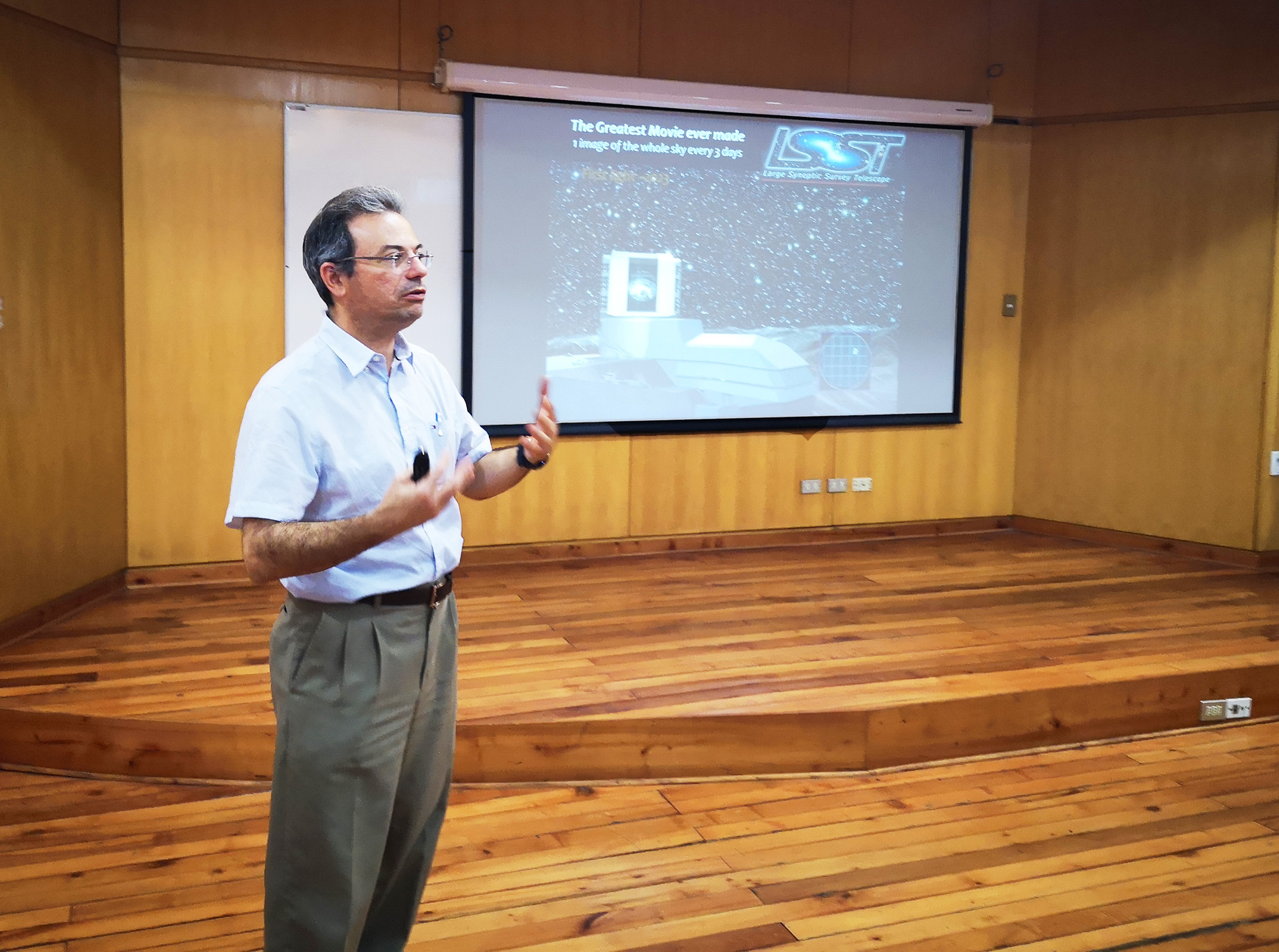
“We are looking to explore possible collaborations between both institutes, taking advantage of the natural synergies between our research areas. Astronomy is rapidly becoming a data-driven science, where traditional analysis methods are no longer sufficient and where it will increasingly be necessary to work in interdisciplinary teams to develop cutting-edge research. On the other hand, in the field of data science, it is very important to have access to large volumes of relatively well-curated data in order to develop cutting-edge research, something that astronomy can naturally provide without the privacy and confidentiality issues associated with other types of data,” says Francisco Förster.
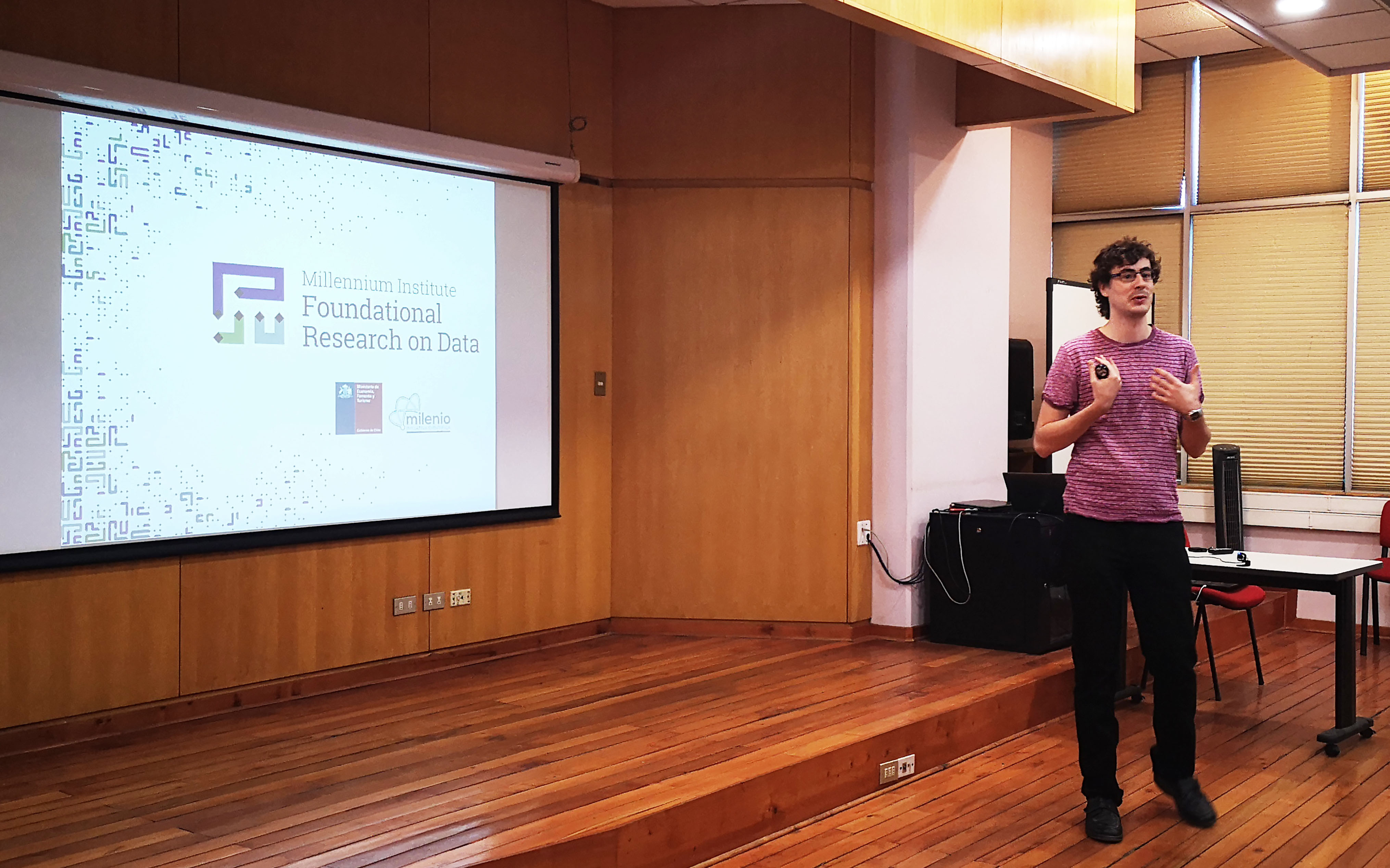
“We discussed several topics on which both groups can collaborate, related to massive data management, the representation of temporal and spatial data, image data compression, and efficient search methods, among others,” adds Aidan Hogan, regarding the workshop held by both institutions.
Francisco Förster notes that new collaborations between MAS and IMFD could include joint projects such as seminars, co-supervised thesis students, and work on shared infrastructure, among others. “An interesting problem is how to work with databases containing billions of rows, with petabyte-scale volumes, that are updated in real time. How to store and process this data is an open problem. In the future, telescopes installed in Chile will generate data ‘streams’ reporting changes detected in the sky—a kind of ‘Twitter of the Universe’ that will report changes occurring in astrophysical objects in our galaxy and in other galaxies billions of light years away. That is a challenge in astrophysics that we can work on together,” says the MAS researcher, who does not rule out a second meeting to be held during 2019 at Universidad Católica.
“We hope to learn from MAS about the concrete challenges they face in astronomy. The solutions we define together can be abstracted by IMFD and applied to other fields that must handle, and deal with, large volumes of data,” concludes Aidan Hogan.