
Olfactory kit for Covid-19: computational platform analyzes exam data in real time
June 3, 2020.– A new advantage has been added to the olfactory kit for Covid-19 developed by the Centro de Aromas y Sabores de DICTUC, at the Escuela de Ingeniería of the Pontificia Universidad Católica: the Millennium Institute for Foundational Research on Data (IMFD) has developed a computational platform that analyzes test results in real time, making it possible to quickly and easily detect anomalies and generate alerts.
“Sudden loss of smell is one of the characteristic symptoms of Covid-19, along with fever, dry cough, or muscle pain. That is why we designed and developed this Rapid Olfactory Kit (KOR), to measure this symptom, in the same way that thermographic cameras are used to detect fever,” says Eduardo Agosin, Professor at the Escuela de Ingeniería of the Pontificia Universidad Católica and Director of the Centro de Aromas y Sabores de DICTUC.
The kit consists of six scents that are presented sequentially for identification. At the end of the test, a ranking is generated that makes it possible to determine whether the person has smell-related issues. Among its advantages are its “low cost, $250 per test; its speed, taking less than three minutes; and its simplicity. It can be administered at the entrance of a company, a primary health center, a public service, or a mining site, among other places,” explains Agosin, adding that “no specialized personnel are required to administer it.”
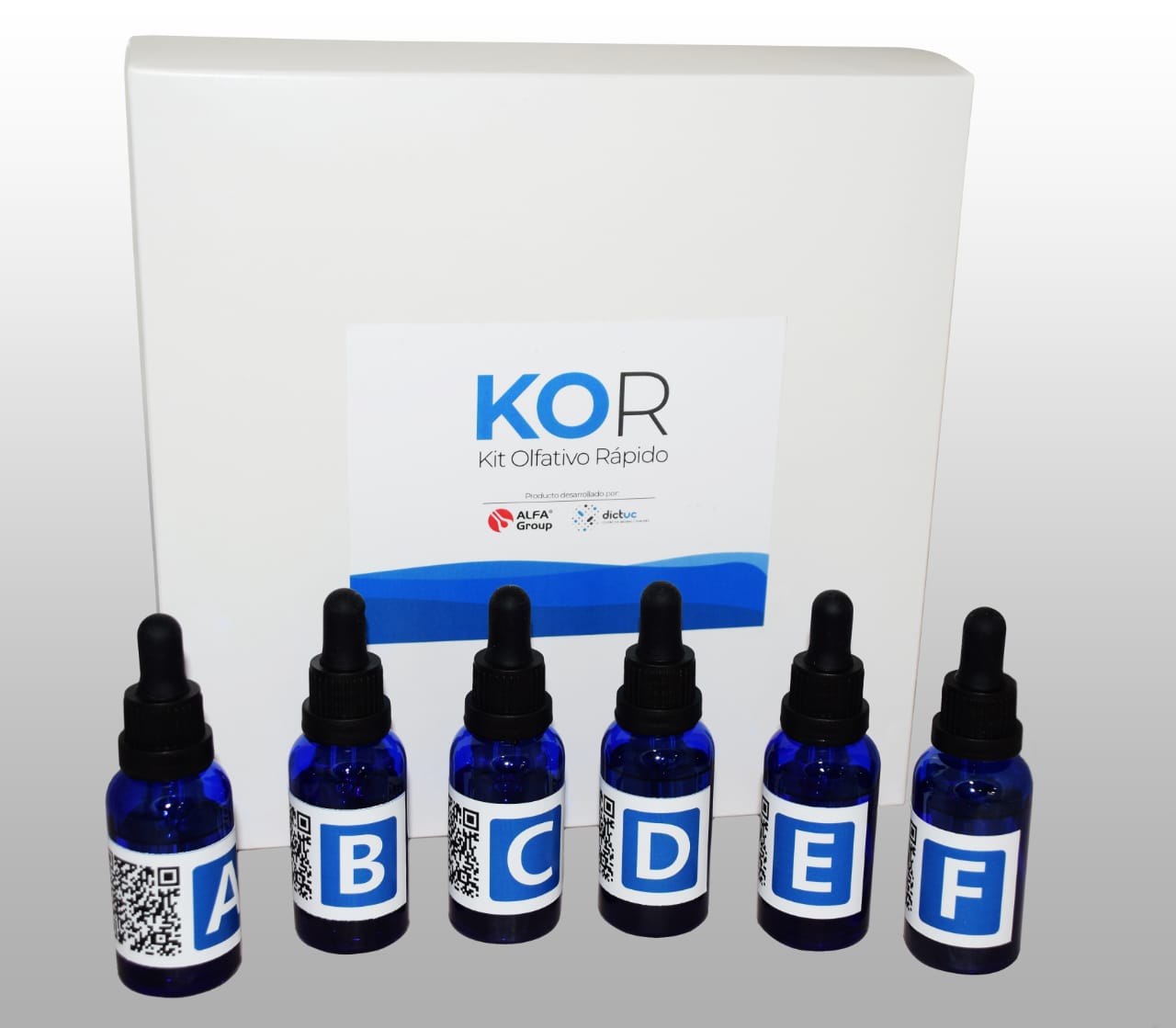
The initiative now has a new advantage. The Millennium Institute for Foundational Research on Data (IMFD), through its Technology Transfer Unit, has developed a web platform that “allows for an agile, simple, and fast evaluation of the tests,” says Pablo Barceló, Deputy Director of IMFD. This platform records the test results in a centralized database and will analyze them in real time, detecting alerts and anomalies.
Martín Ugarte, CEO of the IMFD Innovation and Technology Transfer Unit, explains that, given the urgency of the virus situation in Chile, a specialized team was assigned to work full-time on this project over the past few weeks.
The goal is to have this platform up and running by early June, “to help support pandemic containment efforts in one of its key areas: the difficulty of testing and early detection of cases,” Ugarte comments.
Once the results are obtained, cases presenting this symptom can be isolated and referred for confirmation of potential infection through PCR testing, Agosin points out. He notes that another advantage is that KOR also allows for the rapid detection of asymptomatic cases.
“Mass testing of the population to identify individuals carrying SARS-CoV 2 is an urgent necessity to stop the spread of the virus. It is estimated that one in every 200 Chileans is currently infected. Unfortunately, the cost and availability of current tests make it very difficult to scale them up. As an alternative, measuring acute alteration of smell and taste can be quickly implemented in order to identify and isolate possible carriers,” explains Eduardo Agosin.
The kit is manufactured by a food ingredients company, which makes it possible to produce thousands of tests each week, the academic concludes.