
Enhancing the use of graph databases: 2022 Fondecyt grants
March, 2022.- Three Fondecyt projects were awarded to researchers from the Millennium Institute for Foundational Research on Data (IMFD) for 2022, whose projects address problems such as the widespread adoption and development of technologies for graph databases.
A graph is a set of points or nodes interconnected with each other. As an example, a family can be represented as a graph: each member is a point or node that has characteristics of its own that distinguish it from the others, along with other attributes it shares and that connect it with the other members. This graph can be connected with others: for example, neighboring families, the children’s schoolmates, and friendships, among many others. These interconnected groups form a network of graphs.
Aidan Hogan, associate professor at the Department of Computer Science of the Universidad de Chile, was awarded funds for the project “Enhancing Neural Question Answering Systems for Knowledge Graphs”, which aims to improve systems that query databases formed by graphs, using deep neural networks. First, by generating techniques to group and standardize questions that are similar. Second, by designing a collaborative system that allows users of these graph databases to contribute their feedback, providing additional examples for those questions that the system fails to answer well.
Aidan Hogan explains that currently, question answering (QA) systems manage to answer simple questions, such as who is the current president of Uruguay, but have difficulties with more complex queries, such as “which presidents of Uruguay had children who were also presidents of Uruguay?”.
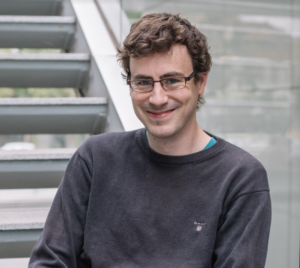
On the other hand, Juan Reutter, academic at the Department of Computer Science of the Universidad Católica, was awarded the Fondecyt grant for four years for the project “Efficient Evaluation of Graph Queries”. The main working hypothesis is that there is a family of algorithms, known as worst-case optimal join, that can make graph processing more efficient, allowing the creation of query models for graph databases that can be used in any database implementation.

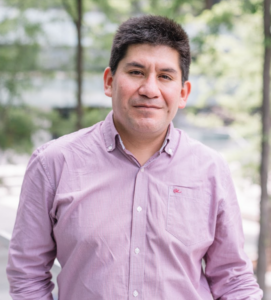
Renzo Angles, assistant professor at the Department of Computer Science of the Universidad de Talca, obtained the competitive funds for the project “Developing the Foundations and Applications of Path Manipulation Operations”. Among the objectives of this project is the implementation of path manipulation operations as part of a graph query language; and testing the use of path operations in the context of protein analysis.
The National Fund for Scientific and Technological Development (Fondecyt) stimulates and promotes the development of basic scientific and technological research every year. It has funded more than 16 thousand research projects whose impacts have benefited both the scientific community and society at large.