
Pablo Barceló takes over as director of the National Center for Artificial Intelligence (CENIA)
The UC academic, who has served as a researcher and former deputy director at the IMFD, will lead the center during the 2026-2031 period.
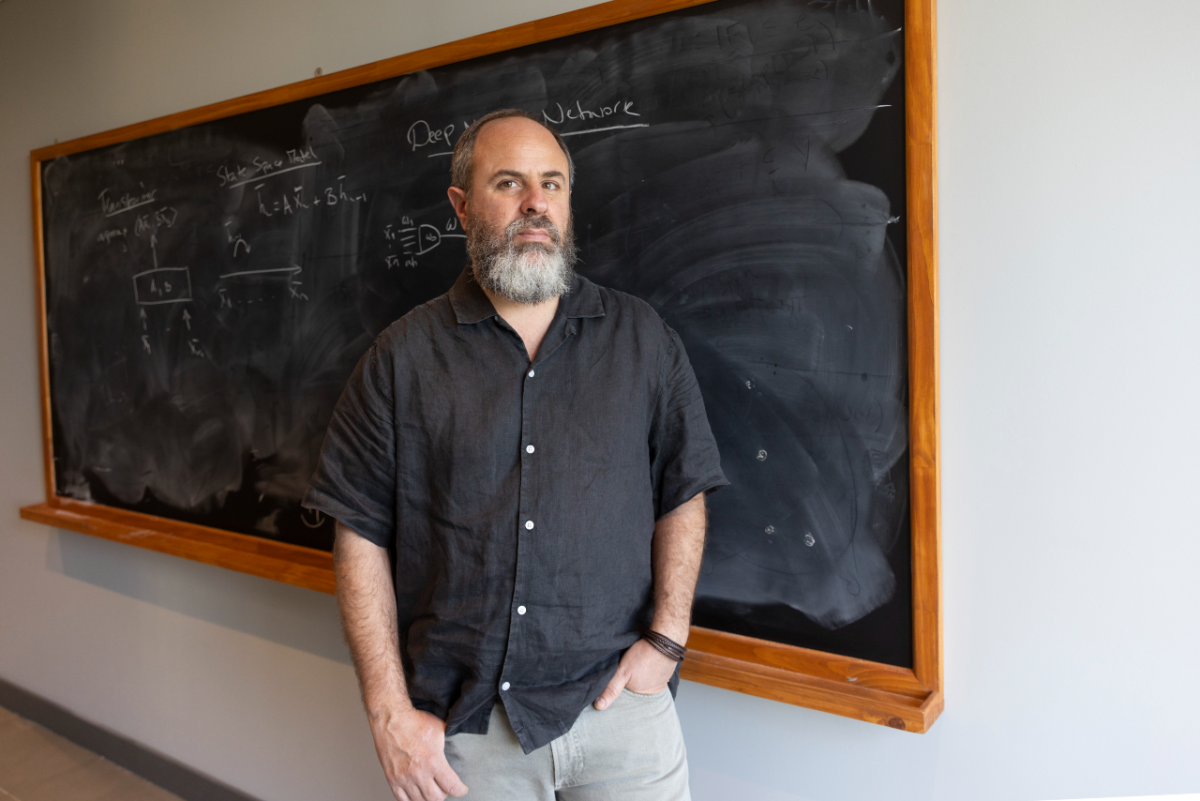
This Monday, November 2, Pablo Barceló, an academic at the Institute of Mathematical and Computational Engineering of the Universidad Católica (IMC UC) and a researcher at the Institute Milenio Fundamentos de los Datos (IMFD), took office as director of the National Center for Artificial Intelligence (CENIA).
The appointment comes as the center marks its first five years of operation, funded by the National Agency for Research and Development (ANID).
The holder of a PhD in Computer Science from the University of Toronto s\ucceeds Álvaro Soto, an academic at the Department of Computer Science of the UC (DCC UC) who led CENIA from 2021 to 2026. Soto will continue as a principal researcher at CENIA and as the lead of the Latam-GPT project, the first large open-source language model (LLM) created specifically for Latin America and the Caribbean, designed through a collaboration among 65 institutions and experts from 15 countries in the region to capture the region’s languages, idioms, histories, and cultural realities.
Pablo Barceló served as deputy director of the IMFD between 2018 and 2023. Before that, he was deputy director of the Center for Semantic Web Research (2013-2018), which gave rise to the IMFD. Between October 2025 and October of this year, he served as director of Artificial Intelligence at the UC Vice-Rectory for Digital Intelligence. In that role, he is s\ucceeded by Marcelo Arenas, an academic at the DCC UC and IMC UC, an associate researcher and former director of the IMFD.
Plans for CENIA
In an interview published in Diario Financiero, Barceló explained that his leadership will aim to move the center from building capabilities to generating value through artificial intelligence. To that end, the solutions the center currently develops for companies and state agencies will be turned into products that can be replicated.
Other priorities include collaborating with the public sector in areas such as health, digital government, and transportation; launching a new version of Latam-GPT; creating a regional network of AI centers; and incorporating a research line on governance and socio-environmental impacts of AI.
“We have already built capabilities and shown that world-class AI could be done from Chile. Now we want to understand AI as a whole, as a truly sociotechnical phenomenon,” said Barceló.
You can read the full interview here.