
IMFD takes part in “Glion Summit of Centers”, a global digital trust meeting for research centers
September, 2024.- Generating environments, protocols and tools that provide reliability to interaction in digital environments: this is one of the greatest challenges currently facing the world of computing and informatics. Digital trust is the main focus of the “Glion Summit of Centers”, held in Switzerland, which brought together leaders from 20 research centers around the world, with the aim of comparing their experiences in the area, aligning their missions and increasing their impact, as well as establishing international collaboration networks.
Invited to the meeting were Aidan Hogan, director of the Departamento de Ciencias de la Computación de la Universidad de Chile (DCC U. Chile) and Deputy Director of the Millennium Institute for Foundational Research on Data (IMFD), and Claudio Gutiérrez, academic at DCC U. Chile and IMFD Researcher, the only representatives from Ibero-America at the meeting.
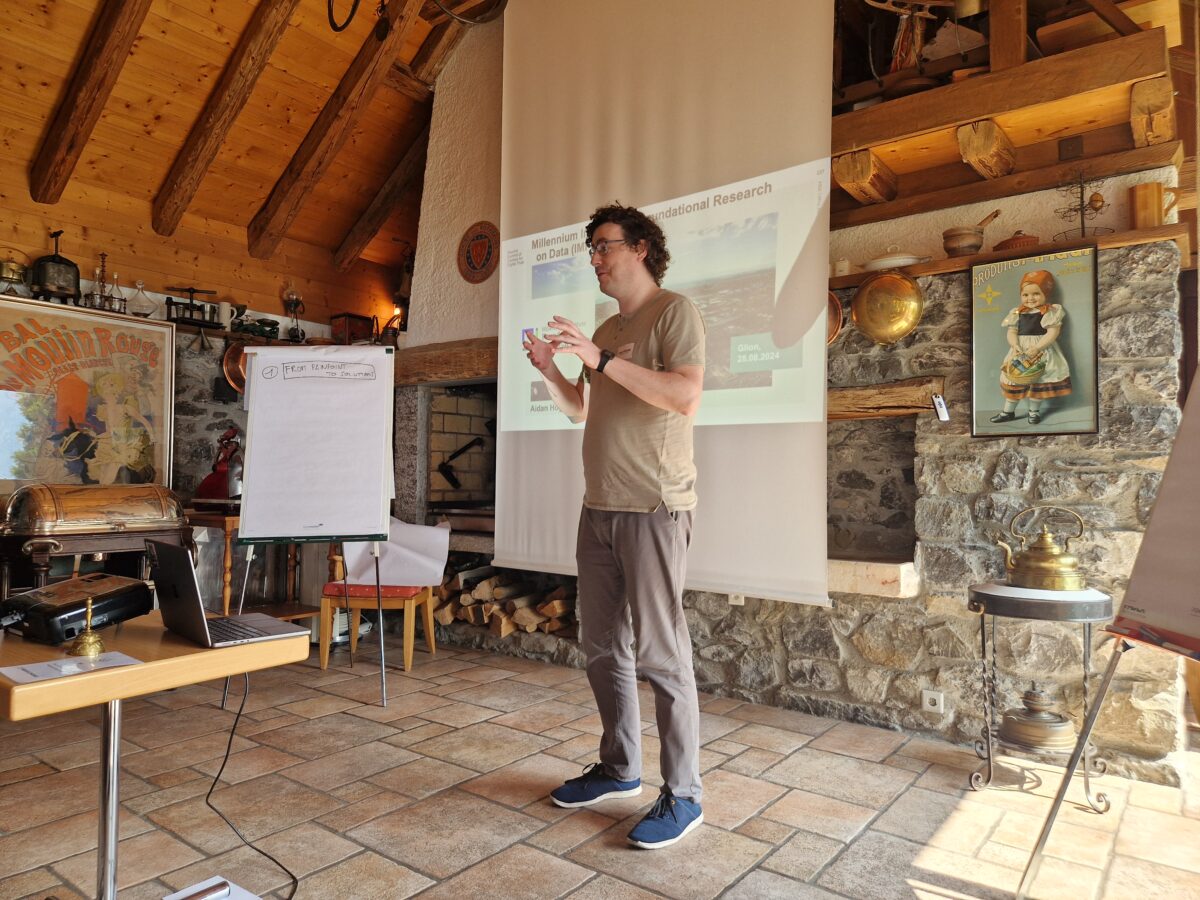
“Digital trust issues are becoming increasingly relevant for those of us who work in this area. As IMFD, we have worked on different projects that have allowed us to gain experience and question the challenges that arise when we see that behind all our models and data, there are people to whom our systems must respond and be useful,” highlights Aidan Hogan.
This is the second meeting coordinated by EPFL’s Center for Digital Trust (CD4T), in which, in addition to the main focus, two objectives were added: seeking to address and understand the needs and challenges facing the centers, and using the world of journalism as a concrete practical case that could serve as a basis for the centers’ research programs.
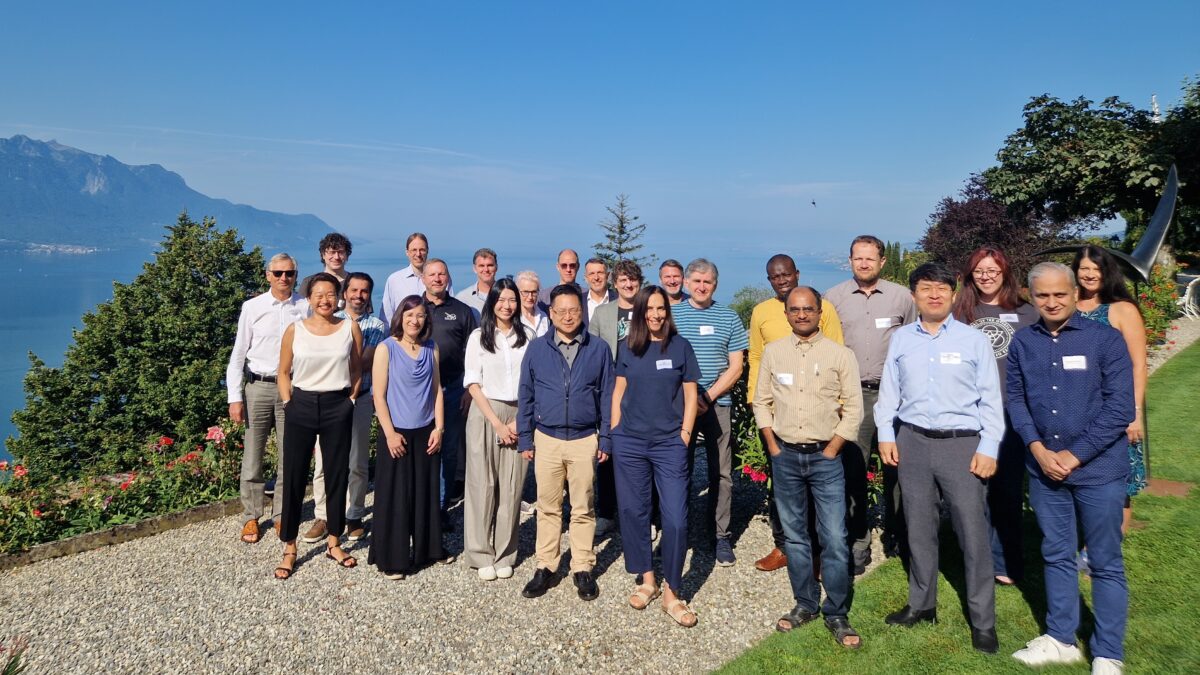
“Approaching the idea of digital trust from academia and research allows us to establish guidelines for the creation of tools aligned with the objectives of our societies, avoiding leaving this important space, which is increasingly inhabited, in the hands of private companies,” says Claudio Gutiérrez. “Among those of us who participate, there is broad consensus on the need to foster these dialogues, create an international community around this, and thus pave the way to have a significant collective impact,” he highlights.

The Glion Summit hopes to fill a gap in the needs of research centers: although there are many conferences where these topics can be addressed, this summit is the only place dedicated to exchange at an internal and operational level. Those who participate in the Glion network must meet a series of selection requirements: they must be based at a university or technical department, have external partners, and include in their mission the development of policy and outreach activities on crucial digital trust issues. The meeting also seeks to reflect the excellence and flourishing activities taking place in various parts of the world.
At the first meeting (2023), 13 centers participated, and this year four new ones joined: the Arizona State University’s Center for Cybersecurity and Trusted Foundations (USA), CyLab-Africa at Carnegie Mellon University Africa (Rwanda), the ACTION Institute at the University of California, Santa Barbara, and the Millennium Institute for Foundational Research on Data (IMFD), from Chile.

Participating centers
Carnegie Mellon University (USA) – CyLab Security and Privacy Institute
Carnegie Mellon University Africa (Rwanda) – CyLab-Africa
Harvard University (USA) – Berkman Klein Center for Internet & Society
Indian Institute of Technology Bombay (India) – Trust Lab
Korea Advanced Institute of Science & Technology (South Korea) – Cyber Security Research Center
KTH Royal Institute of Technology (Sweden) – Center for Cyber Defence and Information Security
Massachusetts Institute of Technology (USA) – Internet Policy Research Initiative
Nanyang Technological University (Singapore) –Digital Trust Centre
Oxford University (UK) – Responsible Technology Institute
Purdue University (USA) – Center for Education and Research in Information Assurance and Security
Queen’s University (UK) – Belfast Center for Secure Information Technologies
Swiss Federal Institute of Technology Lausanne EPFL (Switzerland) – Center for Digital Trust
Technical University of Munich (Germany) – Munich School of Politics and Public Policy
Tel Aviv University (Israel) – Blavatnik Interdisciplinary Cyber Research Center
UC Berkeley (USA) – Center for Long-Term Cybersecurity
UC Santa Barbara (USA) – ACTION Institute
Universidad de Chile – Universidad Católica de Chile (Chile) – Millennium Institute for Foundational Research on Data (IMFD)
University College London (UK) – Cybersecurity Center
Uppsala University (Sweden) – Research Institutes of Sweden (RISE) Cybersecurity Unit