
The Great Challenge of Using Electronic Medical Data in the Age of Artificial Intelligence
November 2023.- Hércules Dalianis, professor of Computer and Systems Sciences at Stockholm University, Sweden, visited Chile as part of the Fondecyt project “Creation of linguistic and computational resources for clinical language in Spanish” led by DCC and IMC UC academic Jocelyn Dunstan Escudero.
“Privacy is key when working with data in the health field. Practically all the information we gather belongs to patients who are vulnerable, for example, to different types of discrimination,” highlights IMFD researcher Jocelyn Dunstan Escudero. One of the major challenges when working with medical data is the potential harm that the use of this data can bring to those who provide it: privacy and security are among the main challenges for those seeking to work with large volumes of this data.
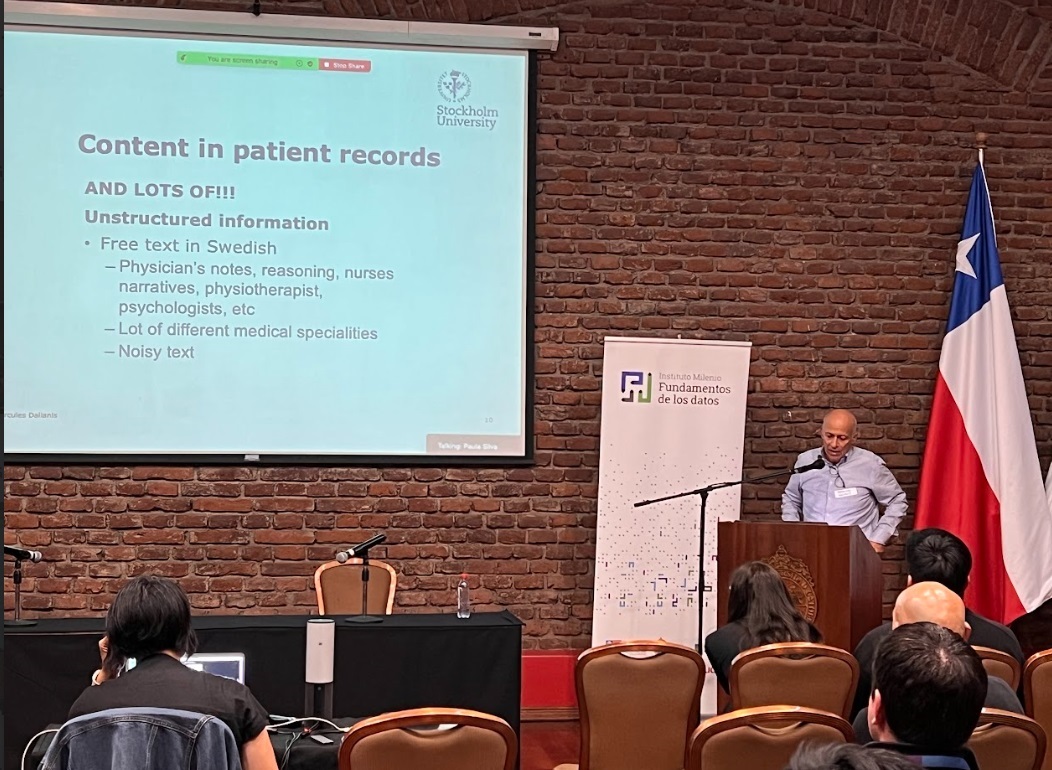
Hércules Dalianis has experience in the anonymization of clinical data. During the event, held at the Sala Colorada of the Centro de Extensión of Universidad Católica, he tested his clinical text recognition application live, in addition to explaining the guidelines for establishing the anonymization of medical data used by his teams, which allows the use of databases while guaranteeing the privacy of the data that people provide to medical teams.
The project “Creation of linguistic and computational resources for clinical language in Spanish” seeks, through the use of different data science techniques, to optimize resources to achieve the major goal of reducing waiting lists for public health service appointments.
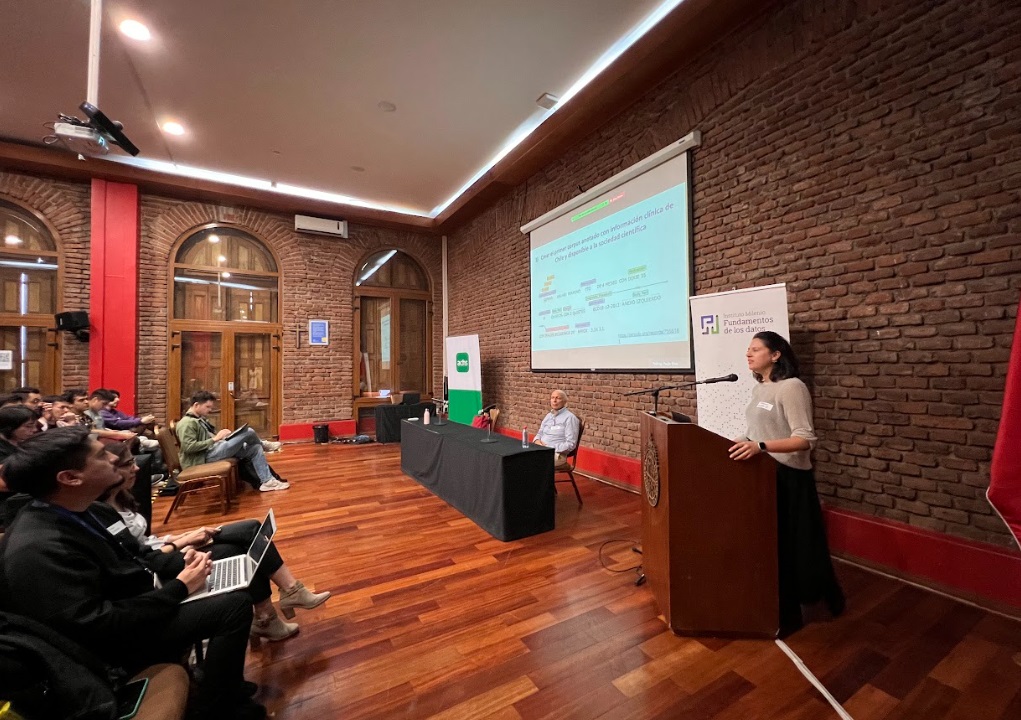
“In this project, we created the first annotated corpus in Chile, which is currently available and released to the scientific community. One interesting thing worth highlighting is that the construction of this corpus was made possible thanks to the Transparency Law, through which the research team managed to obtain eleven million referral requests, which were requested individually from each of the 29 health services that exist across the country’s 15 regions,” the researcher noted during the event.
This project was funded by the Chilean State through Fondecyt, with support from the Ministry of Health, the Asociación Chilena de Seguridad, the Centro de Modelamiento Matemático of Universidad de Chile (CMM), and the Millennium Institute for Foundational Research on Data (IMFD).
Check out the recording of the presentation here: