Women in Research | María José Apolo: Musical Images
May 2023.- María José Apolo, former IMFD student and graduate in Computer Engineering from Universidad Técnica Federico Santa María, works in the field of creative artificial intelligence, researching how style transfer is performed from music to images, through deep learning.
In the research “Bimodal style transference from musical composition to image using deep generative models,” carried out together with Marcelo Mendoza, IMFD researcher and academic at Computer Science Department of the Pontificia Universidad Católica (DCC UC), they study the transfer of style from songs to album covers, that is, the fact that different musical styles use certain images as representative covers.
The goal of the research is to see whether it is possible for a system to automatically create—using music as information—an image suitable, for example, as a cover for an album.
EACH SONG WITH ITS IMAGE
To achieve this, the first thing they did was feed a model with data: “The dataset I generated is a multimodal dataset that had each song —represented as a spectrogram— associated with its album cover. The model was fed with approximately 20,000 (song, cover) pairs,” explains María José Apolo.
What does it mean for songs to be processed as spectrograms? A spectrogram is a visual representation of sound, showing the variations in intensity and frequency over the duration of a track. It is a much more advanced and complex version of what we see, for example, when we use the computer’s microphone and it shows us—in a horizontal bar—the volume of our voice (intensity), activating only when we speak (frequency).
Spectrograms of similar songs will tend to share similar measurable characteristics, and an AI model can analyze them to identify those that are similar or those that are far apart in the musical spectrum.
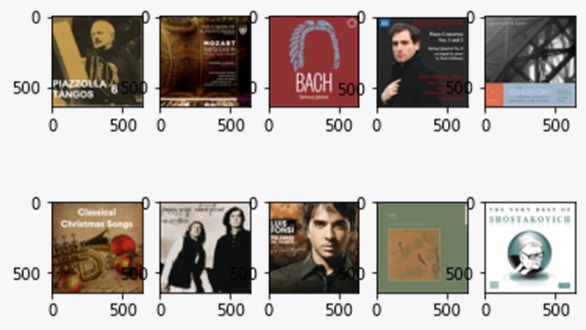
After this, the researchers began entering queries into the model: when asked about a specific song, which the system identified through a spectrogram, the model showed what it considered to be the 100 covers most similar or closest to the queried song. María José notes that, for the most part, the covers the system produced were of the same genre as the queried song or of similar genres.
CREATING COVERS WITH AI
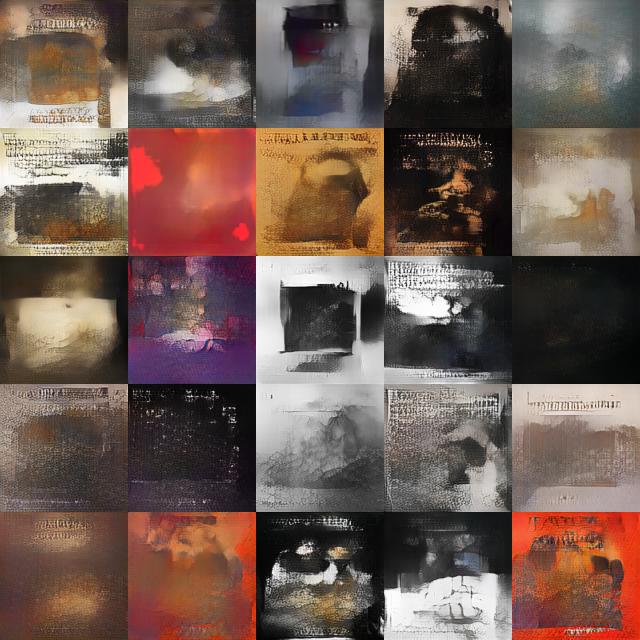
In a second phase, the researcher began using those 100 covers that the system provided for a queried song to train a generative image model, something like the Dall-e or Stable Diffusion systems, which extracted the common characteristics of those covers and began creating new ones.

This, with the aim that, when entering a song of a given genre, the generative system would create a completely new image that effectively corresponded to the track. This was done with songs from 10 different genres, and it was found that the generative model, when generating new covers, achieved a precision of 20.89 on a scale of 0 to 250, where a value closer to zero is more precise or similar.
“I chose this research topic because I find it very interesting how, from the field of deep learning, it is possible to model and provide an interpretation of an abstract and subjective question, such as style transfer from a musical work to an image, where a translation of multimodal attributes must be made, attributes that are conditioned by individuals’ own concepts and their biological and social background,” explains María José Apolo.
The researcher’s hope for the future is to generate a system that allows emerging artists who lack sufficient resources to upload their original song to a platform and obtain an original album cover that matches the author’s theme.