How to build a web that AI Agents can understand: Aidan Hogan and Semantic Web pioneers present proposal in Italy
In late October, in Bari, Italy, two leading figures of the Semantic Web presented, together with Universidad de Chile academic and alternate director of the Millennium Institute for Foundational Research on Data (IMFD), Aidan Hogan, a review of how to build a web where personal agents automate tasks, verify information, and are able to explain themselves. The pieces are already there, the authors argue, they just need to be put together.
In May 2001, an article published in Scientific American envisioned, in part, the “agents” we now know as artificial intelligence assistants. “The Semantic Web” was the concept coined by authors Tim Berners-Lee (creator of the World Wide Web), James Hendler, and Ora Lassila, to describe a virtual space where personal agents automate tasks, verify information, are able to explain themselves, and build trust with users; a web where personal data is controlled, protected, and leveraged in a decentralized manner, and where part of the responsibility falls on the agent and part on the entity that empowered that agent.
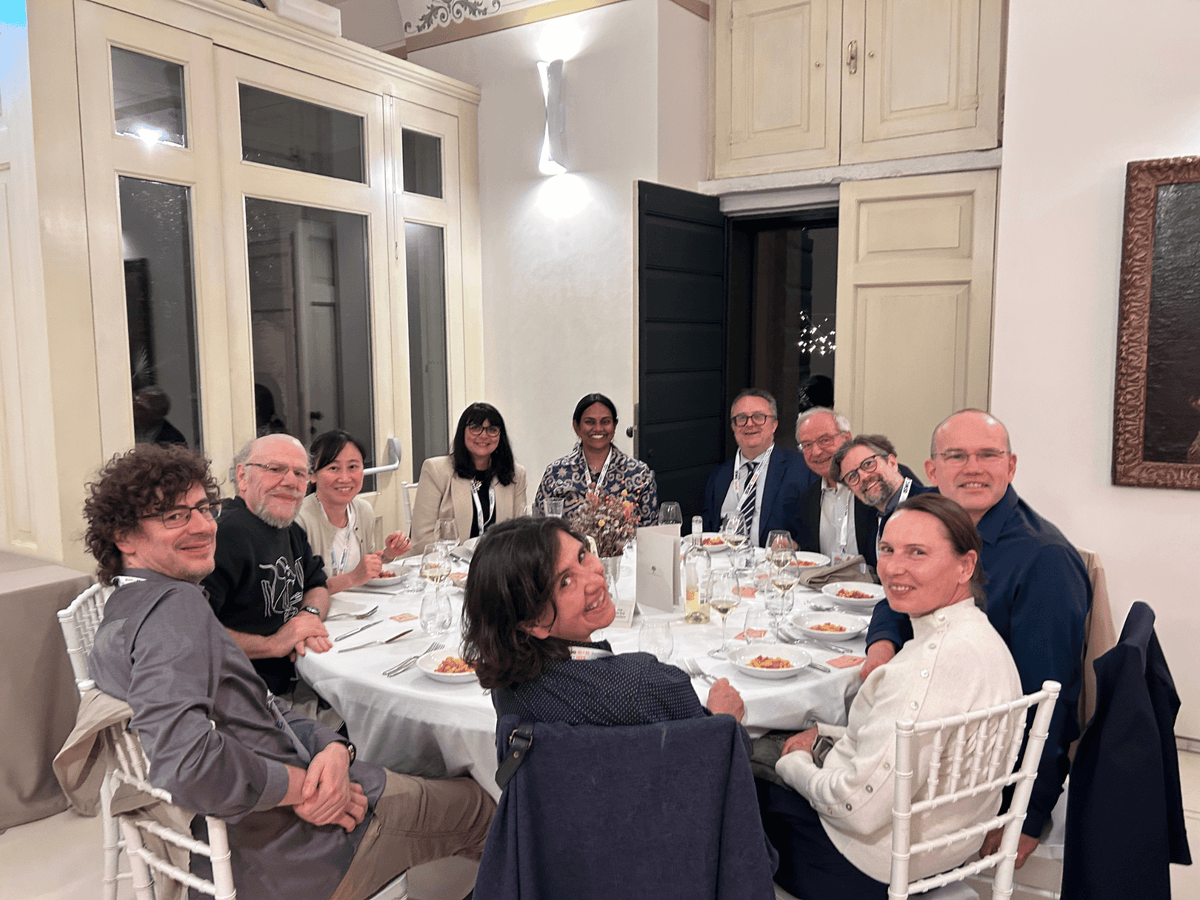
Twenty-five years after that publication, the Semantic Web community gathered in Bari, Italy, for the 25th edition of the International Semantic Web Conference (ISWC). The conference celebrated the anniversary with James Hendler as one of the keynote speakers and, alongside five days of bringing together scientists from around the world to discuss the latest advances in the field, presented a paper arguing that achieving autonomous and trustworthy AI agents requires returning to the original 2001 vision and building a web that agents can understand.
A web for agents to understand and verify information
If semantics seeks to study the meaning and interpretation of words and expressions within a sentence, the Semantic Web is a proposal in which internet portals are built by incorporating meaning into structures, documents, and data so that software agents can process them. The idea is for agents to interpret, relate, and verify information, moving from one page to another to carry out complex tasks on behalf of their users. For example, if a patient is prescribed physiotherapy sessions, their agent could check the medical order, search for nearby centers with agreements with their health insurer or Fonasa, compare reviews, cross-reference available time slots with their calendar, and suggest a day and time to book an appointment.
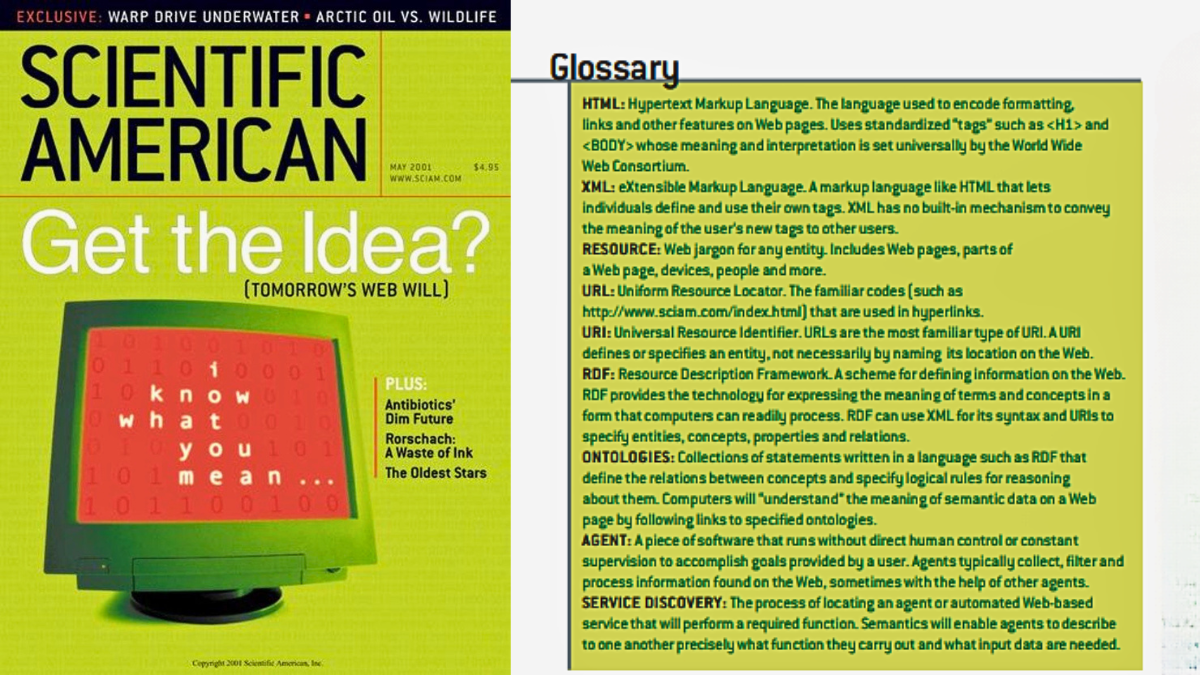
In “Unrethinking the Semantic Web,” Hogan, Hendler, and Lassila revisit that idea in order to improve artificial intelligence assistants, which remain focused on automating simple tasks rather than on the complex interaction between agents and websites.
To do so, Hogan explains, it is first important to understand the two traditional approaches to building AI. “On one hand, there is the connectionist tradition, based on neural networks that learn patterns from large volumes of data and that underpin large language models (LLMs) such as ChatGPT, Claude, or Gemini. On the other hand, there is the symbolic tradition, which uses explicit logical rules (axiomatic methods) to represent and process knowledge,” explains the researcher, who is also alternate director of the Millennium Institute for Foundational Research on Data (IMFD), a national scientific center that is a direct evolution of the former Semantic Web Research Center (CIWS) in Chile.
“In the original article on the Semantic Web, the authors proposed building this new version of the Web in a symbolic way (…). Today, however, the connectionist tradition predominates. Nevertheless, there is growing interest in combining both: using the capabilities of LLMs together with axiomatic methods that allow responses to be evaluated, verified, or explained, not only to human beings, but also to the LLMs themselves, as part of an iterative process,” the researcher notes.
That combination, known as the neuro-symbolic approach, is already showing results. Hogan points to recent progress on mathematical problems that had gone unsolved for years, such as the Millennium Problem concerning the Navier-Stokes equations, which OpenAI has claimed to have solved, though this has not yet been confirmed by peer review. “In a situation like that, several agents discuss the problems and their possible solutions in natural language, and then translate their results into a symbolic framework that allows the reasoning to be verified step by step, or that reveals where gaps remain,” the scientist explains.
Applied to the web, the logic is the same: agents that not only generate answers, but that can also verify the information they use, supported by data whose meaning is written so that machines can process it. It is, at its core, the same idea that Berners-Lee, Hendler, and Lassila put forward 25 years ago, now bolstered by advances in AI that did not exist back then.