
Close to 200 participants at ChileWiC 2024
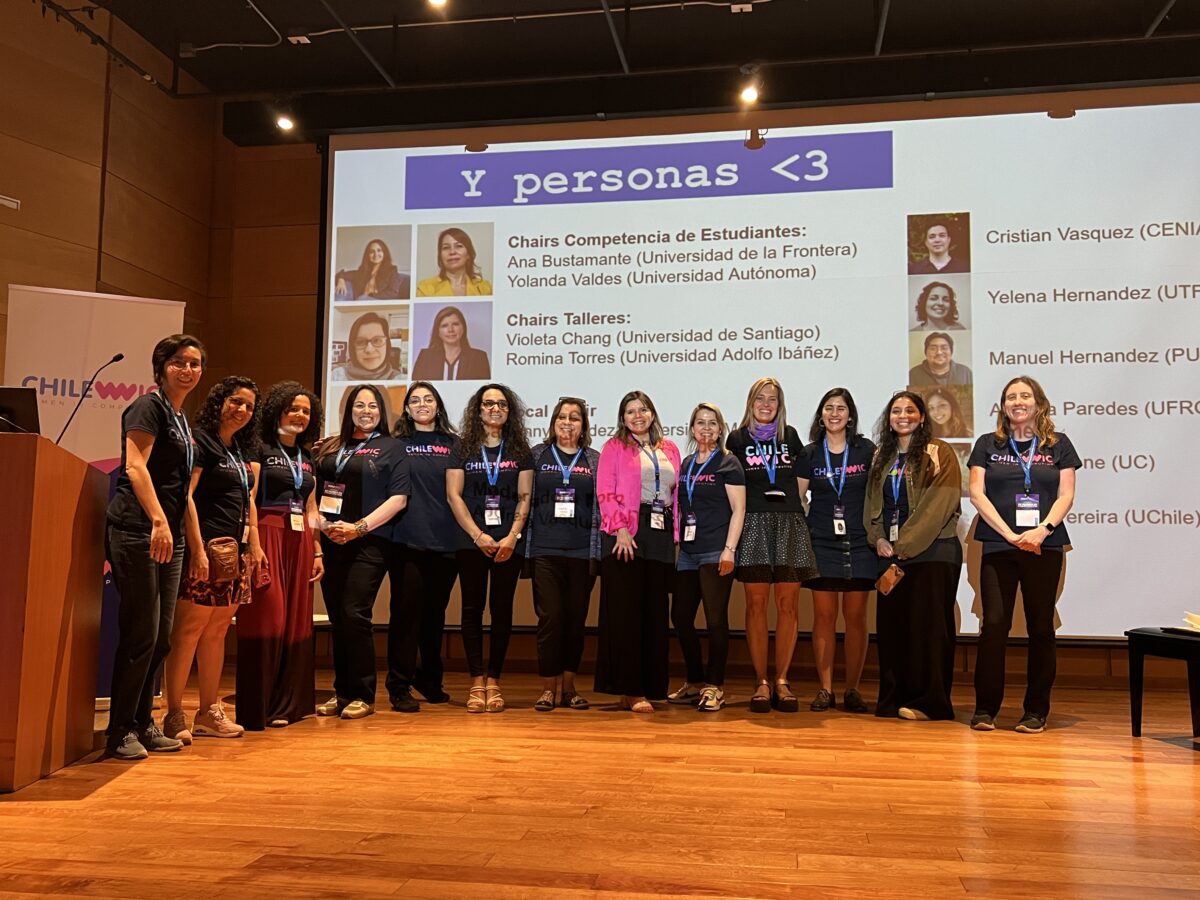
December, 2024.- With a focus on the future of computing and the need to strengthen the representation and inclusion of women and diversity in the field, the 12th edition of Chile Women in Computing 2024, the most important gathering of women in computing in Chile, was held in the auditorium of Universidad Mayor in Providencia.
“This gathering was born from a small group of academics, and every year it has kept growing, so having close to 200 participants this year is already a tremendous success, and it allows us to feel a sense of belonging to a community,” highlights Valeria Herskovic, director of the Computer Science Department at Universidad Católica and one of the organizers of the event. “We seek to give visibility to the contributions that we, as women, make in the field of computer science, technology, and engineering, especially in Chile.”
“ChileWIC is a celebration and that was felt strongly. The day was spectacular, full of joy and camaraderie among the participants, and this year, in particular, there was a lot of interest in the calls for submissions. We are very proud of what we have achieved, and there are more and more signs that people are organizing to attend from other universities and regions, such as USM Concepción and Valparaíso, UFRO, and UV,” shares Claudia López, USM academic and part of the organizing team.
Emerging talent taking on today’s challenges
The emerging talent of the women in computing community in Chile made itself known in the student competition, in which more than 20 posters were presented, with works spanning different topics and challenges for computing, in diverse areas such as health, machine learning, transportation, and others.
“The student competition is, without a doubt, the heart of ChileWiC,” says Ana Bustamante, academic at Universidad de la Frontera, in charge of this segment, in which 22 projects from different students across the country participated this year: “The spirit is that they tell us what they are doing within their universities, framing it as a project. This can be their theses, industry internship projects: what interests us is seeing what they are working on, and promoting it,” says the academic. We seek “for this group of competitors to also be a representative sample of what our new or future engineers are doing as they develop in the field of technology at a national level.” That is why, at ChileWiC, there is a scholarship system for those who must travel from different parts of the country to attend and participate in the competition, which keeps growing more and more each year.
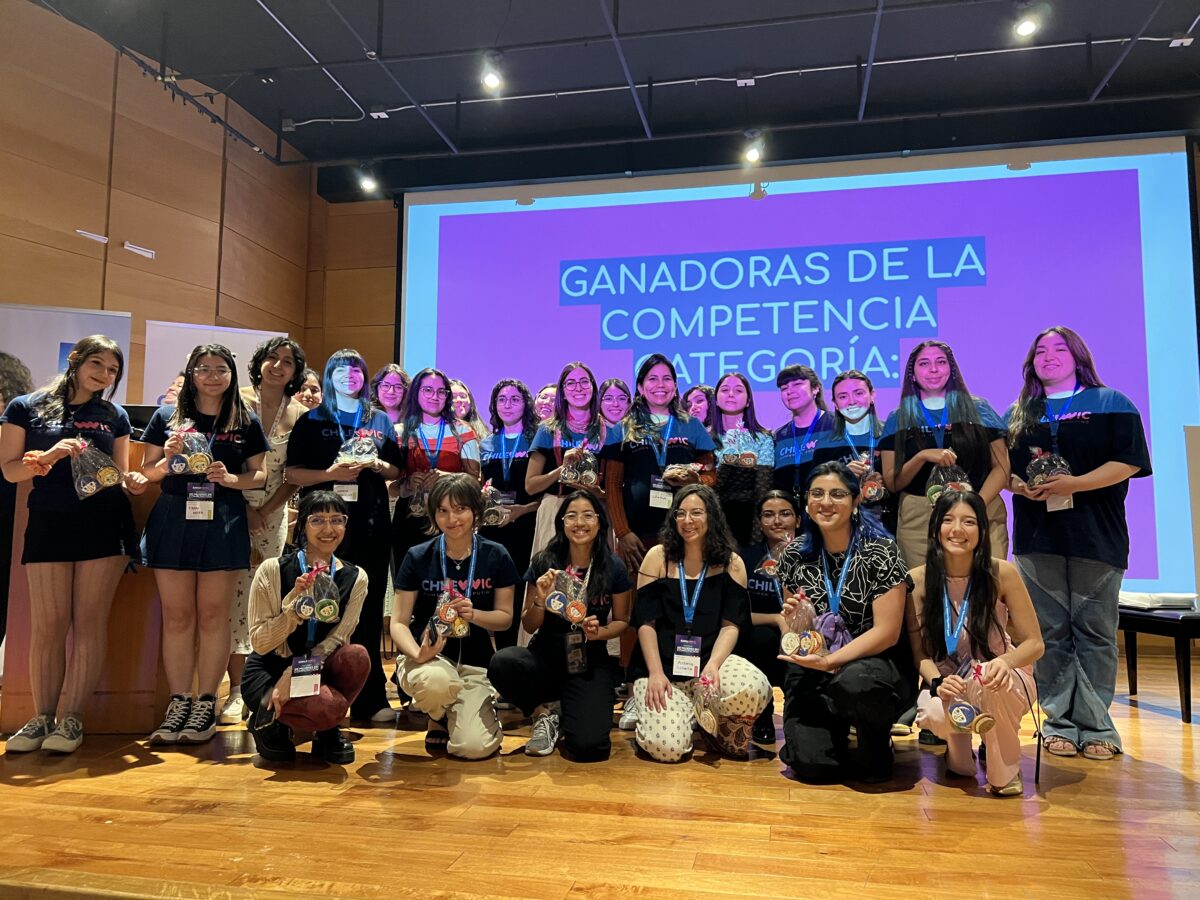
In the individual student track, first place went to Keiko Sahory, a student at Universidad de Valparaíso, with “Model for Analysis and Prediction of No-Shows to Medical Appointments in Primary Care.” Meanwhile, the work “Automatic Classification of Vascular States Using RGB Analysis in Finger Videos for Invasive Diagnosis,” by Josefa Fernández Pavez (PUC), earned second place, and Antonia Labarca Sanchez (U. Chile), with “Weighted Automata Networks,” took third.
Meanwhile, in the pairs competition, the winning work was “Cybersecurity Maturity Model for SMEs,” by Gemita Escalona Troncoso and Francisca Neira González, from Universidad de la Frontera (Temuco). Second place went to “The Effects of E-Scooters on Public Transportation: A Case Study in Santiago de Chile,” by Matilde Rivas and Natalia Meza, both from Universidad de Chile; and third place went to “ProtoAI,” by Renata Martinez (U. Mayor) and Lorenzo Saavedra.
Outstanding presentations
In her keynote, Raquel Pezoa, a prominent academic from Universidad Federico Santa María, spoke about her “experience as a computer scientist in teaching and research, and my applied and interdisciplinary work in machine learning across different areas of science such as particle physics, astrophysics, astroparticle physics, and histopathological image processing.” Meanwhile, in the talk “From 0 to 1: Entrepreneurship in Technology and Sustainability,” given by Florencia Valladares – Co-founder of Bloom Reuse, attendees shared a series of questions about the speaker’s development, seeking to learn from her experience.
Focused on the challenges of artificial intelligence
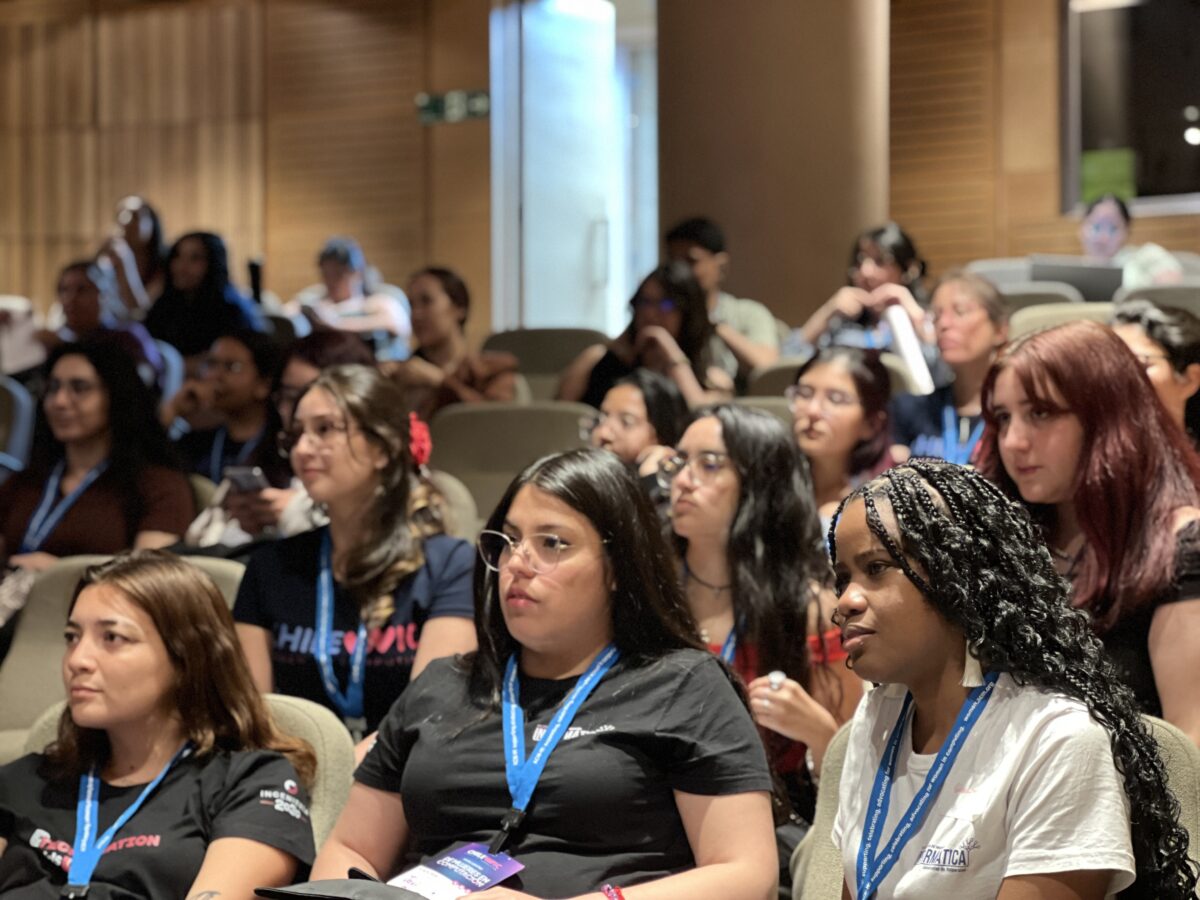
In this edition of ChileWiC, four parallel workshops were coordinated on different challenges in the field of Artificial Intelligence, led by groups that actively work to promote women’s participation in this area.
“Considering that AI is more present than ever in our daily lives, in this edition of ChileWIC 2024, together with Romina Torres from UAI, we organized the parallel sessions track with interactive workshops on AI teaching from different approaches. We are very happy about the high turnout and interest from institutions and organizations in presenting innovative and inspiring proposals that covered different target audiences,” highlights Violeta Chang, academic at Universidad de Santiago and organizer of the workshops. “Choosing which session to attend was difficult for attendees, but we are very satisfied, as all of them had a high turnout and all of us participants came away learning a lot from this experience. That is the beauty of ChileWIC, besides inspiring us and building networks, we learn together in this great celebration of women in computing in Chile,” she adds.
In Development of Abstract Thinking in AI Development: The Executive Director of Fundación Tec Mujer, Constanza Díaz, highlighted the importance of abstract thinking in AI design, based on recent research on STEM education.
Meanwhile, in Introduction to Explainable AI (XAI), led by fellow ChileWiC 2024 keynote speaker, Raquel Pezoa, academic at UTFSM, attendees addressed techniques such as SHAP and LIME for interpreting machine learning models.
In AI and Leadership: Tools for Professional Impact: Jenny Loyola, director of the Asociación de Mujeres Empresarias y Profesionales, explored the use of AI to enhance skills and develop effective action plans.
And the great challenge of tackling bias in artificial intelligence models was the topic of “AI, Ethics and Fairness: A Selection Bias Case Study”; in which Cinthya Vergara, a data analytics expert, guided a hands-on analysis to mitigate bias in algorithms through examples in Python.
Acknowledgments
ChileWiC is organized by female academics from various universities in Chile, including Pontificia Universidad Católica de Chile, Universidad Técnica Federico Santa María, Universidad de Santiago de Chile, Universidad de Los Andes, Universidad de la Frontera, Universidad Mayor, and Universidad Autónoma de Chile. The event is also supported by NIC Chile, the Instituto de Sistemas Complejos de Ingeniería (ISCI), the Centro Nacional de Inteligencia Artificial (Cenia), and the Millennium Institute for Foundational Research on Data (IMFD).