
University of Chile interview with Ricardo Baeza-Yates: "Regulations must exist because there is a lack of ethics."
Although he began his studies in electrical engineering at the University of Chile, having never seen a computer when he entered the Common Plan, it was during these early years that he became interested in computing, studying for both a bachelor's and Master student computer science, a path that has led Ricardo Baeza-Yates, senior researcher at IMFD, to become the world-renowned researcher in Data Science and Artificial Intelligence that he is today. Among the awards he has received, this year he added the National Prize for Applied and Technological Sciences.
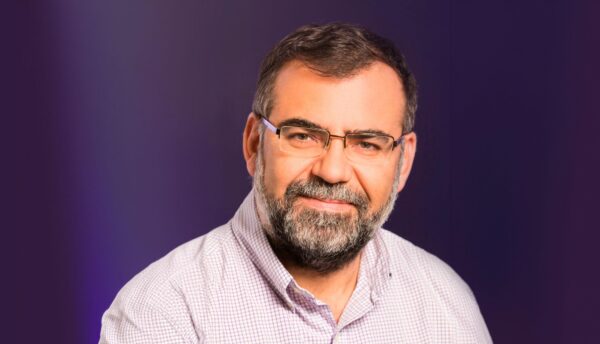
From Silicon Valley, where he serves as Director of Research at Northwestern University's Experiential AI Institute, which has its main campus in Boston, as well as being a Full Professor at Casa de Bello, the computer scientist said thatreceiving this award "is very satisfying because, as the saying goes: no one is a prophet in their own land, and sometimes I felt more recognized abroad than in Chile, soit is a joy to feel that your country appreciates what you have done."
To get this far, Baeza-Yates notes that "one of my maxims is not to make plans, so I never imagine the future, because I believe that plans limit your possibilities, andit's better to do your best at every moment and in this way you will achieve much more than you could ever plan."
And although he is far away, he continues to follow what is happening in the country, especially the news that has shaken the academic world this week. In this regard, the researcher stated that "I don't like to speak when I don't have the facts for sure, but regardless of the specific case, I believe that an important issue is the lack of specific rules in private universities, if they are truly non-profit entities. For example, when you see exaggerated differences in salaries, even internally, because I know people who work at private universities who are paid very little to teach,there is a social justice issue that must be resolved, setting limits and, in particular, much more transparency. Regulations must exist because there is a lack of ethics, because if there were professional ethics, this would not happen: aperson should say, "I do not accept this salary because it is unfair compared to people who are receiving another salary for the same work, whether it is lower or higher, although this happens more frequently when your salary is lower."
– What does your work in the world of AI and Data Science involve?
Most of my scientific work, in fact, is due to the previous areas in which I worked, mainly algorithms and information retrieval, everything we have in terms of data. But it is true that for about 16 years now, I have been working on computational bias issues and for about 6 years on responsible AI. I suppose that given the importance of AI today, especially generative AI, public policy and outreach work is becoming more relevant, in addition to the scientific work I do."
– How do you remember your time as a student at the University of Chile?
The doctor of computer science from the University of Waterloo, Canada, recalls that he enrolled in engineering at the University of Chile because he was unsure whether he wanted to be an astronomer or an engineer, and although his mother worked at the Catholic University, this allowed him to postpone the decision. He then notes that"I had never seen a computer; it was a time when personal computers did not yet exist, and when I took my first computer course, I did not use a computer either, because there were sheets of paper called paper screens where you wrote the programs.That's when I fell in love with computational logic and algorithms." But there was no civil engineering in computing yet, and he wanted to be a civil engineer, so he chose electrical engineering, perhaps because it was the most difficult specialty, while also pursuing a bachelor's degree in computing: "I did two degrees and two master's degrees at the same time, both in computer science and electrical engineering."
Regarding the professors who inspired his career, the academic recalls that"one of my professors was Patricio Poblete, who was such a good teacher that I fell in love with algorithms. I did my master's thesis with him, and that's what made me decide to do a doctorate and go abroad, because at that time there was no PhD program in Computer Science in Chile. I was lucky that when I presented my master's thesis at the International Congress of the Chilean Society of Science and Computing in 1985, a professor from the University of Waterloo saw it, liked it very much, and offered me a scholarship to study with him."
And despite his introverted personality, he managed to achieve a record 12 honors in one semester, when the average is five. "Ialso took a lot of physics classes, thinking I could do astronomy as well,so I was taking a lot of courses at the same time."
After completing his doctorate and receiving offers from abroad, Baeza-Yates decided to return toChile"becauseI wanted to contribute to the country. There were very few PhDs in computer science at that time, and one could make a difference. I believe that I did make a difference in research and human resources training. For example, when we started the PhD program in computer science, the first PhD student and the first one I had was Gonzalo Navarro, who is now the best computer science researcher in Chile."
Of course, in Chile everything was more difficult, there was less funding, but I always had the support of projects from Conicyt, Fundación Andes, Fondef, and after the Millennium with the first Computing Center, the Web Research Center, so I can't complain. because despite having few resources, we managed to do many things,including a Chilean web search engine, TodoCL, which was very important for the next step in conducting research with search engine data, which led to an offer to set up the Yahoo laboratory for Europe in Barcelona," he recalls.
– Is there a concern about breaking down the gender barrier in the world of computing?
"On my part, yes. At first it was by chance, but then it became intentional, sincehalf of my 32 doctoral students are women, partly because I work on issues of bias,and this is unique because I don't know anyone among my colleagues, including women, who has achieved the same."
Along the same lines, to encourage girls and adolescents to enter the world of science, Baeza-Yates says that"intelligence exists everywhere, People enormous potential that often goes undeveloped. Iwas lucky to be motivated at a very young age; my maternal grandfather taught me to read at the age of three, so I think that's an important part of it. My advice, rather than to adolescents and children, would be to parents, to try to motivate their offspring from the beginning, to read more, not to give them a cell phone so they waste their time, but so they can see interesting things on the Web and learn, to try to People on positive things in the long term and not on instant gratification."
– In concrete terms, how important is it to work on AI regulation?
"Now that Chile is considering legislating on the use of AI, it is important to understand how to do this properly and, for example,perhaps not to copy what the European Union has done, whichis not the best possible regulation in my opinion, but it is important to regulate rather than have no regulation at all. However, I would like to see better regulation than what is currently being proposed."
– What mistakes has the EU made that you would not want to repeat in your country?
There are three important conceptual problems with European Union regulation. The first is that I don't think it's best to regulate the use of technology. The example I always give is that if someone said, "You can't hit a person with a hammer," then the next rule would be "You can't hit a person with a rock," and so on. and so we continue with all the technologies and tools and ways of hitting a person that are possible, which makes no sense. That's why we have human rights that are independent of technology. The correct regulation would be not to hit People, period, no matter how you do it, and that is what is currently lacking becauseif we don't, we are going to have to regulate quantum computing, blockchain, and anything new we do in the future, which is going to be a very difficult path because not only do we disagree in different countries, but it will also have to be consistent over time, and that is going to be increasingly complicated. Regulation has to be by sector, as we currently have: we regulate transportation, health, insurance, pensions, etc. We have to regulate the problem and, if possible, independently of the technology, so that it works forever.
The second problem is that it only applies to artificial intelligence, but any software can cause harm, andnow it would be enough to say that artificial intelligence is not used in order to avoid having to comply with this regulation, which leaves a legal loophole. The third issue has to do with the fact that this regulation uses risk to classify applications, and there are four levels of risk: prohibited, high, limited, and marginal. What is the problem? We do not know exactly how to measure these risks. In fact, the regulation uses examples to define these levels of risk, and we are inventing categories that do not exist because risk is a continuous measure. Where do we draw the line between high risk and limited risk if we don't know exactly how to measure it?It's the same thing we did when we invented races, because skin color is another continuous measure. Where do you draw the line between dark skin and light skin? It makes no sense. We are repeating historical mistakes."
– If you were given all the necessary financial and human resources, what would you like to create in terms of technology?
"There's an idea I've always wanted to do, but it requires a lot of research.It would belikea digital "Jiminy Cricket," a digital assistant that tells you all the things you can improve on,like your digital awareness, all the things you didn't do well during the day, all the things you could have done differently, and also all the things that people tried to do to you that weren't right and that you may not have realized. A digital conscience that could be extended to institutions. Imagine if there were a system integrated into every company that told the CEO all the things that could be done better from a social point of view, not from the point of view of making more money or being more productive, but how you could do the same thing while being more concerned about your social impact.
Ma. Fca. Maldonado Wilson, Uchile Press.
Source: https://uchile.cl/noticias/220891/las-regulaciones-deben-existir-porque-hay-falta-de-etica