
Millennium Institute for Foundational Research on Data (IMFD) Researcher to Be a Presenter at Major Conference on Logic and Automata
The 2024 edition of Highlights will take place from September 16 to 20 at the Universidad de Bordeaux (France). The talk to be given by Pablo Barceló will cover three case studies that highlight the key role of logic in improving the understanding of modern machine learning architectures.
The Laboratoire Bordelais de Recherche en Informatique (LaBRI), which operates at the Universidad de Bordeaux (France) and brings together more than 100 researchers, will be the venue this year for Highlights, one of the world’s most important conferences in the fields of model theory, automata theory, databases, and games for logic and verification. The 2024 edition, to be held from September 16 to 20, will feature four invited speakers, including Pablo Barceló, director of the Instituto de Ingeniería Matemática y Computacional (IMC UC).
“Highlights brings together the best work from the most relevant conferences in different areas. It is an informal conference with no proceedings, which are the collections of papers published in the context of an academic meeting. Instead, people submit the best work that has already been previously published, and that is why it is the great gathering of those working in areas such as logic for computer science and automata,” says Barceló, PhD in computer science and researcher at the Centro Nacional de Inteligencia Artificial (CENIA) and the Millennium Institute for Foundational Research on Data (IMFD).
The academic adds that, with the aim of offering a broad view of the latest advances in the different areas covered by the conference, the organizers include speakers who are recognized researchers in their respective fields each year. During this edition, alongside Barceló, presentations will be given by Albert Atserias (Universidad Politécnica de Cataluña), Mikołaj Bojańczyk (University of Warsaw, Poland) and Laure Daviaud (University of East Anglia, United Kingdom). “In addition to the people presenting papers in just 10 minutes, there are the main presenters who give longer, hour-long talks. In my case, this is the first time I have been invited,” he notes.
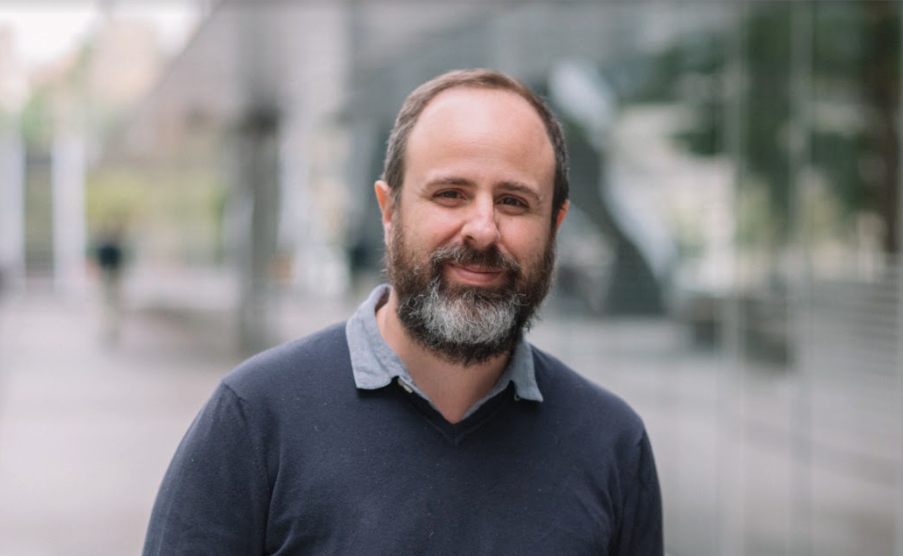
Pablo Barceló, director of the IMC.
The talk to be given by the IMC director in France will be titled “The Role of Logic in Advancing Machine Learning: Three Case Studies” and will cover case studies that highlight the essential role of logic in improving the understanding of modern machine learning architectures. The first two works are “Logical Languages Accepted by Transformer Encoders with Hard Attention” and “The Logical Expressiveness of Graph Neural Networks,” which also involve, respectively, researchers Alexander Kozachinskiy (postdoc IMC UC/CENIA/IMFD) and Juan Reutter (IMC academic/Departamento de Ciencia de la Computación UC and director of IMFD). The third is called “A Uniform Language to Explain Decision Trees” and has as one of its co-authors Marcelo Arenas (IMC/Departamento de Ciencia de la Computación UC and IMFD Researcher).
“What I want to show is that the logical aspects of computer science can be used to understand the capabilities of current artificial intelligence models. We work in three areas; one refers to graph neural networks, another is the expressive power of transformers, which are the architectures behind language models like ChatGPT. Finally, we address the interpretability of models. That is, how I explain the decisions they make, showing in each of them that logic can be an important tool for understanding what can be done and what the computational cost is,” Barceló indicates.
The transformer revolution
Transformer models originated from a paper published by Google researchers in 2017 titled “Attention Is All You Need,” quickly becoming one of the most influential developments in the field of machine learning. As the IMC director notes, its architecture is fundamental to OpenAI’s state-of-the-art language models like ChatGPT, in addition to being key to the creation of software such as DeepMind’s AlphaStar.
“Transformers are language models that recognize sequences of symbols, of words. So, from a mathematical point of view, it is interesting to understand which languages can be recognized by transformers and which cannot. To do that, what we do is formalize a computational model behind transformers and study that model based on which languages it can accept, which generates connections with the logical theory of languages and automata theory, which are also mathematical objects that process sequences,” says Barceló.

Transformers have become essential for applications such as ChatGPT.
This work is essential for the current development of transformers, whose application can be seen in chatbots, virtual assistants, and other interactive artificial intelligence systems where dynamic conversation with users is vital. “Today we are seeing that they can generate and improve texts. But as these models are refined, they will also be used to address multimodal data, which is not just text but also includes images or sounds. These transformers will be able to extract information from all these sources as if it corresponded to a single type of data,” explains the researcher.
The potential of graphs
A graph is a mathematical data structure consisting of a set of vertices—called nodes—and a set of edges connecting these vertices. In the 1980s, researchers began exploring ways to apply neural networks to graph-structured data, although it was not until the early 2010s that graph neural networks began to become better known, as a result of the development of new architectures and learning algorithms.
“These neural networks are models that process information structured based on graphs. We analyze which properties of graphs can be recognized by a neural network of this type, and for that we use logical methods. We demonstrate that any expression that can be expressed with a certain logic can be expressed in a graph neural network and vice versa. If there is a logical expression that can be recognized by a graph neural network, then it is expressible in this logic. It is like a one-to-one relationship between the two,” explains Barceló.
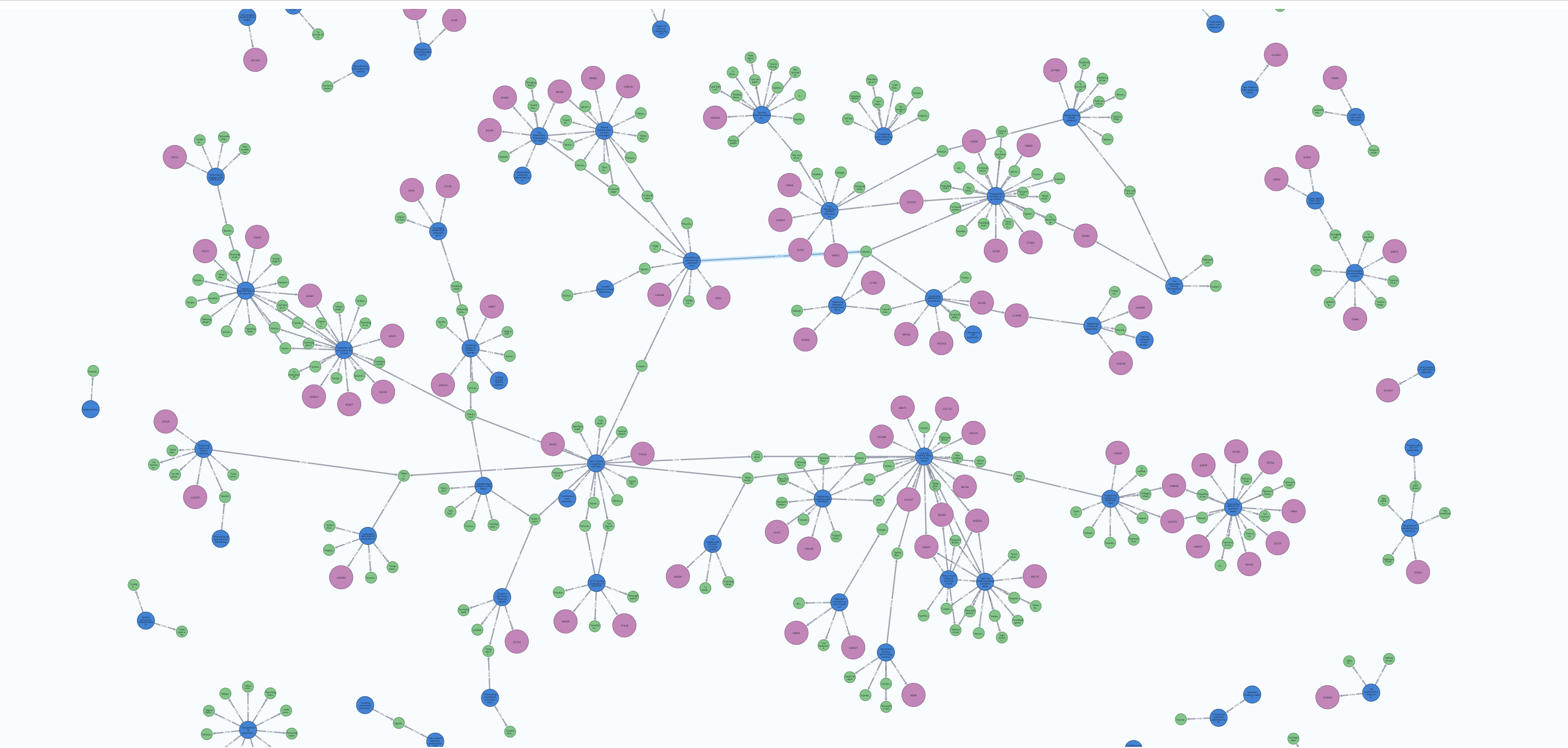
Graph neural networks have undergone significant advances in recent years
Today these networks have applications spanning various fields. “For example, graph neural networks are used for fraud detection in banks. If you have a transaction graph, with a neural network you can begin to detect areas where there are operations that look strange. They are also used to optimize transportation networks. In the development of new drugs, they are also very useful, since they can show that drugs that tend to attack certain diseases more effectively adhere to a certain molecular structure. With that information, you can end up generating another new medication,” says the IMC director.
Explainable artificial intelligence
The third study Barceló will present in France addresses the pursuit of explainable artificial intelligence and demonstrates how first-order logic can be used to design languages that declare, evaluate, and compute explanations for decisions made by machine learning models.
“Basically, models function as black boxes, since we understand very little about how they make decisions. That is why there is a growing trend to try to design models that are more explainable, that in some way provide reasons for why they made certain determinations,” says the academic.
An example occurs when a bank uses one of these models to grant or reject a credit application for a customer: “It is important to know what criteria were used to reach that decision, and not just have the model simply provide an answer. In the end, these criteria are mathematical notions that can also be formalized through logic.” This is because today there is a desire for the “explanations obtained to provide mathematical guarantees, and to be the best, most concise, or most efficient.”
Source: IMC UC