
maqui.ai presented its territorial intelligence platform powered by AI at Edifica 2026
The solution developed by the Millennium Institute for Foundational Research on Data (IMFD) seeks to reduce the time and money that construction and real estate companies spend evaluating land plots. Its presentation was part of the ten initiatives selected by the Chilean Chamber of Construction’s Accelerator program.
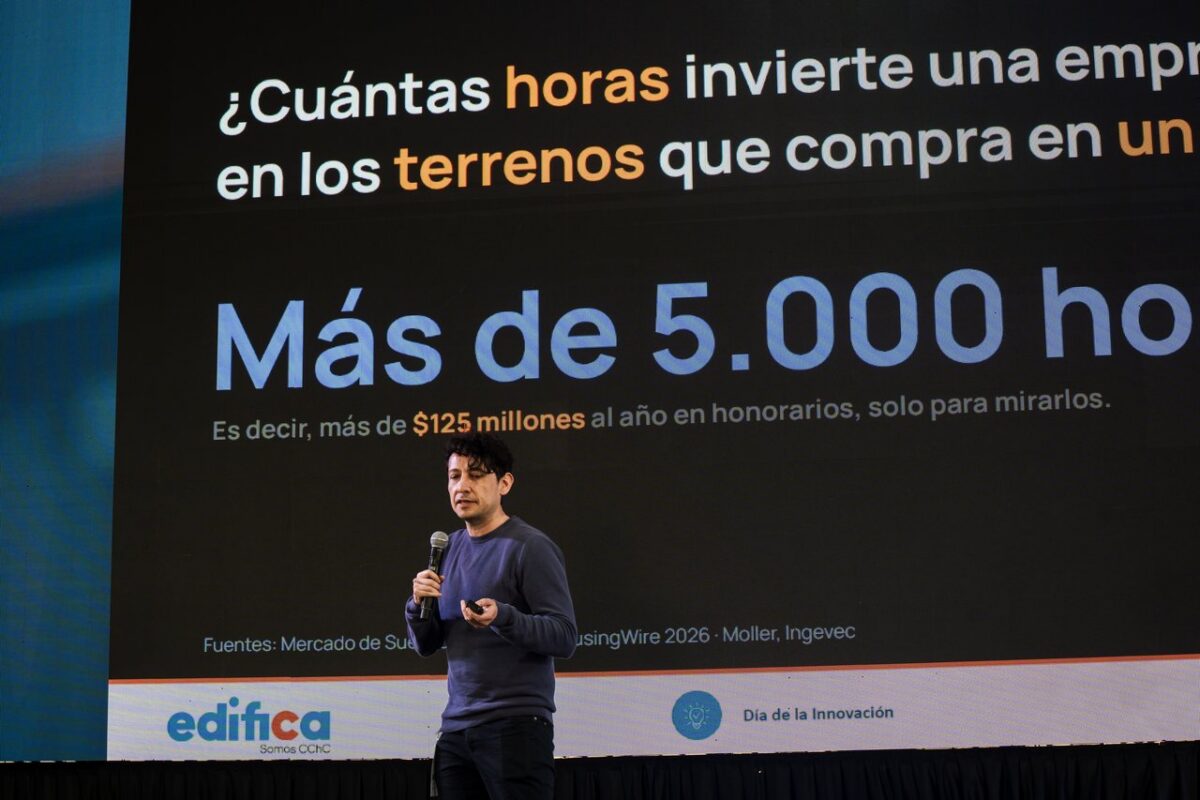
A real estate company spends more than 5,000 hours a year reviewing what can be built on a plot of land. This is partly explained by the need to check more than 20 sources of information that determine what can be built, how much it is worth, and what restrictions or conditions affect its development. The solution? Organize and make all that information available on a single AI-based territorial intelligence platform.
With that idea in mind, the CEO of maqui.ai, Hernán Sarmiento, began his three-minute pitch at Edifica 2026, the international construction fair organized by the Chilean Chamber of Construction (CChC) and FISA since 1990. “The main problem we want to solve is the time and money that construction and real estate companies lose when evaluating land plots. With maqui.ai we solve this problem: we unify the information and make it available through artificial intelligence agents, so that the search takes seconds,” he explained.
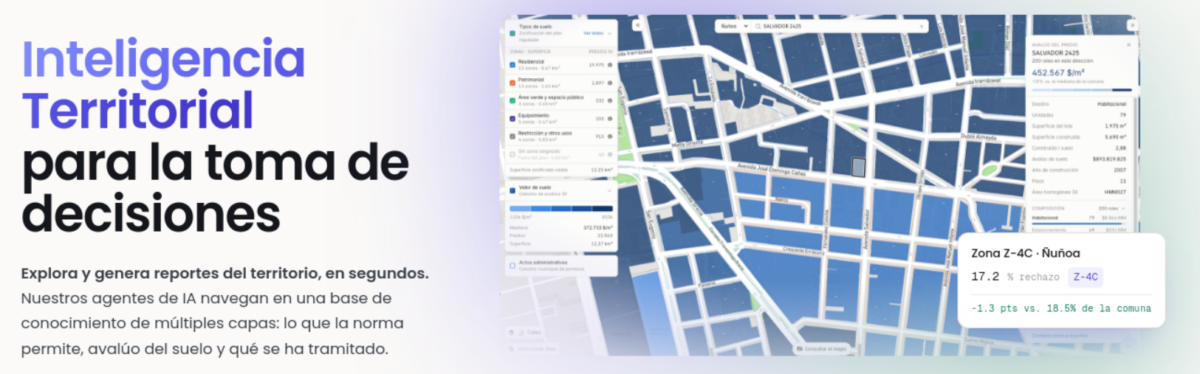
On the platform, users can ask questions such as: “I want all the plots where buildings of more than 4 floors can be built and that are less than 100 meters from a green area in Ñuñoa” or “What regulations and procedures apply to a specific avenue or street.” “The platform will respond with all the information associated with the query, displaying an organized answer through text, panels with indicators, documents and links to official sources, maps, and even reports in PDF that can be automated,” Sarmiento adds.
The presentation was part of the showcase of the ten technological solutions selected by the Construir Innovando Accelerator program, where each team had to present its proposal to investors and CChC partner companies with the goal of closing a pilot deal.
María Elena González, Open Innovation coordinator at CChC, explained the program’s mission during the same event: finding technologies that are not yet fully established in the construction industry in order to bring them closer to companies in the sector through mentoring, training, and the possibility of a real pilot project.
She noted that while all ten selected solutions will take part in the acceleration and mentoring program, only some will carry out a 90-day pilot with a partner company of CChC during December. González also introduced the network of mentors who will support the process, one for each solution.
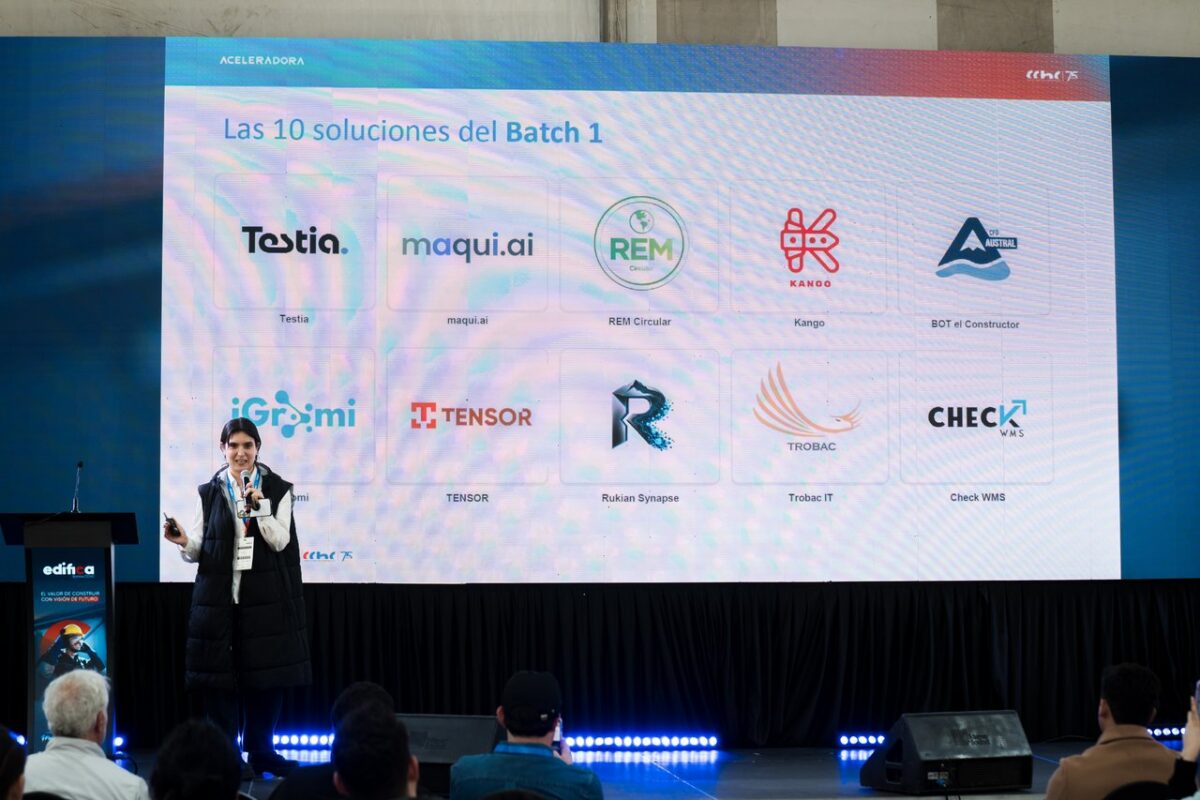
The ten solutions selected in this first generation of the program are: maqui.ai, Check WMS, Trobac IT, Testia, REM Circular, Kango, Bot el Constructor, iGromi, Tensor, and RUKIAN TECH.
The scientific backing behind maqui.ai
maqui.ai is a territorial artificial intelligence platform developed by the Innovation and Technology Transfer area of the Millennium Institute for Foundational Research on Data (IMFD), a scientific center hosted by Universidad Católica de Chile and Universidad de Chile, with nodes at four other universities.
The idea behind maqui.ai emerged in 2024 from joint work between researchers and professionals in computer science, data science, and law, with a very simple goal: to facilitate access to reliable legal information.
After being awarded the Start-Up Ciencia 2025 fund from the National Research and Development Agency (ANID), the research project evolved into a platform that connects more than 25,000 public documents on territorial matters to a closed, secure knowledge base, from which artificial intelligence agents draw information to answer user queries.
“As an institute, we have the goal of transferring the research and knowledge we produce, turning it into a benefit for society. To do this, we have to go far beyond the academic sphere, because the solutions we develop must keep adapting to what end users need and are looking for. Our work with the CChC contributes to that direction, since it allows us to understand how the industry works and how data is handled in order to generate a transfer that provides value. The more we work together and bring academia and industry closer, the more both areas are strengthened,” explains Juan Reutter, a faculty member at the Department of Computer Science and the Institute for Mathematical and Computational Engineering at Pontificia Universidad Católica, and director of the Millennium Institute for Foundational Research on Data (IMFD).
Some of the mentoring sessions from the Aceleradora program are available here.
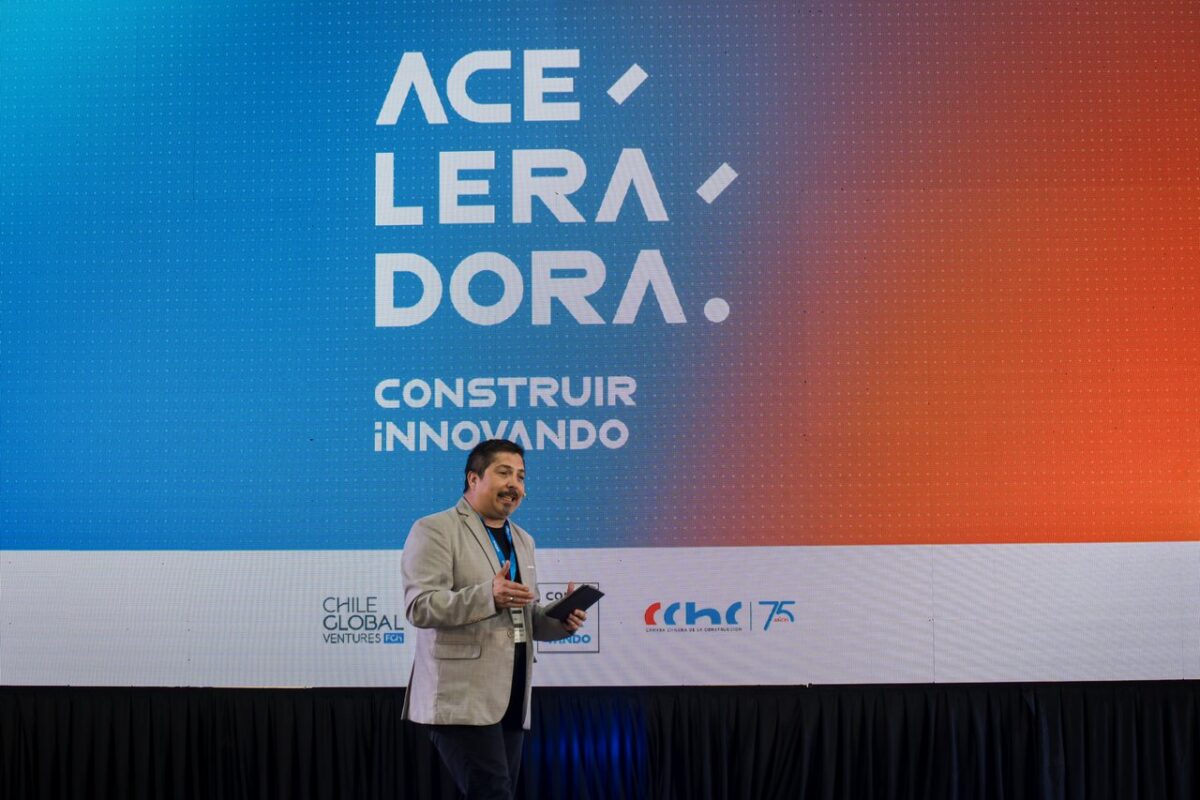

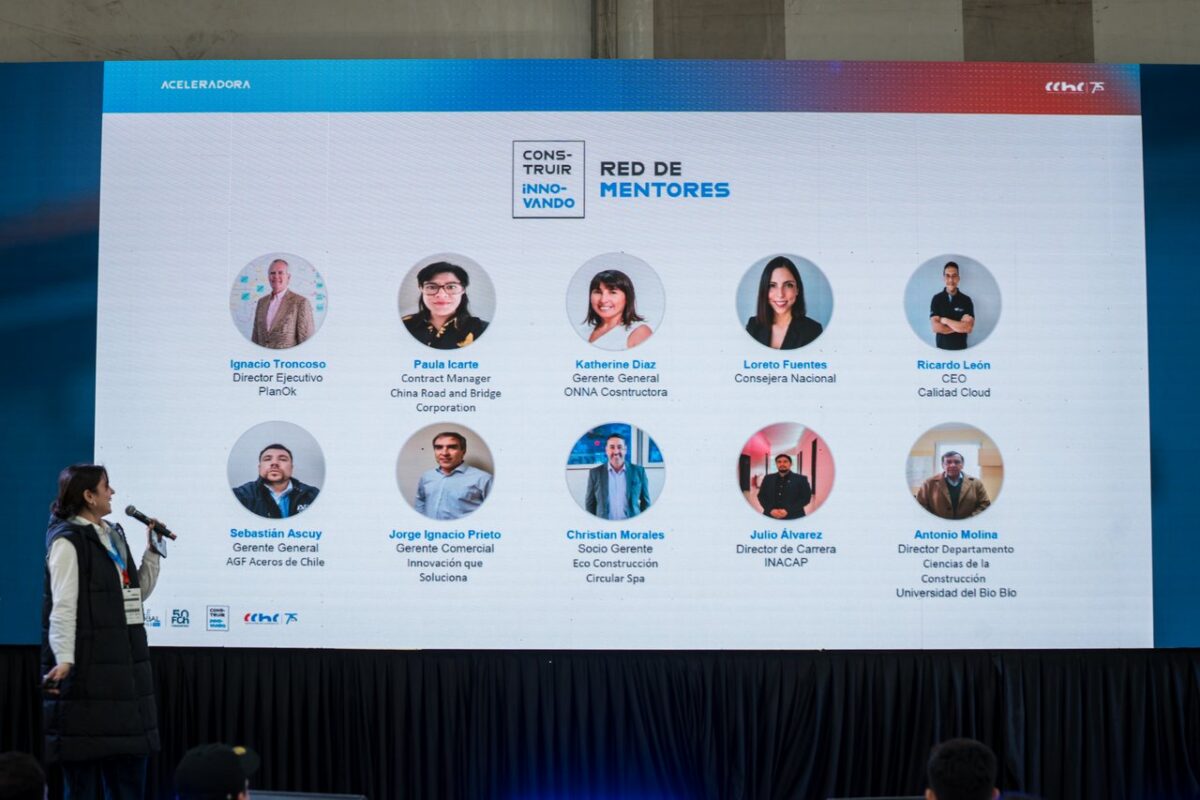



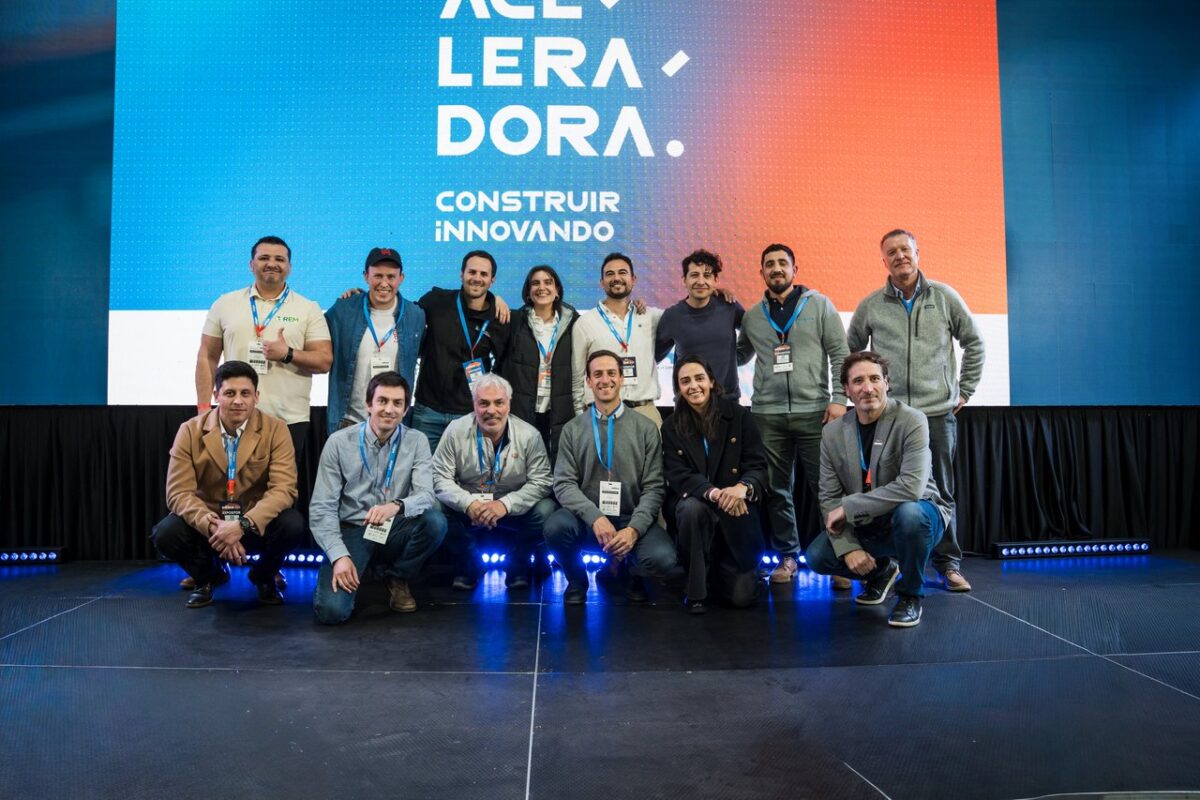
Photo credits: CChC