
Felipe Bravo, Universidad de Chile, is awarded Fondecyt grant to study language analysis models that evolve over time
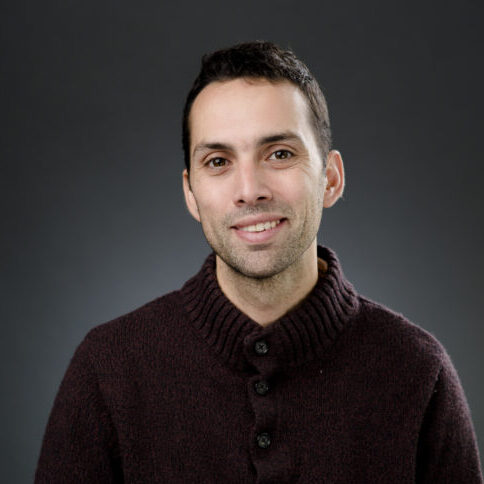
Felipe Bravo (36), researcher at IMFD and assistant professor at the Departamento de Ciencias de la Computación at the U. de Chile, was one of the young researchers, at the national level, who were awarded a Fondecyt de Iniciación 2020. This fund seeks to encourage and strengthen the development of excellent scientific and technological research by young researchers, through the financing of research projects lasting two to three years.
The academic will work on the automatic monitoring of public opinion through social media. “The project consists of building language analysis models -of emotions and sentiments- that can adapt over time without human supervision. Underlying this, I am interested in seeing the evolution of language. For example, when a new hashtag appears, having the model try to automatically understand what it means, what it is expressing,” explains Felipe Bravo.
One application of his research, he adds, will be monitoring social media in real time. “This makes it possible to measure polarization, for example, during moments of elections such as the recently held plebiscite.” Additionally, the idea is for these models to be dynamic. “Today, language analysis models are static, and the problem is that they are limited to the data I used to train them. But language is dynamic, it changes and new concepts appear all the time, especially on social media,” states the IMFD’s young researcher.
Until now, language analysis has typically relied on Natural Language Processing (NLP) and Machine Learning (ML) techniques. This allows tweets to be automatically classified into affective categories such as positivity, negativity, anger, joy, and sadness, using an affective lexicon or list of phrases and words annotated according to affective categories. “Developing accurate, high-coverage affective lexicons for the language used on Twitter is a very difficult task, mainly because the diversity of informal expressions found on this platform, such as misspelled words, acronyms, or hashtags, makes manually annotating words by affect costly and time-consuming. Affective lexicons are also prone to becoming outdated over time due to temporal changes in the affective patterns of words,” states the academic.
Felipe Bravo explains that this project will develop methods to induce affective lexicons capable of evolving automatically over time, based on tweets written in English and Spanish. “In this project, we will use stream data mining techniques for the first time to design incremental and efficient algorithms for the continuous updating of affective lexicons,” he adds.
The application
Once developed, these models can be useful for those who want to analyze public opinion on social media or in texts in general. “They will be able to have guarantees that the models will not become obsolete and that they will always be capturing, in real time, what the language is saying,” states the DCC U. de Chile professor.
Currently, already-trained models are used -such as the Vader library or SentiStrength-, which are generally not adapted to particular language domains. “These libraries or APIs are basically ‘boxes’ to which I feed texts from Twitter or another source and they return the sentiment associated with the text, for example, negative or positive. Inside, these boxes have an algorithm that was trained with data very different from what one wants to analyze, for example, with Spanish from Spain. So it will not recognize the diversity of words used here and will ignore a lot of information,” states Felipe Bravo.
To learn more about this topic, check out this link to an open source software developed by the researcher to analyze sentiment in tweets: https://affectivetweets.cms.waikato.ac.nz/