
Pablo Barceló assumes the Directorship of AI at the Vicerrectoría de Inteligencia Digital UC
One of the missions of the unit he will lead is to promote the informed and responsible use of AI in research, driving interdisciplinary initiatives on its development, impacts, and applications to address the most pressing social challenges.
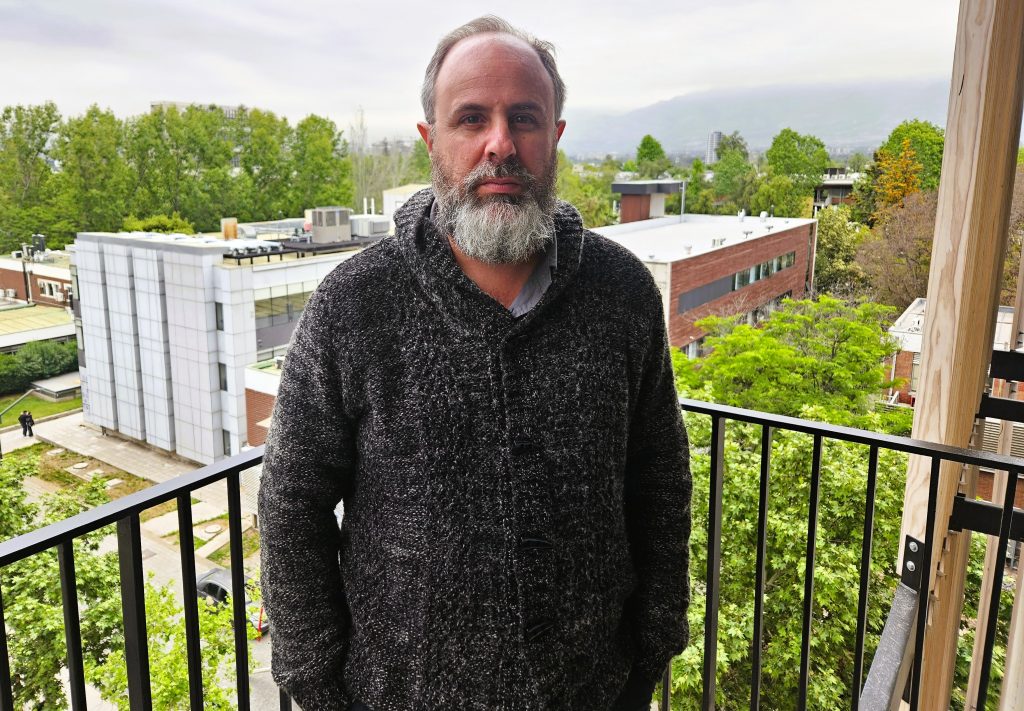
Pablo Barceló, who until a few months ago was director of the Institute of Mathematical and Computational Engineering, has just been appointed to head the AI Directorate of the recently created Vice-Rectory for Digital Intelligence (VRID) of the Pontificia Universidad Católica de Chile. “Several top-tier universities around the world have begun to recognize the importance of structuring the impact of artificial intelligence around their teaching programs and research activities. UC is also being a pioneer in these matters, especially through the creation of the new Vice-Rectory for Digital Intelligence, and has decided to take a decisive step by formalizing this vision through the creation of an AI Directorate that serves the entire university in a transversal way,” says the IMC faculty member and researcher at the Millennium Institute for Foundational Research on Data (IMFD) and the National Center for Artificial Intelligence (CENIA).
The academic holds a PhD in Computer Science from the University of Toronto (Canada), and his specialties include database theory, logic for computer science, and the mathematical foundations of artificial intelligence. He has also been part of the program committees of the most important conferences in databases and logic in computer science, such as ACM PODS, SIGMOD, ICDT, LICS, and STACS. Meanwhile, Pablo Barceló recently appeared in the prestigious ranking compiled by Stanford University and the publisher Elsevier, which lists the top 2% most cited researchers in the world during 2024.
The VRID’s AI Directorate -headed by Paula Aguirre, also an IMC faculty member- will have different areas of action. One of them will be implementing an institutional program to adapt UC’s educational model to the presence and use of artificial intelligence, which includes actions such as curricular updates, faculty training, and the development of pedagogical tools and resources. This includes tasks such as defining ethical guidelines and institutional policies on responsible use, academic integrity, and rights protection.
In addition, undergraduate and graduate curricula in critical areas will be reviewed and updated, incorporating content and competencies on AI and digital literacy, along with training faculty on integrating AI into tasks such as pedagogical planning and activity design.
Another area of action for the AI Directorate will be the development of digital platforms and AI tools that boost collaboration, experimentation, and the scaling up of discovery and creation projects, enabling greater productivity and impact. This includes the deployment of systems that foster synergy and interdisciplinarity between internal and external teams. It also seeks to promote the informed and responsible use of AI in research and creation, driving fundamental and interdisciplinary research on its development, impacts, and applications to address the most pressing social challenges.
Regarding scientific information, the goal is to develop and consolidate digital systems and environments that facilitate the management, storage, processing, and use of research and creation data. This is complemented by advanced training and technical support for researchers in managing scientific data, and the use of AI and data science for research.
On his new role leading the unit that will carry out these tasks, Pablo Barceló states: “I sincerely thank Rector Juan Carlos de la Llera and Vice-Rector Paula Aguirre for their trust in entrusting me with the direction of this initiative. I am very excited about the opportunity to help UC lead the responsible, creative, and transformative development of artificial intelligence in Chile and the region.”
Source: IMC UC