
University of Chile presented dashAI, Chilean platform that allows working without handing over data
The Faculty of Physical and Mathematical Sciences of the Universidad de Chile, through its Data and Artificial Intelligence Initiative (IDIA), launched free, open-source software that allows users to train artificial intelligence models without needing to know how to program. The tool operates 100% locally on the user’s computer, with no mandatory cloud dependencies, positioning the institution at the forefront of the country’s public technological development.
The open-source platform dashAI is designed to make Machine Learning model training and evaluation and the use of generative artificial intelligence models possible without the need to program, and it runs on each user’s own computer.
The initiative addresses a central challenge of today’s technological landscape: access to artificial intelligence and data science. Creating or evaluating AI algorithms used to require advanced Python programming skills or dependence on costly commercial cloud infrastructure; dashAI breaks this paradigm through an intuitive “no-code” interface, with all processing happening on the user’s own computer, so that data never leaves their device.
“The dashAI platform is proof that Chilean academia can develop artificial intelligence technology in an open and collaborative way, without depending on a single company, private platforms, or foreign infrastructure. For our Faculty of Physical and Mathematical Sciences (FCFM), this represents an example of leadership in developing AI for the country’s various challenges, demonstrating that the democratization of technology requires open tools that do not leave behind those who do not know how to program,” said Dean Susana Mondschein.
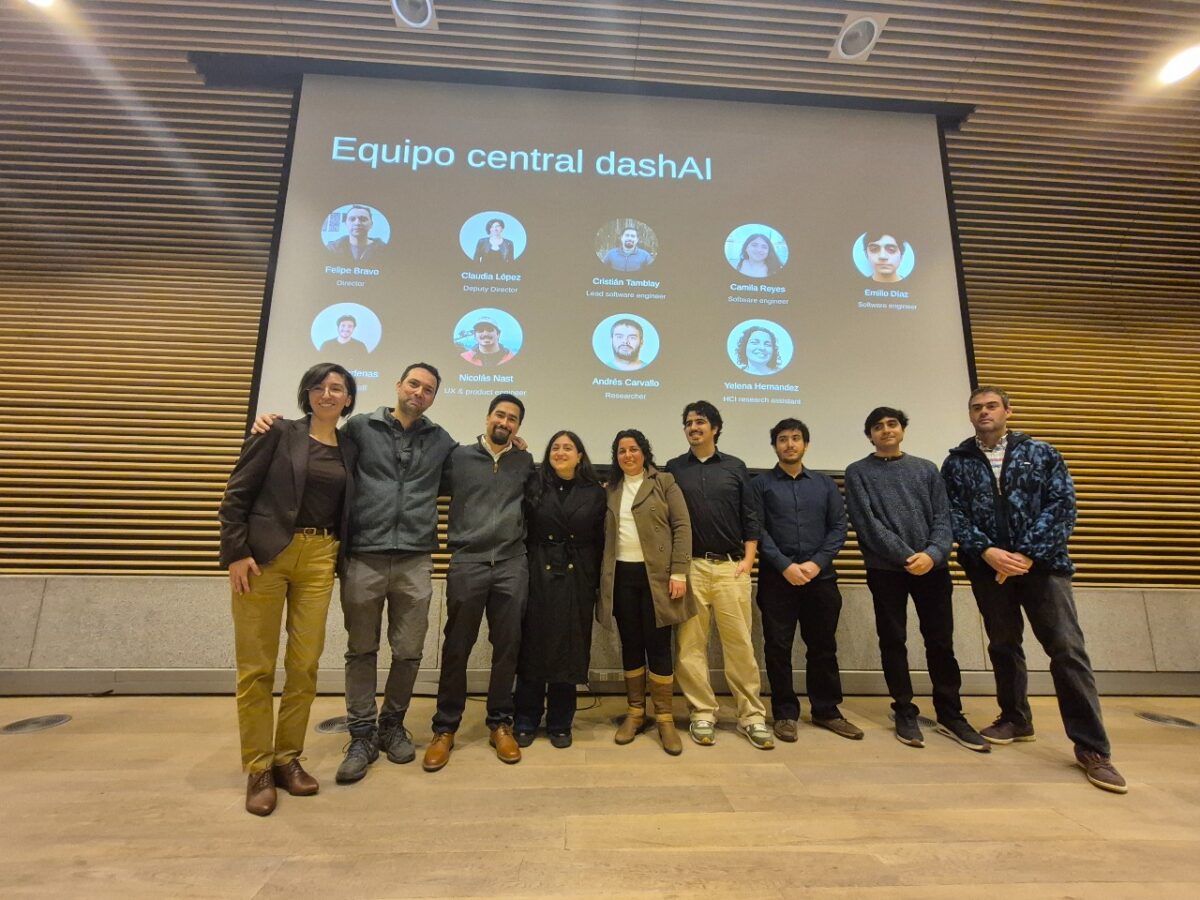
The development of this platform was led by the FCFM through its Department of Computer Science (DCC) and its Data and Artificial Intelligence Initiative (IDIA). The building of this ecosystem includes the National Center for Artificial Intelligence (CENIA) as beneficiary institution, the Millennium Institute for Foundational Research on Data (IMFD) as collaborator, and the company Unholster as industry partner, achieving the scaling of the tool thanks to state funding from the National Agency for Research and Development (ANID) through the Fondef IDeA fund.
“This initiative demonstrates that Chile can develop world-class artificial intelligence through collaboration between the university, research centers, and industry. Our goal is to democratize access to these technologies through open tools that allow researchers, companies, and institutions to innovate without giving up control and privacy over their data,” explained the director of IDIA FCFM, DCC professor, IMFD researcher, and project leader, Felipe Bravo.
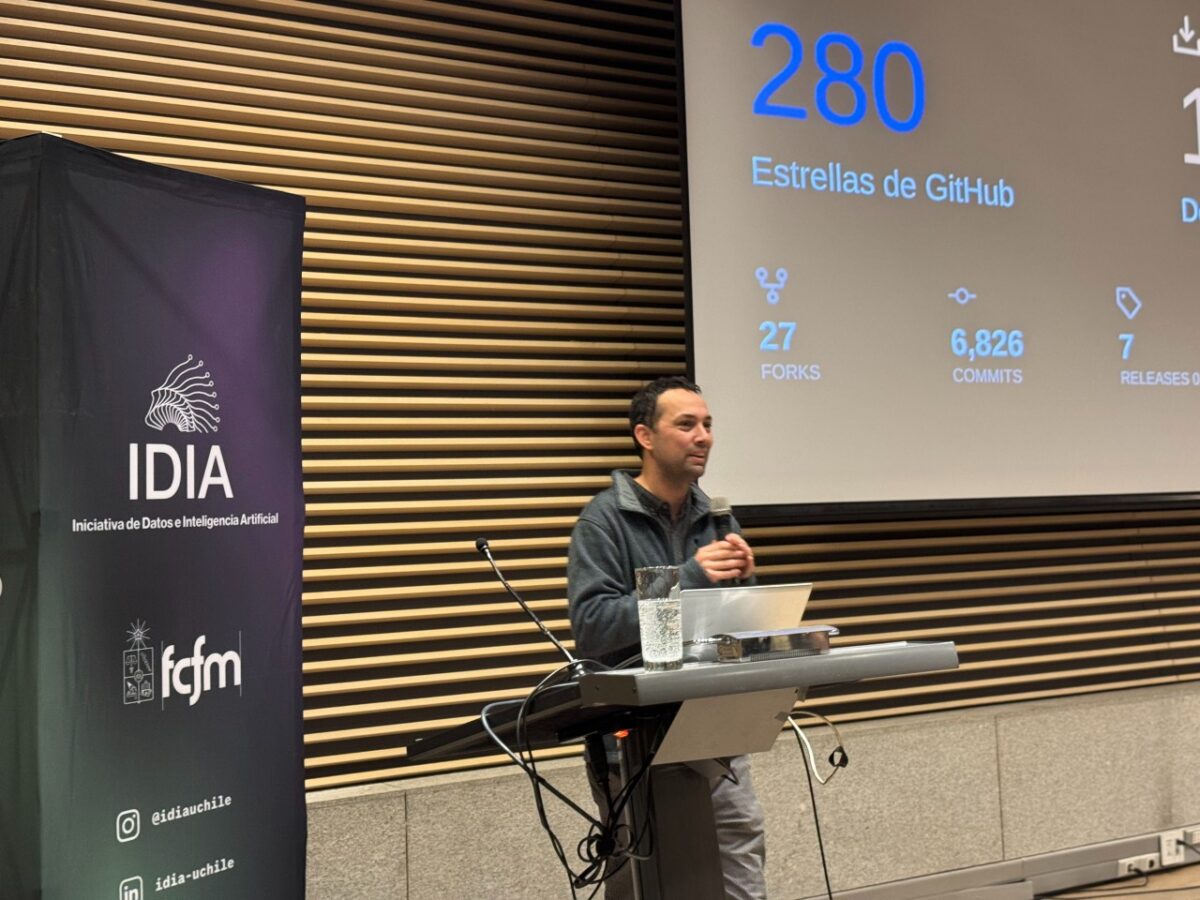
“This platform has also allowed us to strengthen a technology development model that brings together the efforts of university students with a long-term vision to build technologies as a public good for Chile and the region. More than 20 thesis students from Universidad de Chile have taken part in the process”, added Claudia López, also an FCFM Uchile academic.
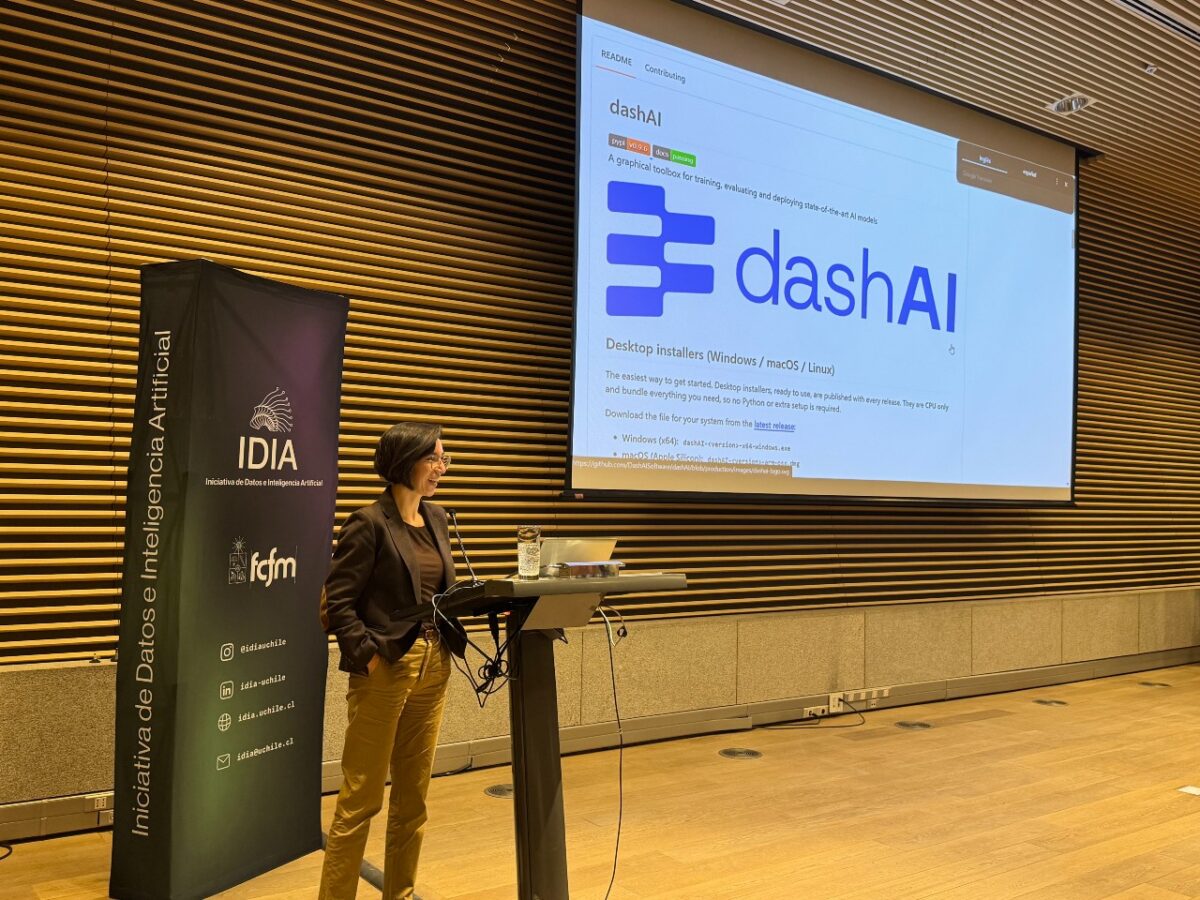
In terms of technical innovation, dashAI works as a desktop application that unifies data processing, training, evaluation, and explainability into a single environment for 76 available models, ranging from tabular classifiers to advanced generative models such as Mistral and DeepSeek.
For Juan Reutter, director of IMFD, this platform “allows us to train AI models in a local environment, maintaining the sovereignty and privacy of the training data, and offering a valuable alternative to cloud services. The fact that people can analyze their data and train models while maintaining control over their information is an important step toward strengthening more accessible and responsible AI, since without well-managed data we cannot create reliable models.”
Each tool added to dashAI comes with a description of its own options, and the program automatically generates the screen to configure it. This allows new components to be incorporated with very little additional work. To date, the platform has recorded more than 18,500 downloads worldwide.