
IMFD researchers stand out at SIGMOD/PODS 2025
The Millennium Institute Foundational Research on Data IMFD) played a prominent role in the 2025 edition of the prestigious ACM SIGMOD/PODS international conference, one of the world's leading forums on database research.
"The participation of IMFD researchers strengthens the institute's position in the development of theoretical foundations, computational tools, and applications in data management and analysis, consolidating the presence of research carried out in Chile at the forefront of international research in data science," says Cristián Riveros, IMFD researcher and academic at the Department of Computer Science at the Pontifical Catholic University of Chile.
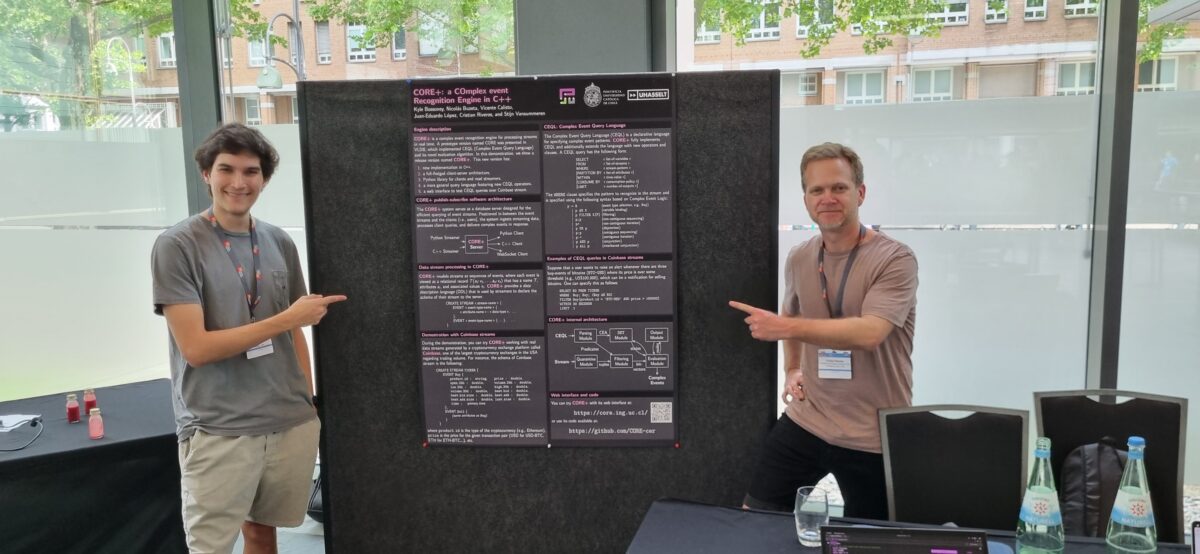
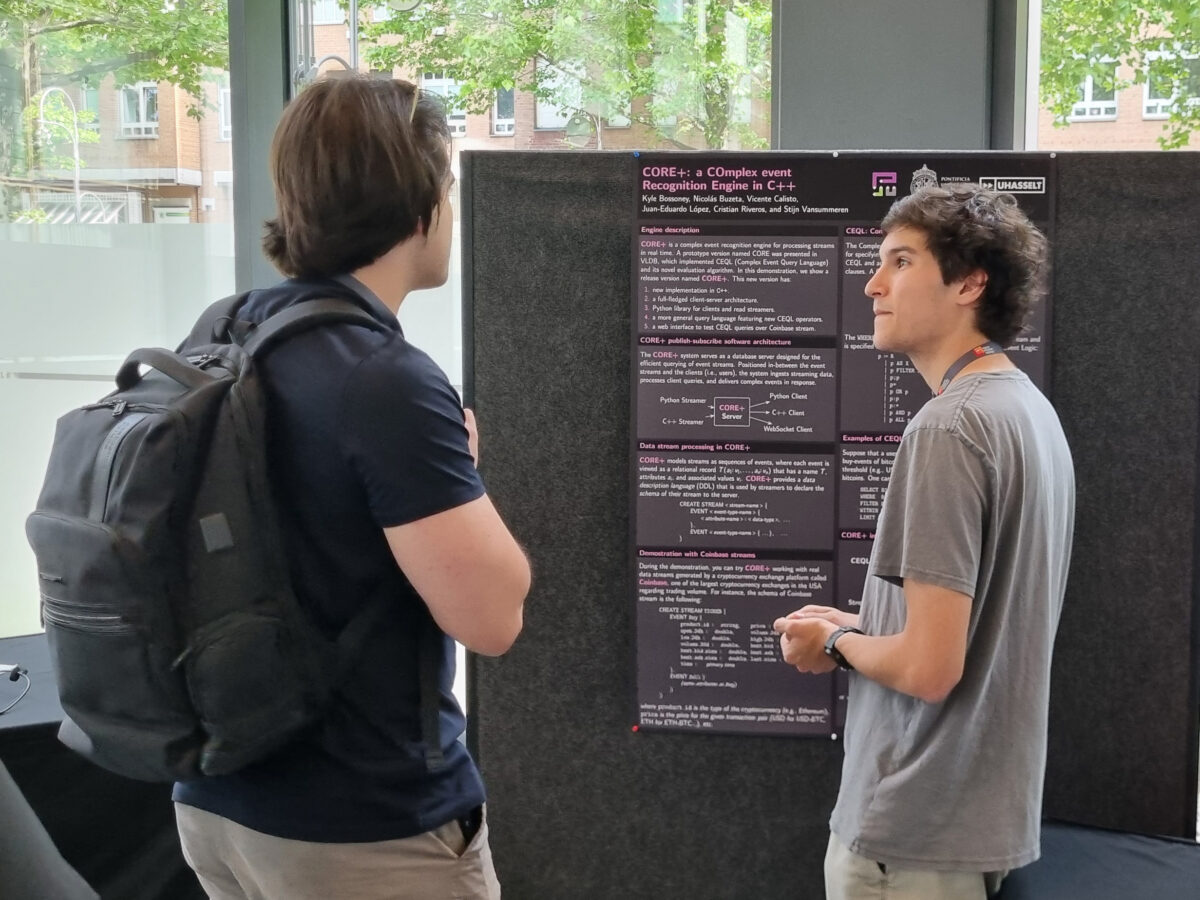
Riveros' team presented the demo paper "CORE+: A Complex Event Recognition Engine in C++," a tool that shows promising results for tackling one of the most challenging problems in computing today: complex event recognition (CER) in continuous real-time data streams.
"This type of analysis is crucial in sectors such as cybersecurity, logistics, and predictive maintenance, where detecting critical situations immediately can make all the difference. Our proposal is based on a research prototype called CORE that we have already tested, and adds new capabilities, optimizations, and features that make it a mature, production-ready version," says Cristián Riveros. Kyle Bossonney from Oxford University, Stijn Vansummeren from Hasselt University, Nicolás Buzeta, Vicente Calisto, and Juan López, all from the Catholic University of Chile and the IMFD, participated in the development of Core+.
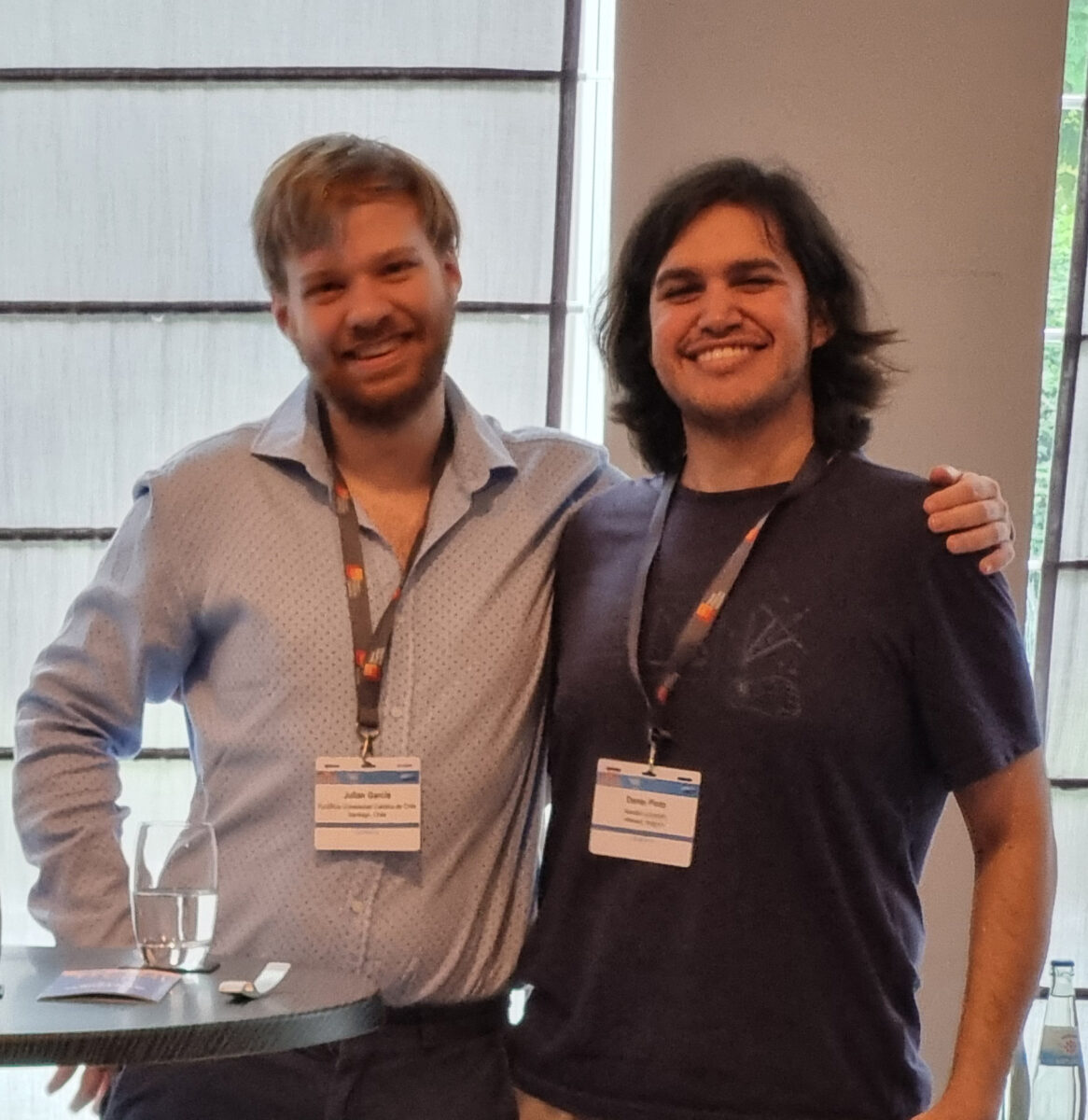
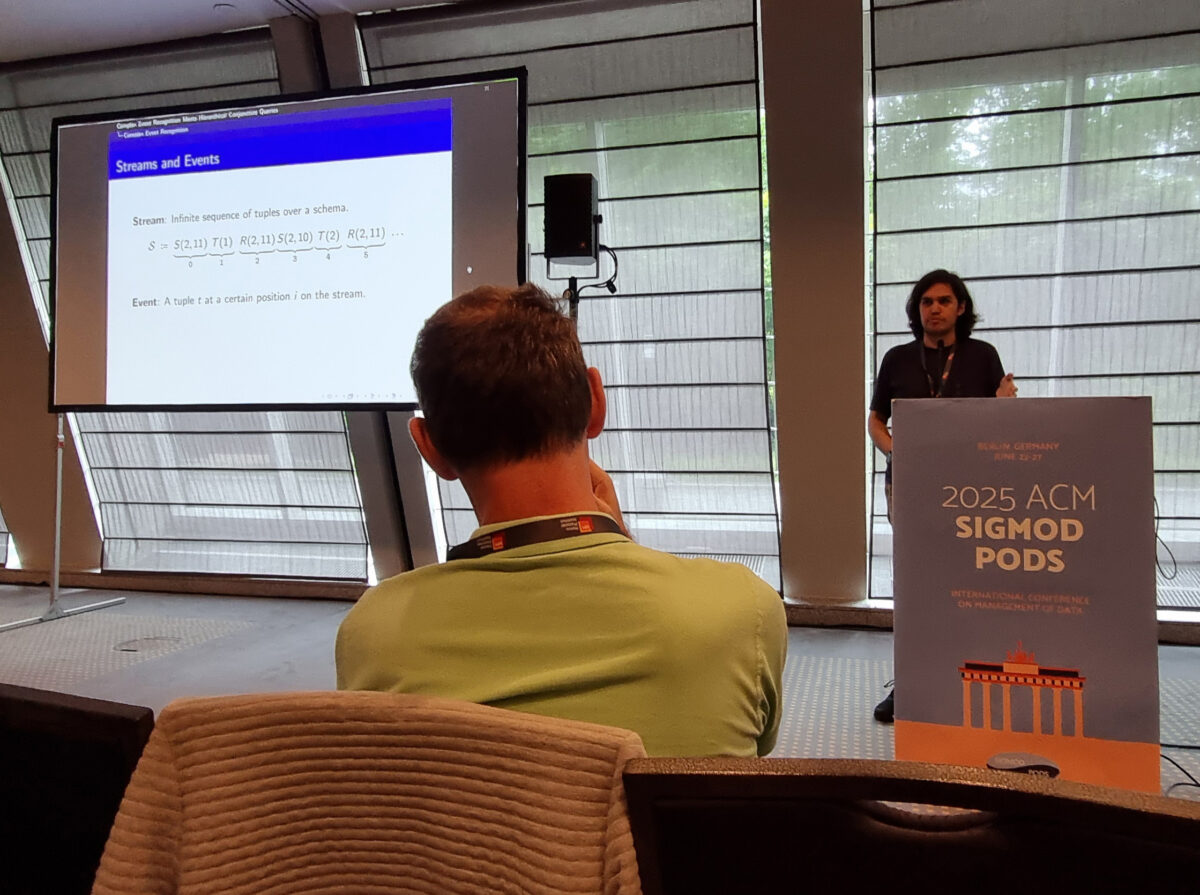
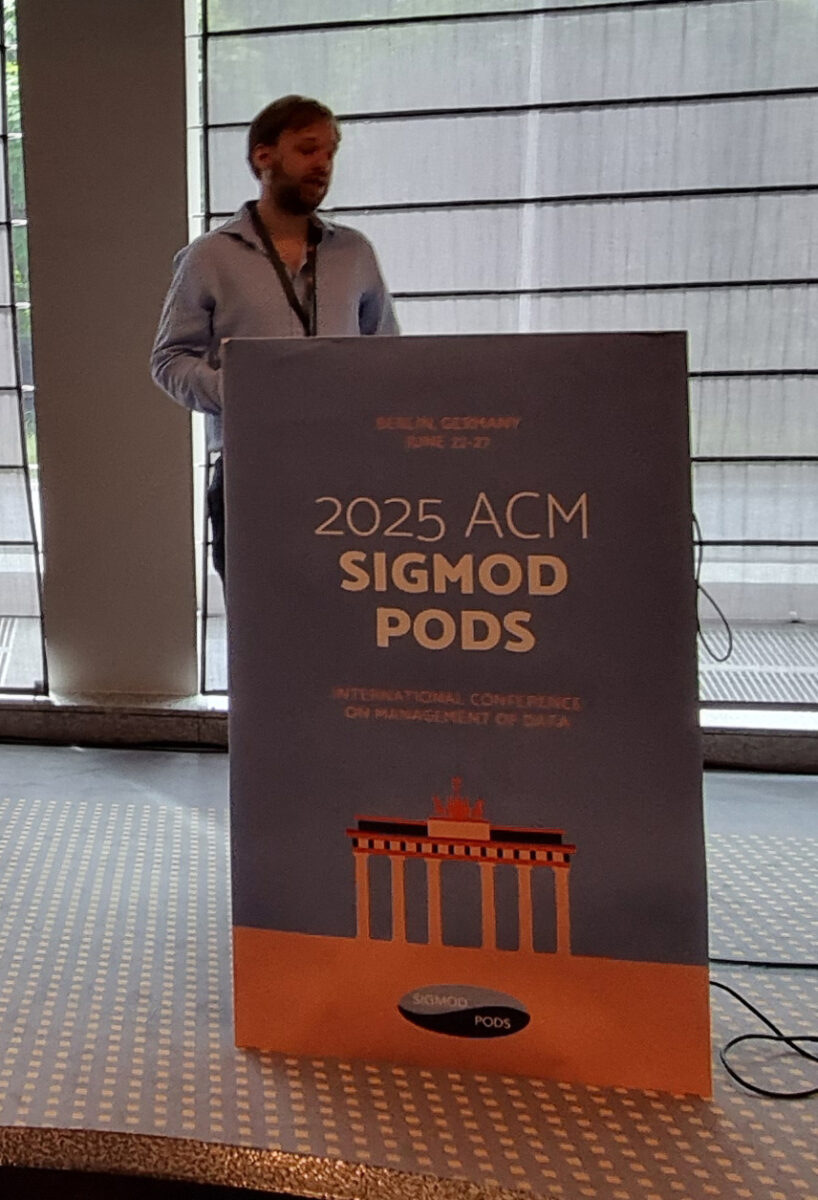
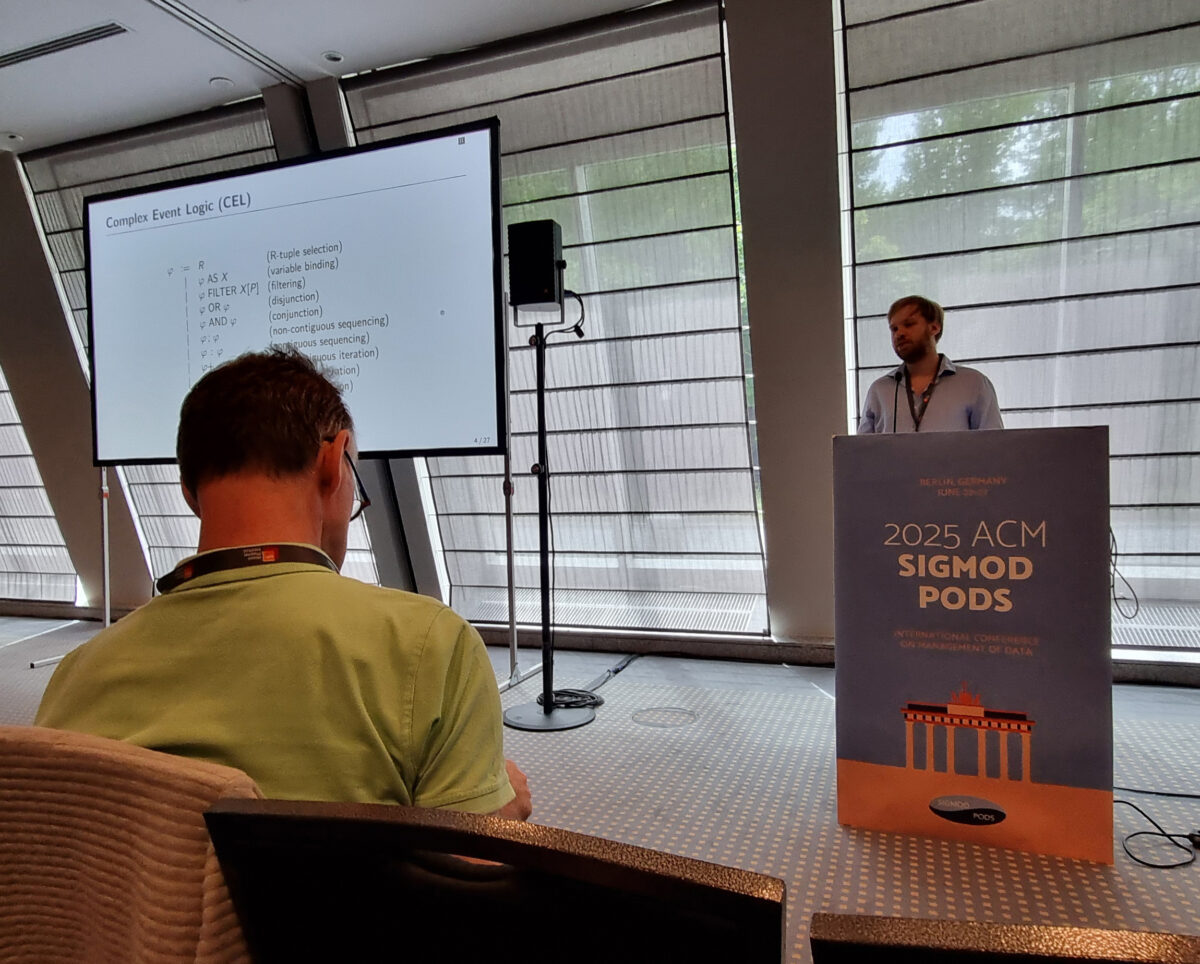
IMFD research presented at SIGMOD/PODS
In "Towards Tractability of the Diversity of Query Answers: Ultrametrics to the Rescue,"another paper presented at SIGMOD/PODS, the researchers propose an approach based on ultrametrics to construct diverse responses to queries. "Considering the massive volumes of information handled today, a simple query can have millions of results. The idea is to be able to present the user with a small, representative, and diverse selection of possible answers that reflects the variety of the complete set of possible answers," explains Riveros. Timo Merkl and Reinhard Pichler, both from TU Wien; Cristian Riveros and Marcelo Arenas, both from the Catholic University of Chile and IMFD researchers, participated in this research.
The paper "Complex Event Recognition meets Hierarchical Conjunctive Queries" by Dante Pinto and Cristian Riveros, both from the Pontifical Catholic University of Chile, combines two key areas: pattern recognition in data streams (Complex Event Recognition, CER) and hierarchical queries (HCQ). Through a new model of parallelized automata (PCEA), the study efficiently expresses a wide range of sequential patterns with desirable algorithmic properties for real-time processing.
In "Complex Event Recognition under Time Constraints: Towards a Formal Framework for Efficient Query Evaluation" by Cristian Riveros and Julián García, both from the Catholic University of Chile and IMFD, a formal model is proposed to study how to evaluate queries on event streams with time constraints. The paper introduces an extended logic with time operators and a model of automata with clocks, achieving efficiency in its evaluation under specific conditions.
Outstanding recognition
Meanwhile, Pablo Barceló, an academic at the Institute of Mathematical and Computational Engineering at the Catholic University of Chile and an IMFD researcher, also received the Distinguished Paper Award for his work, also presented at PODS, "Explaining k-Nearest Neighbors: Counterfactual and Abductive Explanations," which explores explanatory foundations for widely used machine learning models. The paper was developed in collaboration with Alexander Kozachinskiy (Catholic University of Chile), Miguel Romero (Catholic University of Chile), Bernardo Subsercaseaux (Carnegie Mellon University), and Jose Verschae (Catholic University of Chile).