
Ricardo Baeza-Yates receives international recognition for his pioneering contributions to computer science
The Association for Computing Machinery (ACM) awarded the 2025 Luiz André Barroso Award to the IMFD researcher, recognizing his pioneering contributions to algorithms and information retrieval, as well as his leadership in the development of computing in Latin America.
A new and important recognition for his scientific career was received by Ricardo Baeza-Yates, faculty member of the Departamento de Ciencias de la Computación at the Facultad de Ciencias Físicas y Matemáticas (FCFM) of the Universidad de Chile and senior researcher at the Millennium Institute for Foundational Research on Data (IMFD). This is the 2025 Luiz André Barroso Award, granted by the Association for Computing Machinery (ACM) —the world’s leading computer science organization— and by Google. The award recognizes his pioneering contributions to algorithms and information retrieval, as well as his leadership in promoting an active transnational research community in Latin America.
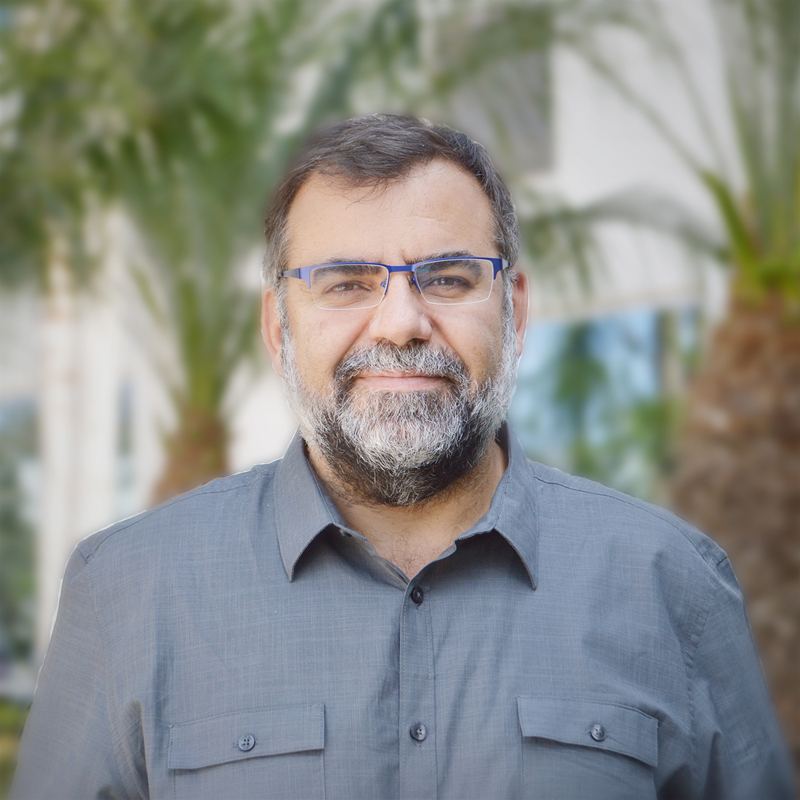
The ACM Luiz André Barroso Award recognizes researchers from historically underrepresented communities who have made fundamental contributions to computer science. The award is named after a Brazilian computer engineer who was a pioneer in the design of the modern data center. Barroso, who grew up in Brazil, was a strong advocate for equal opportunity for all.
“Luiz André Barroso was one of the pioneers at Google of cloud computing, who unfortunately left us far too soon due to a terminal illness. So it is an honor to receive an award named after a world-class Brazilian researcher,” said the professor.
Regarding the present and future of the discipline in the region, Baeza-Yates warned that one of the main challenges continues to be structural inequality between countries. “In Latin America there are nations advancing much faster than others, which widens digital divides. The same is happening with artificial intelligence, but at a faster pace. I hope the region does not replicate models centered solely on financial gain, but instead promotes social well-being and regulates the use of artificial intelligence with its own approaches,” he stated.
Pioneering Contributions to Computer Science
Researcher Ricardo Baeza-Yates is considered one of the world’s leading researchers in information retrieval, especially recognized for developing innovative data structures that have shaped this field. His work has produced influential algorithms for string searching and fuzzy matching, including the well-known Shift-Or algorithm. Throughout his prolific career, he has published more than 500 highly cited papers and co-authored several books. His textbook Modern Information Retrieval, co-authored with Berthier Ribeiro-Neto, remains the most widely used and authoritative reference in the discipline.
He is also notable for the key role he has played in strengthening the computing community in Latin America. During this past decade, he has focused his work on responsible artificial intelligence, being one of the main authors of ACM’s Principles for Responsible Algorithmic Systems, published in October 2022. He currently serves on several technology policy committees, including ACM, IEEE, the OECD, and the World Economic Forum.
“It is fitting that an ACM award named after Luiz Barroso, a distinguished Brazilian computer scientist, should be given this year to Ricardo Baeza-Yates, a leading Chilean technical figure,” said ACM President Yannis Ioannidis. “Their trajectories reflect how higher education institutions in Latin America have trained some of the region’s most important pioneers. On that foundation, Ricardo Baeza-Yates understood that a transnational approach, fostering cooperation among Latin American countries, is the most effective way to drive digital economies in the region. ACM is proud to be part of this growth. More and more Latin American countries are hosting ACM conferences, our membership in the region is growing, and an increasing number of ACM Fellows and journal editors call Latin America home.”
“Google is proud to sponsor this award in honor of our late colleague Luiz Barroso,” said Jeff Dean, Google’s Chief Scientist. “By fundamentally rethinking data center design, Luiz laid the foundations of cloud computing. Similarly, Ricardo Baeza-Yates’s innovations and his indispensable book on information retrieval have been key to how we harness data and derive knowledge from it. We are also proud to collaborate with Ricardo Baeza-Yates and others driving technological development in Latin America. Google continues to make significant investments in the region to increase connectivity, foster digital growth, and expand access to artificial intelligence applications.”
About Ricardo Baeza-Yates
Ricardo Baeza-Yates is currently Search Chief Scientist at You.com and a professor at the Universidad de Chile, the KTH Royal Institute of Technology (Sweden), and the Universitat Pompeu Fabra (Catalonia). He was previously Vice President of Research at Yahoo! Labs, holds 14 patents, and has co-founded several startups in Chile and Spain, including Theodora AI.
He began his career pursuing simultaneous degrees in Computer Engineering and Electrical Engineering at the FCFM, graduating in 1983 and 1985 respectively, and also earning a Master’s degree in Computer Science in January 1985 and a Master’s degree in Electrical Engineering in April 1986. He obtained his Ph.D. in Computer Science from the University of Waterloo (Canada) in May 1989.
Among his honors are Chile’s National Prize for Applied and Technological Sciences (2024), Spain’s Ángela Ruiz Robles Award (2018), the CLEI Latin American distinction (2009), and the first Merit Award of the Chilean Society for Computer Science (2025). He is a member of the Chilean Academies of Science and Engineering, as well as the Academia Europaea, and a Fellow of both ACM and IEEE.
Professor Baeza-Yates will formally receive the award on June 13, during ACM’s annual awards ceremony.
—
Source: Comunicaciones DCC