
Juan Reutter takes on role as new Deputy Director of IMFD
May 2022.- Juan Reutter, faculty member at the Departamento de Ciencia de la Computación de la U. Católica (DCC UC), has recently taken on the role of new alternate director of the Millennium Institute for Foundational Research on Data (IMFD). Pablo Barceló, director of the Instituto de Ingeniería Matemática y Computacional de la U. Católica (IMC UC) and who until now held that position, takes on the role of scientific director of the IMFD Innovation unit.
“Our intention is to put as much force as possible behind those activities that were hindered by the pandemic. It will be a very intense year for our management, with a particular focus on our students, who have suffered the impact of the distance and with whom we hope to keep strengthening ties,” says Marcelo Arenas, director of IMFD and Full Professor at DCC UC. Juan Reutter’s experience in the scientific direction of the Unidad de Investigación y Formación Académica will allow him to continue working on the strengthening of the community of researchers, students, and professionals at the institute, Arenas adds.
Meanwhile, Pablo Barceló, as director of IMC UC, associate researcher at IMFD and also at the Centro de Investigación en Inteligencia Artificial (CenIA), is in a unique position to act not only as scientific director of IMFD Innovation, but as a connecting node for collaborations among the different centers, academia, the public sector, and the private sector. “We have a significant gap as a country, in areas ranging from the training of specialized human capital in data science and artificial intelligence, to the application of innovative solutions from these areas to local needs. I am convinced that the only way to move forward quickly and effectively in solving these problems is through collaboration in research and technology transfer among IMFD, CenIA, and IMC UC,” Barceló states.
Pablo Barceló holds a PhD in Computer Science from the University of Toronto, Canada, and is currently director of the Instituto de Ingeniería Matemática y Computacional UC, which conducts frontier research and offers the first Bachelor’s Degree in Data Science Engineering, along with several graduate programs. Before becoming alternate director of IMFD, he was deputy director of the Centro de Investigación de la Web Semántica (CIWS), which gave rise to the current IMFD. His areas of interest are database theory, logic for computer science, and the emerging relationship between these two areas and machine learning.
Data at the service of society
“We are celebrating four years as IMFD and during this time we have worked intensively to become a center that addresses data science from all its angles, with an interdisciplinary focus that is part of our essence. We have been able to connect research in computer science with political science and communication sciences, generating unique projects that carry the meaning we all share at IMFD: to go to the root of data to extract its value and turn it into a benefit for society,” highlights Juan Reutter.
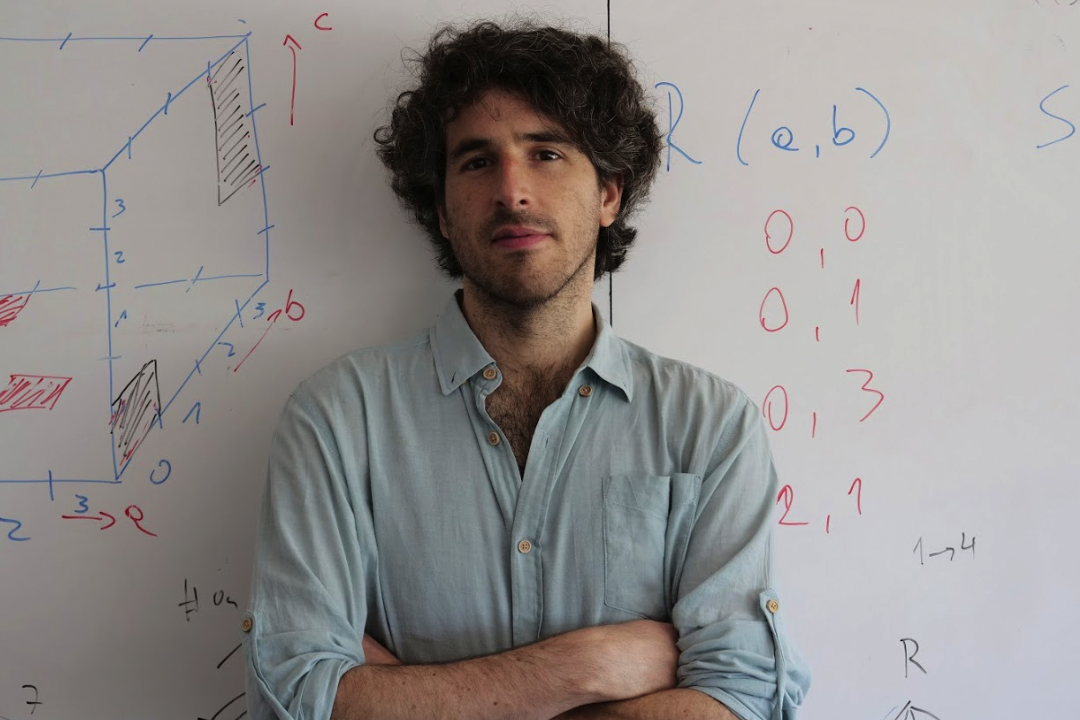
These achievements, and the challenges ahead, would not be possible to tackle without the commitment of IMFD researchers, students, and professionals, Reutter adds: “I feel very honored to take on the role of alternate director of this project, in which not only work and commitment converge, but also the affection of all those who make it up. I know we still have a lot to do, but I am certain that our IMFD community will accompany us and move forward with us on this path.”
Reutter is Associate Professor in the Departamento de Ciencia de la Computación and the Instituto de Ingeniería Matemática y Computacional at Pontificia Universidad Católica de Chile, and holds a PhD in Computer Science from the University of Edinburgh, Scotland. His areas of interest are mathematical principles in data science, data management, web, and graph databases. He received the Ramón Salas Edwards award from the Instituto de Ingenieros de Chile, the Cor Baayen Award from the European Research Consortium for Informatics and Mathematics, and the award for best computer science thesis in the United Kingdom granted by the Council of Professors and Heads of Computing. His research has been recognized with Best Paper awards at the ACM-PODS conference in 2011 and ISWC in 2019, and recently the ICLR Outstanding Paper Award.