
Jocelyn Dunstan Escudero joins the editorial board of PLOS Global Public Health
July, 2023.- Jocelyn Dunstan Escudero, academic at IMC UC with a joint appointment at the Departamento de Ciencia de la Computación UC, PhD in applied mathematics and theoretical physics, and researcher at the Millennium Institute for Foundational Research on Data (IMFD) and the Millennium Institute for Engineering and Artificial Intelligence in Health (iHEALTH), was appointed as a member of the editorial board of PLOS Global Public Health. This is an #OpenScience journal dedicated to public health research that expands the range of global perspectives from which we learn to improve the health of all humanity.
As the journal, launched in 2021 and having already published a thousand studies, states, its goal is to address “deeply entrenched global inequalities in public health”, and to ensure high-impact research is visible to “health professionals, policymakers, and local communities without barriers”. It also aims to amplify the “voices of underrepresented and historically excluded communities” and prioritize “equity, diversity, and inclusion at all levels (editors, editorial boards, peer reviewers, and authors) to broaden the range and diversity of perspectives at the forefront of public health and promote the health of all humanity”.
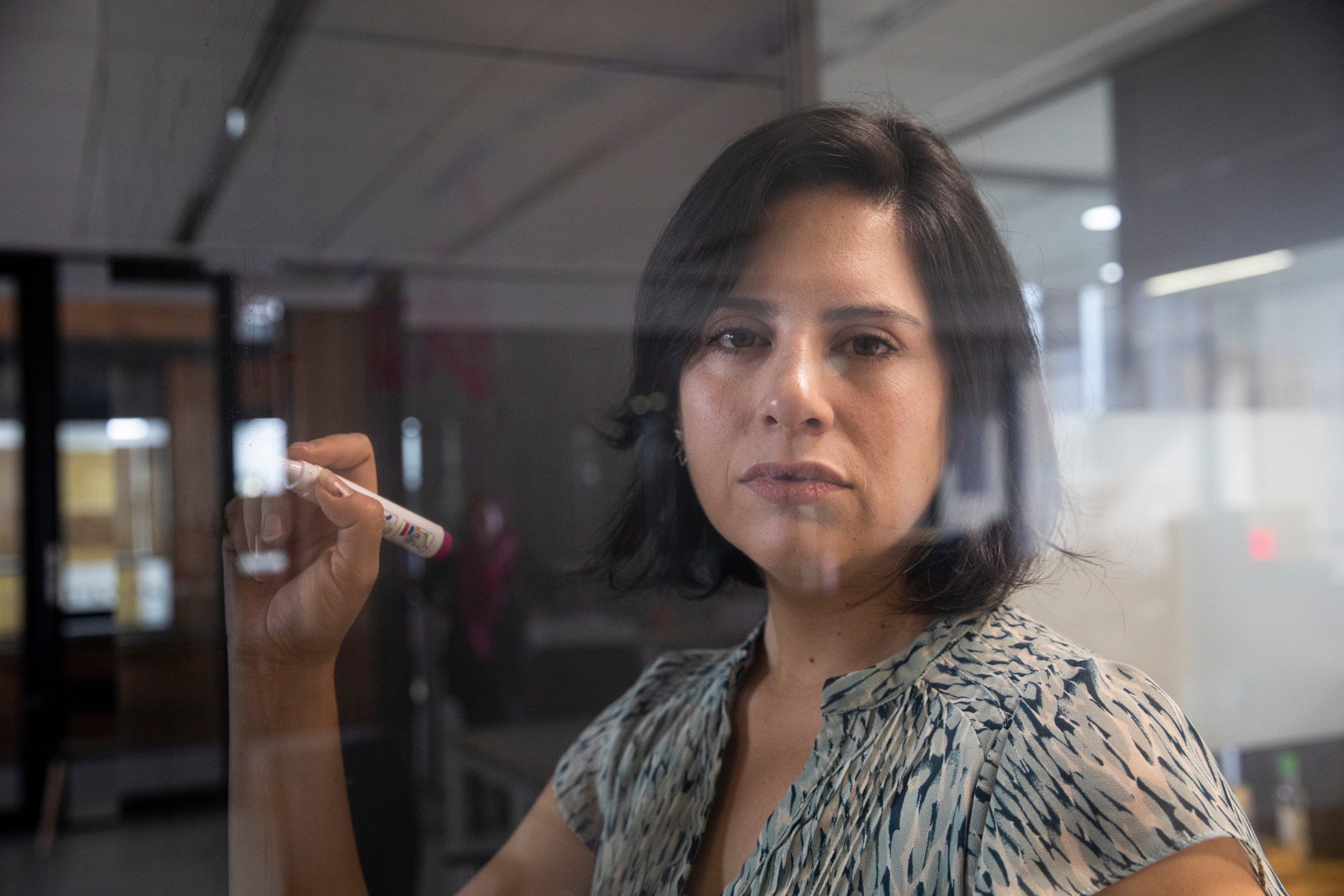
Jocelyn Dunstan.
For this reason, the publication’s goal is to present “ethically and methodologically rigorous research that has an impact on public health” and, in particular, to encourage work that reports on “research on health inequalities and efforts to increase diversity and inclusion in public health”. Currently, the journal’s editors-in-chief are Dr. Catherine Kyobutungi, Executive Director of the African Population and Health Research Center (APHRC), and Madhukar Pai, physician and epidemiologist at McGill University, in Canada.
Currently, PLOS Global Public Health considers papers in areas that include, among others, global health service delivery; infectious diseases; non-communicable diseases; mental health, maternal, neonatal, and child health; nutrition; sexual and reproductive health and rights; indigenous health; environmental and planetary health; social and behavioral health; and global health security.
Appointment to inter-transdisciplinary evaluation group
Regarding the FONDECYT evaluation groups, these are made up of researchers with recognized track records and expertise in different scientific and technological fields. Their work consists of supporting the evaluation and selection processes for proposals in each competition, as well as monitoring and overseeing projects currently underway.
Today there are 30 evaluation groups in four areas: Arts, Social Sciences and Humanities; Exact Sciences and Engineering; Natural and Life Sciences; and Inter- and Transdisciplinary Studies. Invitations to join these bodies are proposed by the experts in each group and validated by ANID’s Higher Councils for Science and Technological Development based on research excellence.
In the case of the inter-transdisciplinary group, the director is Mauricio González, PhD in biological sciences from the Institute of Nutrition and Food Technology of the Universidad de Chile (INTA). It also has 15 members from various higher education institutions such as the Universidad de Concepción, the Universidad de Valparaíso, the Universidad Técnica Federico Santa María, and the Universidad de la Frontera.