
Ricardo Baeza-Yates joins as a Full Member of the Chilean Academy of Sciences
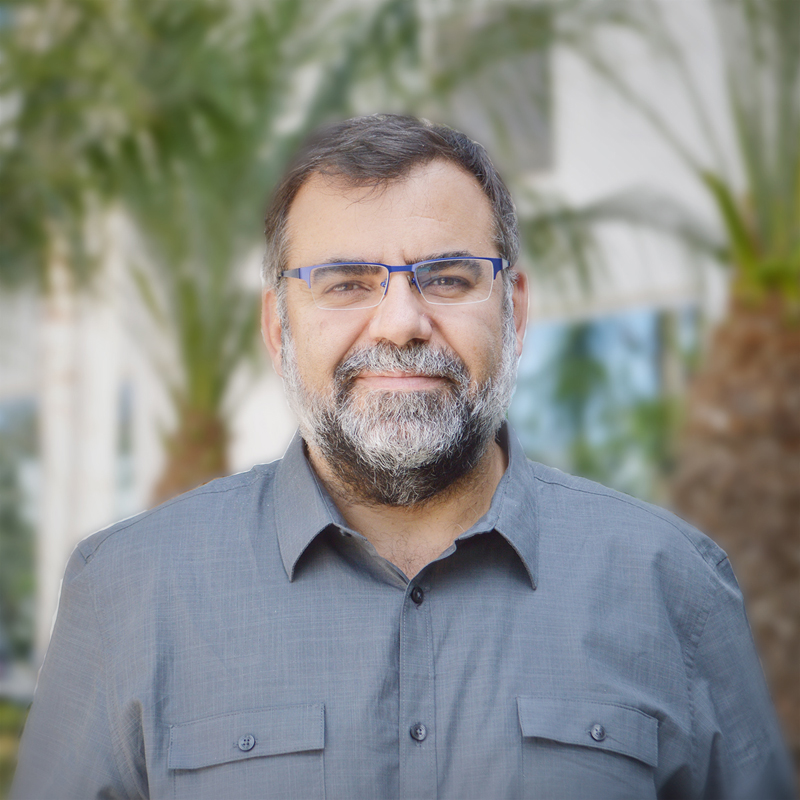
June, 2022.- In recognition of his outstanding scientific career, DCC U. Chile academic and senior researcher at the Millennium Institute for Foundational Research on Data (IMFD), Ricardo Baeza-Yates was inducted as a Full Member of the Chilean Academy of Sciences, the entity that brings together the country’s most distinguished scientists. “It means being one of the 36 most distinguished scientists in the country according to the Academy, where one is nominated and elected by its members. Research trajectory, impact, awards, and active participation in different areas of society, among other factors, all play a role,” said the academic.
This recognition makes him the first computer scientist to be inducted as a Full Member. “I am very pleased to receive this news, although it is something that could have happened earlier, since I have been a Corresponding Member for twenty years despite being one of the five most cited Chileans on Google Scholar. The fact that I am not permanently based in Chile, and that I am not from one of the traditional sciences, probably delayed this recognition.”
Ricardo Baeza-Yates holds a PhD in Computer Science from the University of Waterloo, Canada. He has an extensive and distinguished career in the field of computer science, both in Chile and internationally. He is currently Director of Research at the Institute for Experiential AI at Northeastern University, in the United States, in addition to being a part-time Full Professor in the Information and Communication Technologies Department at Universitat Pompeu Fabra in Barcelona and in the Department of Computer Science at Universidad de Chile, where he is also a Senior Researcher at the Millennium Institute for Foundational Research on Data (IMFD). Between 2006 and 2016, he was VP of Research at Yahoo! Labs, first from Barcelona and later in Sunnyvale, California; and between 2019 and 2023 he was a member of the Spanish State’s Artificial Intelligence Advisory Council. He is a Fellow of the IEEE and of the Association for Computing Machinery (ACM), the world’s largest scientific and educational computing society.
His research interests include algorithms and data structures, information retrieval, Web search and data mining, as well as data science and data visualization. He is also an expert in responsible AI, a field in which he participates in various initiatives, committees, and advisory boards around the world, such as the Global AI Ethics Consortium, the Global Partnership on AI, the IDB’s fAIr LAC initiative (Latin America and the Caribbean), and the ACM’s US Technology Policy Committee. He is also co-founder of OptIA in Chile, an NGO for the transparent and inclusive use of algorithms, and a member of the editorial board of the AI and Ethics Journal.
Throughout his career, he has received numerous national and international awards for his contributions to computer science, notably the Spanish national computer science award Ángela Ruiz Robles, granted by the BBVA Foundation and the Spanish computer science professional associations, SCIE, and the Salvà i Campillo Award for Outstanding Personality for his contributions to promoting ICT, awarded in Catalonia, and the Latin American Award for Merit in Informatics, granted by the Latin American Center for Informatics Studies (CLEI). He is the author of numerous scientific publications and co-author of “Modern Information Retrieval”, the most cited book in information retrieval.
Drawing on this career, Ricardo Baeza-Yates shares his view of computing today, stating that “over the past thirty years the discipline has matured greatly, both worldwide and in Chile. 34 years ago, when I returned from my PhD, Chile had fewer than 20 PhDs in computing across about five universities. Today we have already surpassed a hundred PhDs at most universities, partly due to the creation of local doctoral programs, where DCC U. Chile was the pioneer and where I graduated the first PhD in computer science, Gonzalo Navarro. The main challenge today is to strengthen top-tier research in computing, which remains concentrated in the country’s leading universities.”
—
Source: Comunicaciones DCC