
IMFD and CENIA student team achieves first place in DIPROMATS 2024 NLP competition
July 2024.- A group of four students, led by Marcelo Mendoza, faculty member at DCC UC and researcher at IMFD and Cenia, took first place in DIPROMATS 2024, the NLP challenge on propaganda and narrative detection at the Iberian Languages Evaluation Forum 2024.
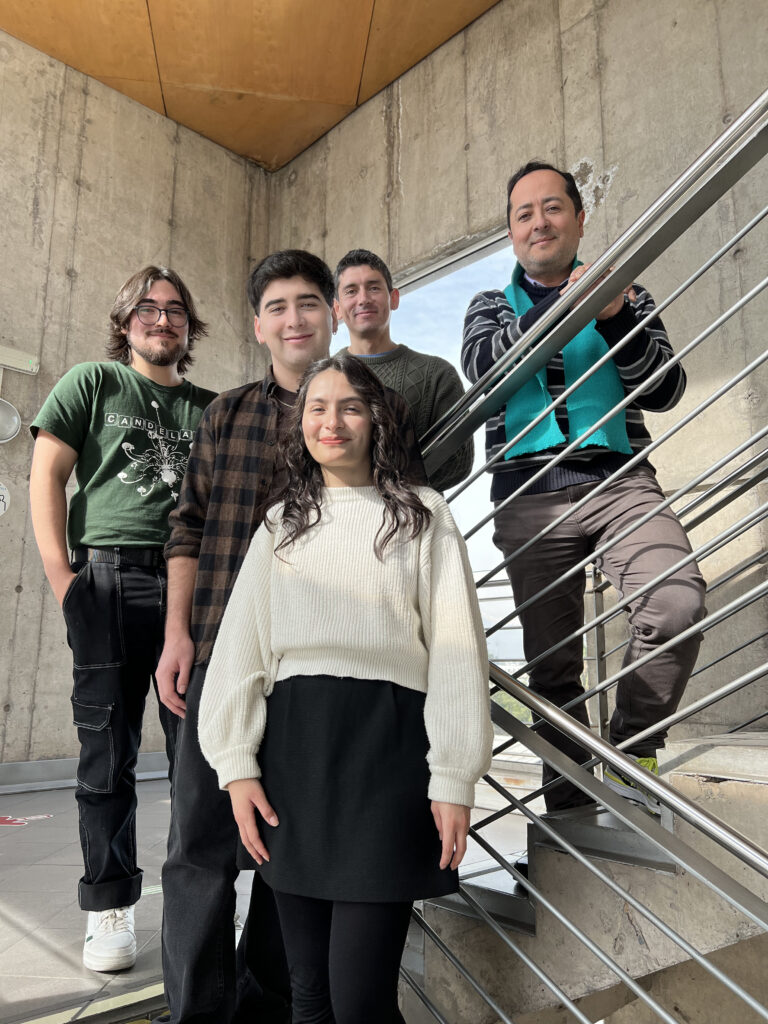
The team, made up of Miguel Fernández (IMFD and DCC UC PhD program), Maximiliano Ojeda (IMFD and DCC UC PhD program), Lilly Guevara (CENIA RL5 and Engineering at USM), Diego Varela (CENIA RL5 and Engineering at USM), achieved the best results in one of the test’s two categories, which consisted of developing systems capable of detecting and characterizing propagandistic content in tweets written by authorities from the US, Europe, Russia, and China, in English or Spanish.
Propaganda
The deceptive intent of propaganda can be less obvious and more harmful than disinformation. Its content need not be false, and its effects may only become apparent over time. The abuse of propagandistic content in the information ecosystem produces a manipulation of public opinion, which can be truly detrimental to the democratic system.
“Propagandistic content is understood as a message that is deliberately designed to influence a specific audience: it is built intentionally and can effectively put democratic discussion of certain topics at risk—for example, distorting what foreigners in Chile are actually doing, it can affect minorities, and that slowly erodes democracy,” notes Miguel Fernandez, IMFD and DCC UC PhD candidate. This is why this phenomenon is of particular importance for research and was selected by DIPROMATS for this competition.
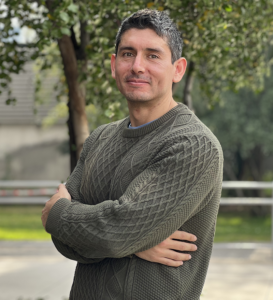
“In this challenge we used techniques based on artificial intelligence and natural language processing to detect the use of persuasive language and propaganda techniques in text,” explains Marcelo Mendoza, IMFD researcher.
“We trained a model based on Transformer technology, an architecture that allows machine learning models to understand text, and also used techniques such as data augmentation,” explains Diego Varela, of CENIA RL5 and Engineering at USM.
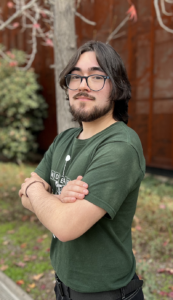
These techniques make it possible to carry out analyses that would otherwise be impossible, given the large amount of information that must be handled. “As humans, we may have very few resources, or not all of us have the resources, to identify this type of phenomenon, but thanks to these technologies, we can achieve it,” notes Lily Guevara, of CENIA RL5 and Engineering at USM.

Transformers are useful for identifying patterns in texts, and the way to identify propaganda is to examine how language behaves within the text: what comes before, what comes after, which words go together—the use of language as a whole. That is why it is one of the most widely used techniques today, explains Maximiliano Ojeda, IMFD and DCC UC.
DIPROMATS 2024 is a challenge organized by the Natural Language Processing and Information Retrieval Research Group of the Universidad Nacional de Educación a Distancia of Spain (UNED), in which the research community defined new research challenges and proposed tasks to advance the state of the art in natural language processing (NLP).
The team will travel to present their solution at the event, which will take place from September 24 to 26 in Valladolid, Spain.
Check out a video where the challenge participants share their experience: